Good Conversations and Why We’ll Never Have Enough of Them

To tell you the truth: I had been very unhappy this past month. This singular discovery confuses me, of course, noting that I wasn’t able to find any particular reason of me being in such state. I definitely have an awesome job, got myself a dozen of new books, and published a couple of (although generic) articles here and there. Baffled, I slid through the calendar trying to get myself distracted on an arbitrary rotation of activities.

Only recently, I figured out that I haven’t had any good conversation for a while.

I’m not talking about the typical “What are you up to?” kind of catching up—those are delightful as well, but too predictable. I’m taking about conversations that make your heart race because you cannot foresee how the person across the table would respond to your weird question; conversations that could not make you care any less about what you’re wearing that day. The best ones.

The partner I usually count on, to my remorse, has been unavailable for intellectual engagement recently and my instinct told me this situation isn’t gonna change anytime soon. Luckily enough, a nice friend who just came from down under invited me to chat over coffee (I ended up getting green tea) last weekend—and another took me to a spicy dinner with the following Monday. Both supplied me with insights special enough to keep my mind sane for the rest of the week.

Processed with VSCOcam with t1 preset

People have different analogies but I think conversations are like a thought-mining site—one that works best when reciprocity is conceived. Here’s how: as you continue listening to the other person, your mind wanders and digs into new memories or piece of idea—then takes them from the back of your head, brings it right on, until it passes on through the dialogue. Later they work as a stimulus for the other person to also prepare a new set of responses, thoughts that would not have presented themselves otherwise.

It is a remarkable process and, like someone said, might actually be more intimate than sex.

P.S. An unbalanced interaction, on the other hand, would leave one of the parties tired, either of slowing down or trying to run faster. (This is why humans must stop settling down for spouses who aren’t their par, btw.)

***

On a more substantial note, here are several viewpoints from both conversations that resonate and stay with me whenever I wake up in the morning within the past few days:

1. Conversation Is the Closest You Could Get to Pretending That Connection Exists

Each of us was born in this world alone, and although the promise of having a soulmate is very tempting, at the end of the day we will also die alone (and pretty much alone in between, too). We have families, friends, and lovers, indeed, but these are external beings; individuals who went through a unique experience different to yours—chances are they could not grasp the inside of your brain 100%. They could try because they care about you, but they would not—and never could.

Conversations are then a very good consolation to this sad truth.

Through exchange of symbols (words and gestures) that we somewhat agree to understand as representing certain concepts, humans think they understand one another. The truth is, there’s a good possibility that we are not even talking about the same things right now.

I however still believe in the romantically stupid idea of ‘having a connection’—because let’s be honest to ourselves: there are moments, magical ones, when you look into another person’s eyes and know exactly what they are talking about and, at the same time, know that they know that we know about what they’re talking about. When you’re at that point of epiphany, for a short second, you might believe that connection is possible. It’s a comforting sensation.

2. Life Could Be More Meaningful If People Stop Romanticizing Their Consumption

Johan, an extraordinary thinker he is, suggested a brilliant dichotomy: that any activity is either a consumption or production. Easy examples to the former would be: eating, drinking, and reading. The latter in the meanwhile involves certain efforts made to construct or build a new item for someone else’s consumption—writing, cooking, and film-making could be several.

We used to, he pointed out, hit the minimum bar of survival for our consumption activities, and focus on romanticizing things that actually matter. We ate because we’re hungry, not because the restaurant cooked our favorite meal with a foreign oil. We went to places because we wanted to spend more time with friends, not because we wanted to be part of the acknowledged hipsters.

But thanks to social media, recently this trend shifted and we’ve become this cult of empty individuals who oversell what we buy and lost interest in smaller things that are essential—things that make us human. Today, it’s a shame how bookworms and librarians (yours truly, too) stop sharing the insights they got from books and instead start posting quotes on the virtue of reading books. People take pictures with famous people they’ve never heard of and check in places they saw from postcards.

Conversations, on the other hand, are an act of producing. It processes raw thoughts and words into more digestible and consumable premises. It is production, ladies and gentlemen, that allows mankind to possess a sense of purpose and fulfilment.

3. People Don’t Actually Care About What You Do With the Rest of Your Life

I don’t know about you but in the past 20 years, I have lived under the misleading impression that people cared about what I achieved or failed to deliver. This then set me on a winding road of, among others, taking a major I don’t necessarily love, winning competitions I don’t necessarily feel challenged by, or doing work I don’t necessarily enjoy. I have no regrets up to this point though, because, as you might have been part of, so far the journey has been wondrous.

But here’s where it gets interesting: I finally realized that apparently nobody cared. Or if they actually did, they stopped caring as you turn 21.

I mean, I’ve always been told to take option A over B, do C over D, read E over F, but now suddenly everyone went quiet. My parents let me do what I want, my friends are busier minding their own career, and here I am, pretty much clueless about what I should be doing ahead. Our linear education system has been constructed in such way that we have always been assured that there is only one correct answer (remember those multiple choice questions), and the fact that now life allows you to create your own options from thin air is not very helpful.

Yes, some of them still advise you to take A or B and the rest have expectations on your shoulder, but if you have reached that mature understanding that none of them actually cared, things become a lot easier (although trickier at the same time). I mean, it’s been bugging my mind for some time about the steps I must take had I really wanted to publish a book.

Regardless, I’m quite sure that I do not want to be part of the proud corporate slave society who have doubleplusgood income but got their entire life given up to the 9-to-5 routines manipulated by companies that pay their salary. I want to still have this independent mind, to be able to think critically, and most of all, to be myself. I want to be fully-aware and conscious that it is my right and it is completely fine to take a day off to just sit down under a tree and spend the entire day thinking about the meaning of death.

4. Instead of Love, Use Fear; It Offers More Certainty

Still related to that: almost two months ago, I came across this clever article on, to oversimplify, career choices. The most appealing part of the article (that might be misjudged as a crappy self-help scribbles), is the fact that instead of using Job’s overrated ‘do what you love’ one liner, it appeals to the human fear. It suggested that, if you’re not afraid of losing it, you don’t love it enough. So instead of measuring affection or admiration toward certain job or sector, think about something that scares you the most. To me, it is imagining that if I eventually publish a book, it will end up on the discounted shelf because nobody likes reading it. *knocks on wood*

5. Understand, Because Tolerance Is Ignorance

This one came from Ben, who unintentionally pointed out how the concept of ‘tolerance’ has been overused (if not abused) to accommodate the worst state of human being: ignorance. We have not, he said, tried our best to understand differences—let alone putting our shoes in someone else’s. Instead of really getting to know them better and understand their situation, all we do is sit down and create distance.

“It’s fine as long as they don’t disturb me,” is not enough. It’s not fine. Talk to these people, try to grasp how they look at the society who puts them as the marginalized, then you could claim that you have done your part.

Anyway.

If you’re also feeling unhappy lately, maybe you need a good conversation, too. Here’s a tip: start with an honest “How are you?” and mean it when you ask it. Also remember to answer it with however long you want to answer it with when someone else ask you that.
A Short Account on Humility

Originally posted on Almanak-Almari a year ago.

I love writing and I’m good at it. I won’t pretend that I’m lousy with words just to make people think that I’m humble, because clearly humility doesn’t work that way. And I believe that’s what everybody should be doing, too. Finding what they love and/or good at, then stand up for it.

Yes, there’s a fine line between confidence and arrogance, but a trained mind can tell when they see one. So worry not: dare yourself to tell the world what you love and/or good at. Just keep your apology for the rainy days when you have to hurt someone for what you believe in. And when that time comes, tell yourself that things are going to be alright.

[On a less relevant note, I published this on Selasar (made it to the most popular article for a while) and this on Forests Asia’s website (as an intro to the youth session speech I’ll be delivering)—in case you need some extra reading this weekend. Cheers.]

Power Couples: Because Love Does Not Always Belong In Disney Castles

I think we would all agree to call the obsolete line “behind a great man stands a great woman” off. With almost-equal opportunities here and there, ladies who could not make it to the top must either be: 1) not qualified, 2) not hardworking enough, or simply 3) not that brave to let herself lean in. Sorry to break the truth down to you, but we shall all deal with it somehow at the end of the day.

That being said, I think it is fair to shift our admiration from power people (individuals who happen to be talented and luckily achieve stuff while not letting their spouse to get on their way) into power couples: a man and a woman, both of whom involved in a(n arguably healthy) romantic relationship and independently hold high-level, influential careers.

There’s a number of reasons to why power couples are more awesome than power people:

  • Driving a huge truck is something, but driving a trolley-bus (with at least two
    connected cars) is an entirely different league. It is a considerably larger responsibility, requiring a lot of compromises and wider driving-awareness/sensitivity. If one manages to not only move from point A to point B but actually doing it gracefully well, I think he/she deserves a bigger appreciation.
  • Girls have the natural urge to be with someone who beats them in a game or two. To complicate that, however, girls also have the natural crave to be with someone who would let them pursue their dreams/ambitions/career. Statistically, the intersection between categories #1 and #2 does not provide us with many options. Hence, to know that there great women out there who manage to find such rare breed of men could be encouraging.
  • Well, we basically just love fangirl/fanboy-ing over power couples.

Among many, these are the top 5 power couples of my pick (some of which are fictional):

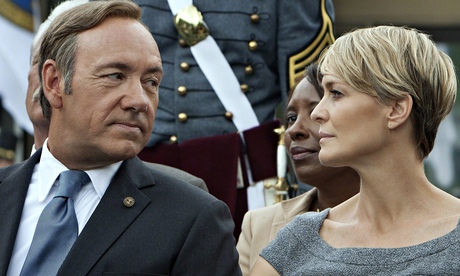
1. Francis and Claire Underwood

House of Cards, TV

I love that woman. I love her more than sharks love blood,” Frank told us once.

The word ‘romantic’ might not fit them best—if anything, their marriage is mostly platonic. But I swear to you there is something inexplicably intimate in those looks they exchange every now and then throughout the series. Frank, a Democrat with big ambitions (he went from being a congressman to vice president in just one season) and Claire, a cold president of a non-profit organization, makes a perfect combo for any political geeks. They are not particularly ‘decent’—together they manipulate the people around them to grab influence and prestige (although Frank orchestrated most of the work) and they might be united merely by their common hunger for power but I think it makes their relationship even more profound and realistic.

2. Samantha Power and Cass Sunstein

Samantha

In the same realm of politics but the real version of it, there’s Power-Sunstein duo. Started off as a journalist, Power is now the ambassador for United States to the United Nations. She won a Pulitzer, graduated from two ivy league schools Yale and Harvard, as well as served as a professor at the latter. In 2008 she met Cass Sunstein when they both helped Obama’s campaign. Sunstein then worked for the White House Office of Information and Regulatory Affairs and taught at Chicago’s Law School for 27 years. Despite getting married to a divorcee when she was 38, Power (who, if you notice, retains her name) seems to be very happy, and they’re now both overjoyed with two kids. Just imagine all the insider’s news and high-level gossips they might be discussing in the bed.

3. Will McAvoy and MacKenzie McHale

download

Is it just me or are awkward relationships cute? If you watch Newsroom, you would probably agree that McAvoy and McHale’s under-the-table fondness for each other is just adorable. If Frank and Claire has that indisputable connection, I cannot exactly speak the same for this couple. Instead of trust or overflowing affection, their relationship is full of doubts, anger, and disappointments. That and my hunch about how Aaron Sorkin set them up with similar names aside, I love how they both worship the true goal of journalism i.e. to educate American people through relevant facts and stories. In News Night, Will acts as anchor and managing editor, while MacKenzie was invited back as executive producer. Although they fight a lot on the surface, deep inside, they share the same idealism of what journalism should be, and nothing could tie two people stronger than that.

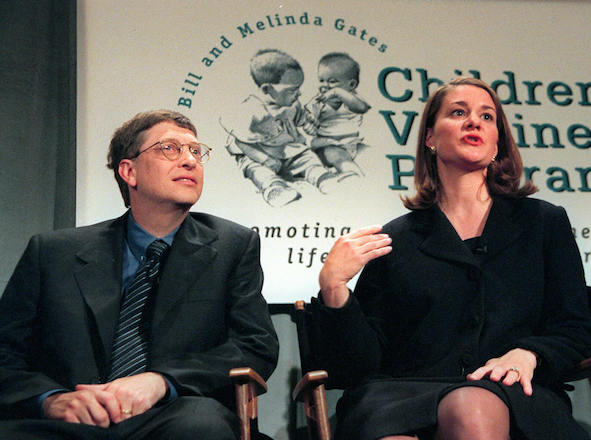
4. Bill and Melinda Gates

(FILES) Microsoft Chairman Bill Gates (L

The billionaires who save the day would probably be how we call them. Melinda, hired by Microsoft in 1987, met Bill four months later when they were seated next to each other at a press event in New York City. Since the day they got married in 1994, Bill and Melinda have funded countless projects in the domains of health, education, as well as global development in general, creating tremendous changes here and there. It was all kicked off when Melinda shared her travel stories to Bill, explaining how women and men in Indian villages suffer. Today, their joint leadership has given billions on helping individuals in need in various parts of the globe. How blessed, don’t you think, to have matching vision (that is also noble) as well as the resources to actually make it happen?

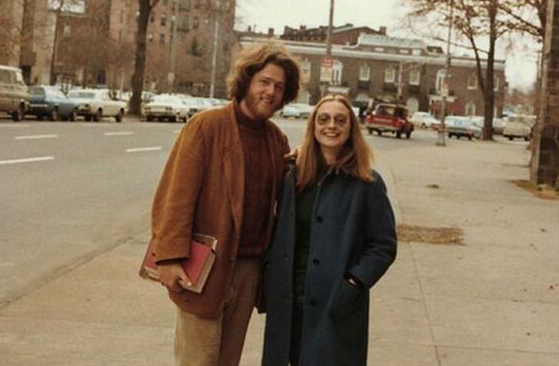
5. Hilary and Bill Clinton

Screen Shot 2014-03-09 at 1.48.58 PM

Enough said on this one. Both possessing sharp brains—essentially what it takes to lead the United States—they might as well end up being the first president-president couple in the near future. (Don’t jinx it. We’ll never know.) Looking at the picture from their youth time and the fact that they’re now married (still, despite the Lewinsky scandal) with Bill declaring his support if Hilary runs as the 46th, you sort of wish you were one of their college friends who said, “I saw this coming!” But no, darling, nobody saw it coming. One could only hope.

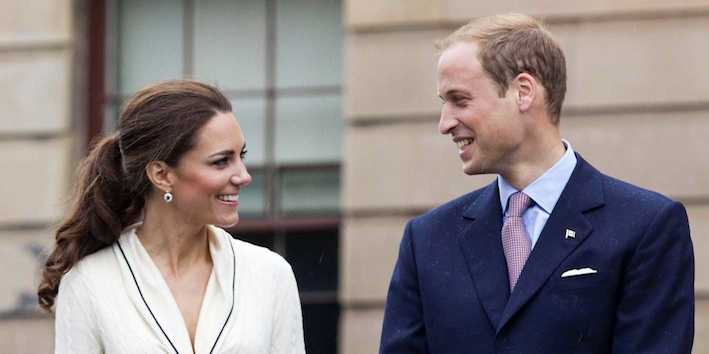
Bonus: Kate Middleton and Prince Wiliam

Okay. Maybe, just maaaybe, love ends up in Disney castles and still deserve to have that ‘power couple’ title. I mean looking at this one, it’s pretty singular, isn’t it? He’s the Duke of Cambridge, she’s the Dutchess—and they both live up to their names. It makes sense that an article once called them, ‘flawless royals who handle scandals with class’. Their power comes from the English monarchy, but it doesn’t mean they don’t work for for it.

***

I would love to also include, of course, Sherlock Holmes and Irene Adler. Remember that part of the book where Watson says, “For Sherlock, she has always been the woman.” I think to have found an equal, the way Sherlock found Irene and the other six men and women above found theirs, is the most rewarding experience one could ever have in their life.

(Let alone actually living the rest of your life with them.)

Good Readers Make Good Writers: Five Authors That Affect Me the Most

There’s only a few things I hate in the world, not too many that I could name them one-by-one: dog-eared books, reckless taxi drivers, and arriving late to a meeting, among others. On top of this, however, is my perpetual loathing towards ‘How to Be a Good Writer’ workshops.

I MEAN, SERIOUSLY.

[Disclaimer: I take writing (and reading, as well as other literary-related activities) personally. So personal that I easily get offended when the notion of profit or profanity in general make its way into my romanticized world of literatures. And I could be offensive in return.]

First of all: no great writers had been born from a two-hour seminar.

It takes years of writing shapelessly, then a period of finding your own writing character (length may vary), then every-now-and-then-looking-back-with-embarrassment at your old writings, then finally settling down with your own identity—first without confidence, and later with (if you’re lucky enough to be surrounded by an audience of your kind).

Bottomline: it’s a pretty long process, and I’m quite sure it involves a lot of practice, confusion, temporary assurance, second confusion, and so on.

Second of all: good readers make good writers. Surprise, surprise, but it’s sort of the law.

Don’t get me wrong: I’m not saying that one is supposed to read more shall he/she want to write better. Yes, doing that can help you store richer perspectives in your mind palace and wider vocabularies in your word bank, but they would not necessarily sharpen your ability to argue or creativity to develop a moving story.

I’m saying that a writer’s opus always reflects the collection of the books that captivate her/him the most throughout his/her course of literary exploration. In my case, there are five major writers (and therein elements) whose writings have been an influence to the voice of my own:

1. Ayu Utami

Ayu

There was a period back when I was under the dilemma of fiction/non-fiction dichotomy—never been quite assured that I belonged in either of the two. As much as I enjoyed developing story lines, I still thought that a writer could only do his/her writing a justice had he/she used it to make a bigger, factual point. One book that later made a huge impact on me by answering this was Ayu Utami’s. An in-depth, research-based criticism toward militarism, monotheism, and modernism, Bilangan Fu is also an eloquent novel about three young lovers.

On one occasion, she told me (and a room of starstruck audience) that it is the duty of a writer, or artists in general, to make truth a little more bearable. She’s the queen of both worlds I look up on.

2. Alain de Botton

muralt

The second writer who gives a huge impact on me is, apparently, a British bloke. I love Alain de Botton not only for his wide range of topics (read through this blog and you’ll see that I never really succeed in trying to stick to one theme) and his generalist point of view (an inseparable consequence of the first notion), but also his intellectually astute, eloquent way of elaborating a profound observation. In Essays In Love, de Botton uses diagrams to point out how we often feel like a different ‘amoeba’ around people we love. He writes above dull rhetorics and cheap philosophy, resulting in pure, golden thoughts. He shows me the magnitude of brilliance you can create with just words.

3. Pramoedya Ananta Toer

images

Pram is a one-in-every-century writer whom you shall not compare with other writers. It is already a literary sin to put him on a list like this, but some sins are worth it, and I just have the urge to bring this up: that the greatest writers are great because they capture not just stories, but an entire civilization. His Child of All Nations effortlessly helped me understand the initial confusion of our identity as a nation, and later growing consciousness of being ‘Indonesian’ throughout the colonization area.

This, fellow aspiring writers, is just not something that you can acquire. This takes real experience and personal contemplation, something that our generation had no privileges upon. I learned a great deal from you, old man. I am so grateful that you had access to pen and paper.

4. Joanne Kathleen Rowling

Screen Shot 2014-02-16 at 11.23.40 PM

Spending 10 years of my childhood coursing through Rowling’s story of Harry Potter and the wizarding world, it would simply be a lie (a lame one) not to say that her writings inspired me big time. For one thing, her seven books set the standard of how well-developed characters could make a very significant difference to your story. If there’s any writer who treats the characters in their novel like treating actual children, it’s her. She wouldn’t stop at only giving a very well-thought name, she would go as far as making a separate chapter of background story for them. If we’re now familiar with the humane side of villains, remember that it was her who first made us fall in love with Snape.

I mean, come on. It’s been years since she finished the series and she still thinks that maybe Hermione would’ve be happier had she been with Harry.

5. John Green

JohnGreen_3

Rara insisted that John is too cengeng of a writer. I am aware that some of you might agree with her, but I would rather call it innocence. We don’t need to debate on that, though, because obviously it is not his teenager-ian stories that bought me; it is his unique way of grammar-mixing ability to cook new form of words and sentences that give you enjoyable pops in your head. If you notice my liking of writing whispers inside brackets “(…)” or Capitalization of Words that Are Not Somebody’s Name or neverending-dash-to-make-a-sentence-a-word, the credits go to him.

John hosts literature crash courses on YouTube, all the more proof that, beyond his preference of writing overly-young adult stories (I really enjoyed Looking for Alaska, btw), he loves English.

6. The List Goes On…

I know I should stop, and I will, in fact, stop, but I have to say that my quick overview suggests that there are four kinds of awesome fiction writers:

  1. ones with strong characters (where authors spend enough time to help us understand them, such as J.K. Rowling and Harper Lee);
  2. ones capturing the status quo of a civilization very well (the writer was lucky enough to be born in a historic scene, including Pramoedya Ananta Toer);
  3. ones supported by really good, extensive research (Dan Brown and most of the other science-fiction writers, besides Ayu Utami);
  4. ones depicting what’s might happen in a utopia future (I worship George Orwell and Aldous Huxley’s works for their imagination wild enough to soar in possibilities but also grounded enough to make us think that it might actually happen).

Do you have a different idea on what makes a book great, or want to share which authors make the hugest impact on you? Feel free to write it down in the ‘Comments’ section.

Good night.

P.S. in case you haven’t, also read: A Personal Note on Reading.

The Sign of Four

To all Sherlock fans out there: apology—this post has nothing to do with that Jonathan Small case. It of course does not altogether mean that you shall not be interested in reading it through. For what it’s worth, it’s gonna try to answer (or at least start a discussion about) the mystery of constantly repeating quartet patterns around us. You see, sociology has probably explained so much about human’s dyadic (consisting of two people) and communal (typically uncountable) interactions, but little effort has been put into shedding more lights upon bonds between four individuals.

The more relevant question to begin this with is probably:
do such quadrangular connections actually exist, or is Afu just completely wasting my time into a delusion of a non-existent order?

Top+5+Attractive+web+Patters+3

Well, my shallow belief contends that either you’re part of one, or you know a group of four close friends who seem to be a real match to one another. I don’t just mean any random friendship of four, but a strongly-tied relation whose balance is reached exactly because there are four nodes and not less or more. Shall one of the people in the group leaves, things don’t seem to work out.

In case you’re none-of-the-above, then here are some fictional references of the Great Division of Four (different personalities):

  • The four female characters in Ayu Utami’s Saman surely have something in common, but they are four different animals by nature: Shakuntala the undomesticated, Cok the ever-thirsty, Yasmin the spoiled, and Laila the curious.
  • In Candice Bushnell’s Sex and the City, each of the foursome stands out with their own, unique qualities (Carrie Bradshaw the columnist, Samantha Jones the businesswoman, Charlotte York the art dealer, and Miranda Hobbes the lawyer) but they are also a perfect combination for one another and make a greater whole than sum of its parts.
  • Lastly, the fact that all of us feel like we belong in either of the houses in Hogwarts (Gryffindor the courageous, Ravenclaw the clever, Hufflepuff the nice, and Slytherin the ambitious), must mean that somewhat there’s gotta be an explanation behind J.K. Rowling’s division of four.

Have psychologists came across this interesting pattern?

Well, the truth is, they have. Despite the fact that it is not their mission to untangle the mystery of human interactions (since they usually focus on self-discovery or person-per-person psychoanalysis), they have—through the ages—been coming up with personality categorizations that focus on four quadrants:

  • Time-traveling back to the ancient times, there was Hippocrates who came up with four temperaments that he thought shaped us all: the Choleric, the Sanguine, the Melancholic, and the Phlegmatic—each of which reacts differently to various stimuli. Now I’m not sure why exactly he got the four combination, but it is interesting to further look at.
  • Only recently, psychologists develop personality test for companies/organizations to figure out what condition suits their employees best—it says that we’re either one of the four colors: blue (the relationship way), gold (the action way), green (the logical way), or orange (the organized way) in day-to-day working situation. Knowing this, companies/organizations can set up better, enabling conditions that would allow them to be more productive.
  • Last but most compelling to me, is the famous Myers Briggs Test Indicator (MBTI), which puts us in four major boxes: the Idealist, Rationalist, Artisan, and Guardian. It revolves mainly in four elements of personality: 1) introversion/extroversion, 2) intuition/sensing, 3) thinking/feeling, and 4) perceiving/judging.
    Later this builds up to 16 different combinations of personality that explains (or even predicts) an individual’s behavior.

Now literatures might not offer the same level of wonder since we can simply blame the authors for arranging stories around the omnipresent four, out of personal, arbitrary decision. But those psychological theories, typically based on close observation of human behaviors, really fascinate me.

Having said this, however, I would still have to say that the difficult part is to connect the dots in real life. Luckily enough, my laboratory for social experiment sits right here in my own friendship. Let me quickly introduce you to Diku, Kiki, and Ipeh—three girls who probably have the biggest impact in my life, especially for accepting my unusual obsession towards patterns. (Trying my best to maintain the scientific tone of this post and not get all emotional here.)

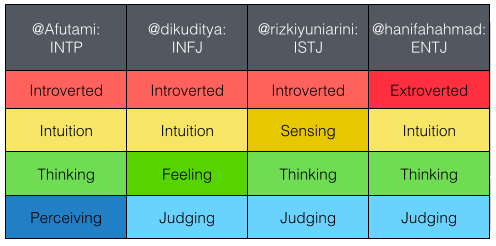
So one day Kiki, Ipeh, and I had a dinner where we laid out our MBTI results (after some 30-minute rants on boys and politics), which looks like this:

Screen Shot 2014-02-07 at 16.37.51

Now I would lie to say that this finding did not excite me. As I’ve been repeatedly saying, yours truly is pretty much a bitch for patterns (why do you think I bother to make this post from the first place), SO YEAH IT DID REALLY THRILL ME TO HAVE THIS DISCOVERY!

From then on, some derived premises have been knocking on my overthinking brain’s door:

  1. It is not that the four of us happen to like the same things or possess identical personalities; rather, the four-node balance is formed because we are both similar and different from one another. To be precise, each of us is actually excluded from the rest at one specific aspect—Ipeh for being the sole extrovert, Kiki’s rather extraordinary sensing ability, Diku’s feeling-based rationality, and my, well, slow progress toward making conclusions (I have a subconscious tendency to keep things open-ended).
  2. We dig into really engaging conversation when we are together because there’s a shift of balance of power (a.k.a. topic-driver) every now and then, making a dynamic to its flow. Imagine if we’re all thinking machines or sensing analysts—our friendship might not be as exciting (and enriching) as I remember it now.
  3. Our friend (Diku’s boyfriend) Sindhu, later convinced me (through Diku) an alternative view: that we’re a circle of clicking personalities. It goes Diku-Afu-Kiki-Ipeh (and goes back to Diku). This would explain not only why Diku-Kiki needs me to connect, me-Ipeh needs Kiki to connect, and so on, but also how Kiki connects best with me and Ipeh, or Ipeh with Diku and Kiki.

Ah, patterns. I could continue talking all night but I’m sure you’re starting to lose interest at this point, so I’ll just stop. I also know that these are all premature hypothesis—ten years from now, I might find this post obsolete or the four of us might actually stop being friends to one another because we lose the balance (psychology does support the idea that personality is ever-changing). But even then, I would be grateful to ever experience being part of a sociological artefact that could explain the link between quadrangular personalities and sociology of four.

Even then, I would cherish this little infinity of (almost) five years we’ve been together. Cheers, girls.

***

Thought-bibliography:

  • Sindhu, for coining the phrase ‘sociology of four’ and being our first and so-far-only interested observer who came up with the proposal from the first placealthough, to be fair, I had it at the back of my head since the time of Ayu Utami and Candice Bushnell (long before we had our first conversation).
  • Diku, for shoving Sindhu’s staggering (yet effortless) examination into my head, and adding a lot more sense to it through your advanced comprehension upon human behavior and outstanding ability to elaborate.
  • Kiki and Ipeh, for simply being yourselves and finding us at the right place and the right time—you know how obsessed I am with patterns and your mere presence is already a gift (note that this is a sociological remark, of course you bitches mean a lot more).
  • Rizky (and plausibly two currently-non-existent boyfriends of mine and Ipeh’s as well), for stimulating follow-up questions in analyzing our respective counterparts—to be curious about whether or not a pattern of eight puzzle pieces exists at all.