Post-Facto Notes and Whatnots

Funny how our brains work. One day it fools us into believing that a colony of butterflies is building a home in our abdomen; a couple of weeks later, it tells them to completely migrate somewhere else. To their convenience, of course, there are leftovers—some haystack used to finish the ceiling, or dying flower petals in their kitchen.

This post will not, however, talk about the natural habitat of animals in the Insecta class—although I must concur that it is a very appealing subject. Instead, we will talk about pain and ego, two mythical creatures that—just like those butterflies—share a nest inside our chest, although—unlike those butterflies—they usually stay. In fact, they stick with you religiously even when you want them gone. They’re loyal like that.
Kavva 2

Pain

Remember Anna Karenina’s first sentence—“All happy families are alike; each unhappy family is unhappy in its own way.” I’d like to anchor that proposition to an underlying possibility: all pleasures are similar, but every pain is irritating in its own way. Pain leaves a unique scar every time it touches you; depending on the degree, it also owns the power to change you into somebody you don’t want to be.

Whoever said pain demands to be felt, had no idea that pain is just a side effect of healing. When your body’s temperature rises, for instance, it’s not because the virus wants you to be aware of the trouble it causes you—it’s your immune system fighting back. If anything, mortals should embrace pain, for it signals the arrival of the remedial phase.

In other words: pain is not an end, it’s a means. A resource, if you might.

Of all pains, the most politically supported one to claim throne is that of a broken hearted person. Because what could’ve been more wounding than an unrequited love? To find out that the man/woman you dearly care about does not reciprocate, must’ve bashed your heart to the ground; or at least numbed it off for a little while.

I would’ve thought so, too—had I not been introduced to another breed of pain: that of not being able to love back, no matter how hard you’ve tried. You might think that being loved is simple: it’s a blessing from the universe, to have another living soul beaming affection onto your worthless self. But ‘being loved’ also endorses the power—or, as I’d like to call it, ‘the burden’—to hurt, to cause pain onto somebody else. And not just ‘somebody else’—it’s the very person who would trade the world to make you happy.

Love is beautiful when there is give and take—life is created upon cyclical patterns after all. Our lungs breath in and out, humans return to earth as soon as they die, while capitalism prevails because market lets you buy and sell at the same time. Mutualism sustains, but imbalanced bond destroys.

Being the party who only receives does not only make you an involuntary villain, but also a depressed black hole, incapable of providing back. And the thing about black holes, they grow. The more you feed them, the bigger they get, and sooner or later, they will end up eating themselves.

The most deranged part of this scheme: you have absolutely no control upon it. It’s like standing just one step behind the line to ‘perpetual happiness’ zone, and yet you could not move your foot any inch closer.

What a pain, don’t you think, to be deeply loved by someone you can’t love back.

Ego

Centuries of civilization has benefitted from ego—it sent ships to conquer a new world, delivered humans to the moon, and killed several along the way. For all I know, ego is an open-sourced energy, you are free to use it as you wish. When it comes to pain, however, one thing is clear: ego makes pain bearable. Your love for yourself, no matter how small it might be, helps you survive through pain—all kinds of them. The typically-evil thought of “you deserve better” or “this isn’t your fault” is exactly what you should hold on to, in order to get to the finish line and name yourself a champion.

Whenever an opportunity presents itself, ego walks around with hatred. Sometimes, the latter takes over and professes itself to be in charge. When this happens, of course, pain will hide and pretend it doesn’t exist, because obviously hatred makes you feel a lot better than pain does.

This is probably why most people succumb to hating the people they used to love. They don’t have to, you know, it’s just one of the easiest self-defense mechanism they could afford. Because the other alternative would hurt even more: declaration of dependence narrowly shows weakness, and one cannot bear pain unless they’re strong. Strong they’d rather become, without realizing that under the curtain, pain still works its due—altering them into a slightly less-trusting mind.

No two people experience the same pain, so maybe humans were never meant to really understand each other. Regardless, I know for a fact that there are people who opt for the most genuine interaction with pain—they do not let ego (nor hatred) distort what they should have felt.

They let pain humanize them, bringing back the primitiveness of being helpless and in need.

***

Together, pain and ego dance their way off whenever our subconsciousness calls for them. Their favorite music, to nobody’s surprise, is human connection—although they might as well enjoy the internal doubts humans cast upon themselves.
No, Not That Kind of Romance

Humans thought they understood love, and—for a narrow window of time—we probably did.

The earliest awareness universally begins as soon as you sense an unearthly gravity toward a particular figure. A boy whose name you barely learned a week a go, a girl who made politically-incorrect jokes throughout that boring lecture—whenever this person pops up in the same room as yours, your head suddenly gets clouded with a thin air of urge to appear a brush prettier, a sentence funnier, or an argument wittier.

Processed with VSCOcam with x1 preset

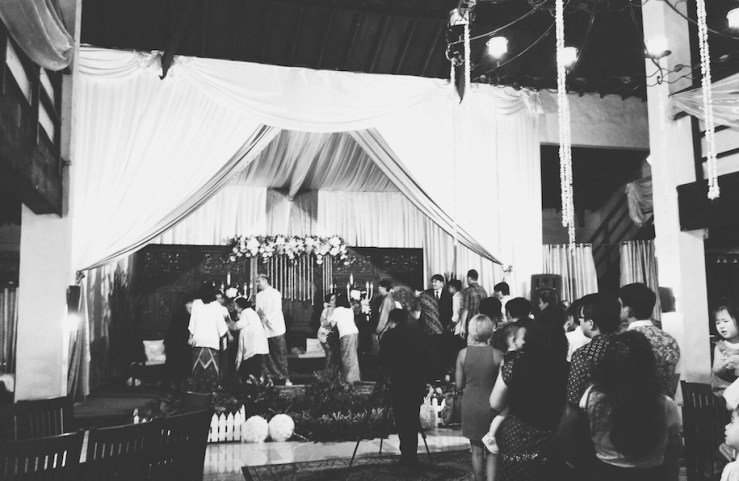
Maybe that’s why there’s a peculiar charm in wedding ceremonies.

Witnessing two people, once a complete stranger to each other, consciously commit to spend the rest of their lives together—you wouldn’t be able to resist an ink-drop of hopeful feeling inside you. And they don’t do this discreetly in the fear of not being able to live up to such promise, no, they do this in public—sometimes in front of over hundreds of groomed audience. Not because they deny the possibility of getting hurt on the way, nor ignore the fact that the person standing next to them is flawed and far from perfect—but rather because they have come to accept it. They have seen everything—the awkward first dates, the comforting company, the embarrassing habits, the ugly face, the laughters and tears—they have seen them, and just like that, decide to keep it with them a lifetime longer.

(That, or we’re just too coward to deal with life alone. Either way, for the species who were born and are to die alone, getting a temporary assurance of ‘living happily ever after’ becomes a beautiful impossibility—too beautiful nobody would have the heart to refuse and disappoint. So hey, we thought, let’s entertain the pinch of likelihood and smile and be happy for a little bit, no matter how ephemeral our story might end up be.)

You might notice that this post is starting to lose its point by now, because that’s basically what’s happening. Maybe we should’ve talked about critical spiritualism instead—oh wait—it’s coming back! Two things, before it disapparates again:

1. Some relationships have width, some have depth.

One of the most discussed issues in the realm of romance would probably be whether or not we should be with someone very similar to ourselves.

The argument-against contends that being with someone from a different background would definitely be nicer, because you get to learn new things everyday. A computer engineer should ask the journalist out, while an architect and a nerd-looking entrepreneur would make a great duo. On the other hand, dating a person coming from the same sector would bore you to death—not to mention the competition it would entail.

Beyond careers and interests, resemblance in personalities also wouldn’t be much of a help. In an ideal scenario, one of you should be more patient than the other, and a better financial manager than the splurging spouse. Nobody would want to double the trouble.

But we also know that there are power couples of the same profession. The reception above, for starters, was hosted by a jazz singer and a band member. Don’t forget that I once gave you a shortlist, too—what about them?

Well, here’s a thought-proposal: while you could ‘complete each other’ (I hate the overused phrase) by being with someone who comes from a separate world than yours, the two of you would never be able to reach the deepest—often hidden—room of mind-intimacy, unless you are with someone who understands, or at least has set their feet in your world.

Both have its practical perks, I guess—the way presidents could avoid trouble by being with stay-at-home first lady, or how Marie Curie and her chemist husband managed to win a Nobel Prize together. My favorite instance though, would be Simone de Beauvoir and Jean-Paul Sartre’s 51 years of open marriage that gave birth to existentialism.

2. When it comes to soulmate-ship, we are cursed with eternal ignorance.

Until somebody comes up with a valid methodology to verify the concept of ‘being destined for someone’, it’s simply an overrated myth. Us humans fall in love, several times for most of us—often: 1) with the wrong person, 2) at the wrong time, or 3) in the wrong place—and that usually leaves either one of you brokenhearted. Now what if we don’t really ‘find’ a soulmate, but simply happen to have ticked all three boxes above?

As soon as you say yes to this, you would also realize that you could engineer a soulmate for yourself. If experience taught that you could only stay with the smart men, don’t pick boys that still have mother issues. Don’t fall in love when you’re about to leave for a master’s degree, or in the busiest year of work. Lastly, limit your feelings for someone who could geographically be a home when you need them, but not too close that your togetherness could later turn into obsession for possession.

Voila, a ready-to-be-married-with soulmate for you.

Unfortunately, these three variables are not as adjustable/arrangeable as you wish them to be. Cosmologically the probability of having them all set within line is—well, once or twice in a lifetime. (Right now I’m silently laughing at the pathetic-ness of us mortals.) I am of course overgeneralizing the idea into soulmates you would want to get married (or have sex) with. After all, we might have best friends without whom we know we couldn’t live with, but we never thought of them as a partner in physical interactions.

Like all myths, this one also has unverifiable superstitions—’real’ soulmates are: couples who die after one another (“The husband passed away only six days after the wife did. Aww.”), couples who look alike (“I seriously thought they were twins!”), and a bunch of other false—appealing, but very likely untrue—assumptions.

At the end of the day, all these postulations might boil down to the person who could appreciate you for who you are, whose sense of humor warms you during the rainy days. It might all actually be very simple—only if you allow your mind to think so.

***

P. S. Sometimes, entering the full realization that I am human—with all its consequences and social contracts—even for just five seconds, astonishes me profoundly.

P. S. S. I don’t know why but I’m very much into this album lately.

Lost at Sea (Where They Will Never Find Us—But We Will)

I was eating my chocolate pudding while reading Seperti Dendam, Rindu Harus Dibayar Tuntas when Lawa nudged me to look outside the airplane window and there it was:
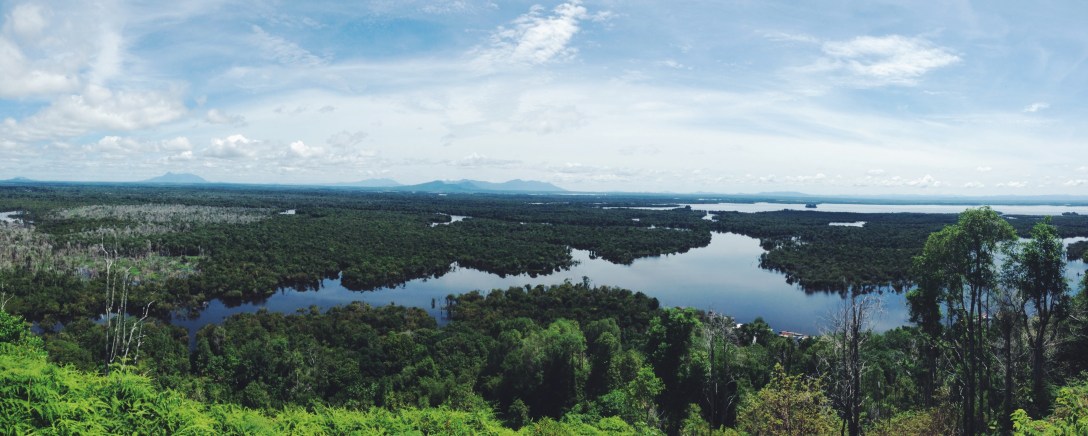
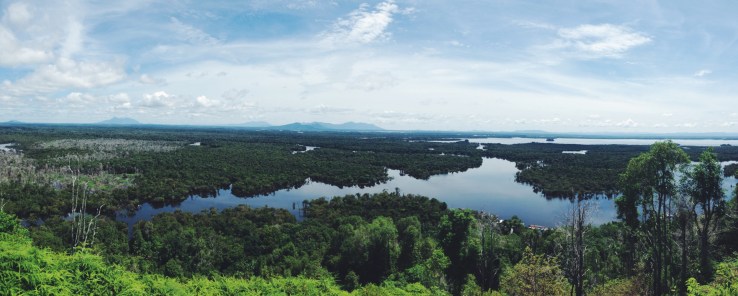
the beautiful Kapuas River, flirting beneath us through the forests on her sides, reaching out to the horizon marked by tall mountains in a distance. You might think that I’m being ludicrous, but that view literally held my breath for several seconds. It was on KD-945, the flight that took us from Pontianak to Putussibau, that I fell in love again—not with the book, not with the abandoned dessert, but with the ‘blue and green’-ness of pristine nature.

Processed with VSCOcam with f2 preset

To give you a little context: several months ago, the think-tank I work for sent me to Kapuas Hulu, a small kabupaten up in the northern part of Kalimantan. It is also home to some of Indonesia’s oldest indigenous groups and part to the conserved Heart of Borneo area.
Prior to my departure, Ariana warned me that this five-day trip might be one of those life-changing experiences people write about when they get back home, and darn I couldn’t say that she wasn’t right.

1. “Sebelum Memberi Minum Diri Sendiri, Manusia Harus Memberi Minum Tanah”

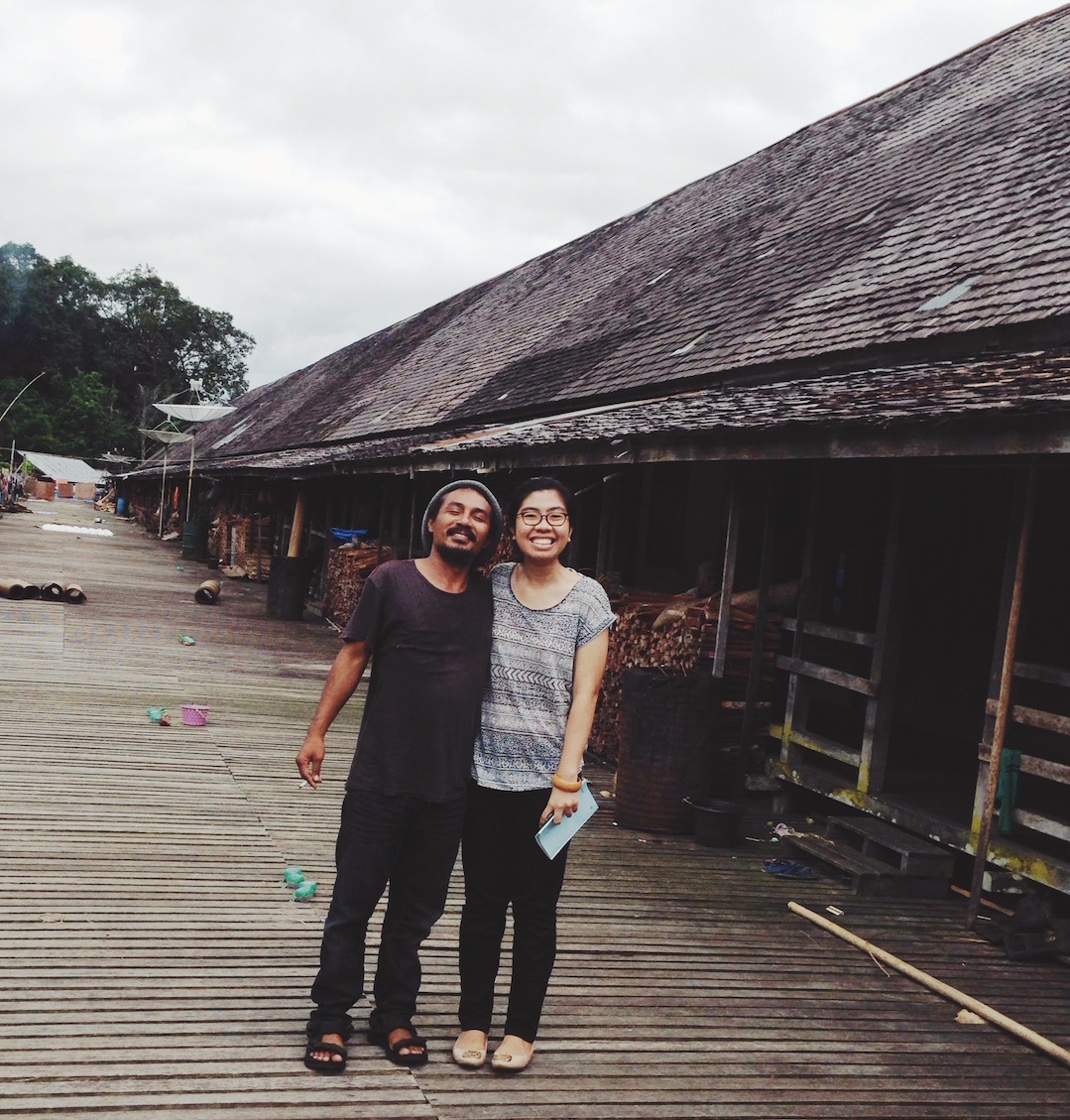
Our first stop was a rumah panjang in Desa Sungai Utik. As the name suggests, it was an extraordinarily long house with over 25 families living under the same roof (!), and we were lucky to have been hosted by Lawa’s old friend. Oh and just like a neighborhood in itself, each rumah panjang has its own tuai rumah (master of the house), who makes all kinds of important decisions.

Excited about the new scene that I entered to, I didn’t even mind tasting a small cube of of daging babi hutan (yes, boring city people, actual wild boar meat) that they served—which tasted really, really good.

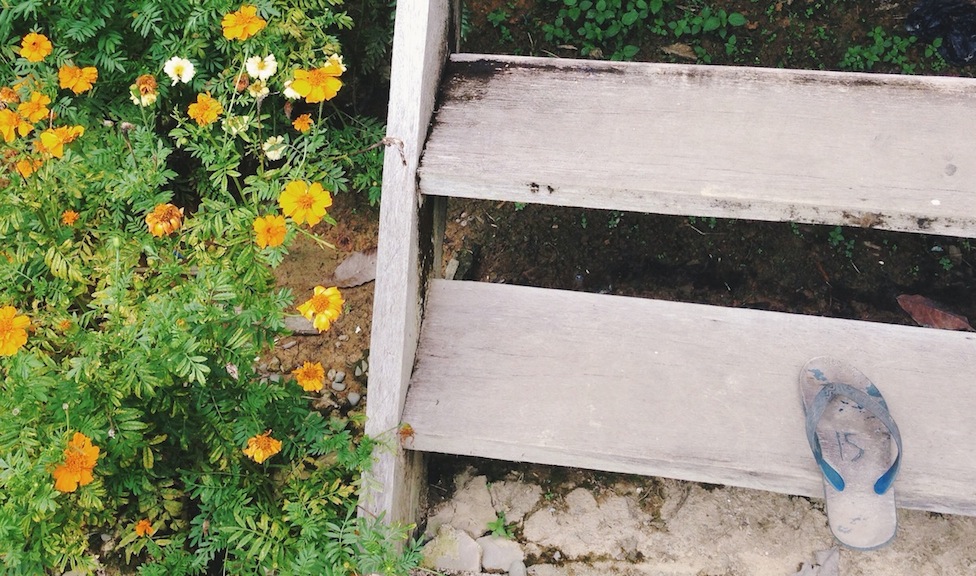
Here’s the punchline: when the arak (some kind of traditional fermented drink) was brought in, everybody poured a few drops into their glasses and, without anyone’s instruction, stood up in front of the window together. Confused, I asked, “Should I feel weird for not knowing what to do?” I remembered Lawa laughed and said, “Oh don’t worry. Just copy what we did.” And when I lined up with them with a filled glass in my hand, they all flushed the liquid out the window to the ground.

“Why would we waste that arak?” I stupidly asked. “Because, honey, before feeding themselves, humans need to feed the earth first.”

After that, I promised myself to share this story every time I have the opportunity to, until it gets dull of being overused.

Processed with VSCOcam with f3 preset

2. You Don’t Have to Travel the World, Just to These Two Places

The whole, “Those who don’t travel only read one page,” quote was a complete scam.

First of all, traveling (especially by plane) means producing carbon footprint (i.e. what puts holes on our ozone layer, causing climate change). Flying back and forth to and from Jakarta-Paris, for instance, emits more CO2 than driving for one full year, let alone all the connecting routes that you take in between.

Don’t get me wrong: I’m not saying we shouldn’t travel, I’m saying the middle-class society who could afford it should travel more responsibly.

This journey then helped me realize that you don’t have to travel anywhere else but two places: one where you could wonder over what human hands are capable of building, and one where you could amaze yourself of what God hands have created.

Possible combinations would be: Istanbul and Raja Ampat, or Washington D.C. and the Maldives. While the former would inspire us to move civilizations forward after seeing what our ancestors have left us with, the latter would humble us down, truly accepting how mankind is nothing but a species that is part of the universe’s grand scheme. Only then we could fathom that that there is a balance we need to maintain.

3. They Were Right When They Told You to Get Lost to Find Yourself Again

Passed the thrilled phase, comes the post-peak consciousness: as much as I was enjoying my time there, I missed home big time.

Yes, the people were awesome, the food was delicious, and the trees offered me a nice, new sight, but deep down I knew I didn’t belong there. My days in Badau were good, but they went by undeniably slowly. It’s almost like the clock worked at a different speed system out there. I got used to it eventually, but the voice inside my head kept asking me to go home.

As an introvert, though, I greatly appreciated the ultra-rare silence that I found for the first time (literally not even a small sound for a long time until someone starts talking)—oftentimes accompanied by singing birds or crickets. It would be a heartfelt pleasure get myself in such a peaceful atmosphere again.

But then I arrived at the conclusion that each of our brains has its natural habitat—the exact same way animals have theirs. My brain, it turned out, was a city kind. She finds it natural to encounter problem and solve them on a daily basis, to work on a fast pace, to swim through the rushing roads, and to interact with many different names and faces at the same time.

Processed with VSCOcam with f1 preset

You see the funny thing about this whole set up: I love all the new lessons and discoveries that I gained there, but not as much as I love writing about them.

P. S. The title of this post was one of the songs on my “On the Road” playlist, and you could listen to it here.

The Arcane Truth Behind Growing Up (a.k.a. How Parents Nag Differently When You’re an Adult)

Among the 8.7 million living species on earth today, I think homo sapiens still tops the planet-wide rank for the most complex inter-species relations. First of: we have a confusing system of social interactions—first there are strangers to judge, then you have acquaintances for cheap talks, friends to hang out with, parents to respect, spouses to love, kids to take care, and the list goes on. But what adds complication to that already-intricate web of agents and structures is this: the time dimension. You see, ladies and gentlemen: as humans grow up, the nature of these associations also shift, pushing us to adjust and eventually win (again) in the standing of ‘the most adaptive species’.

Now let’s take a closer look at one of the most understudied human bonds around us: that between mother/father and their daughters/sons.

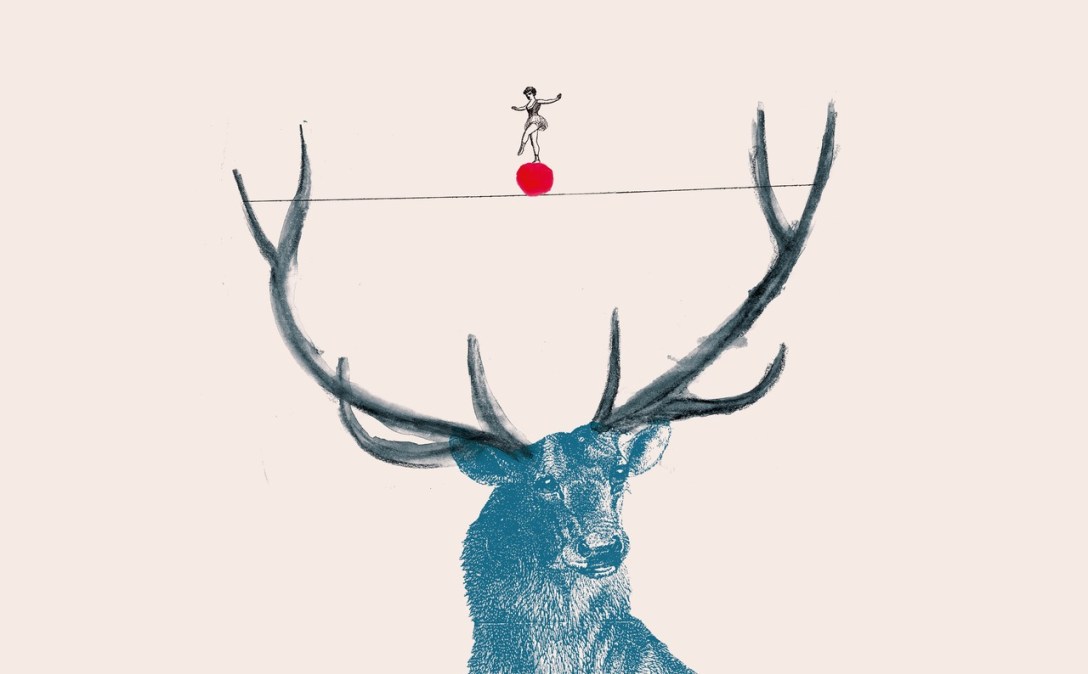
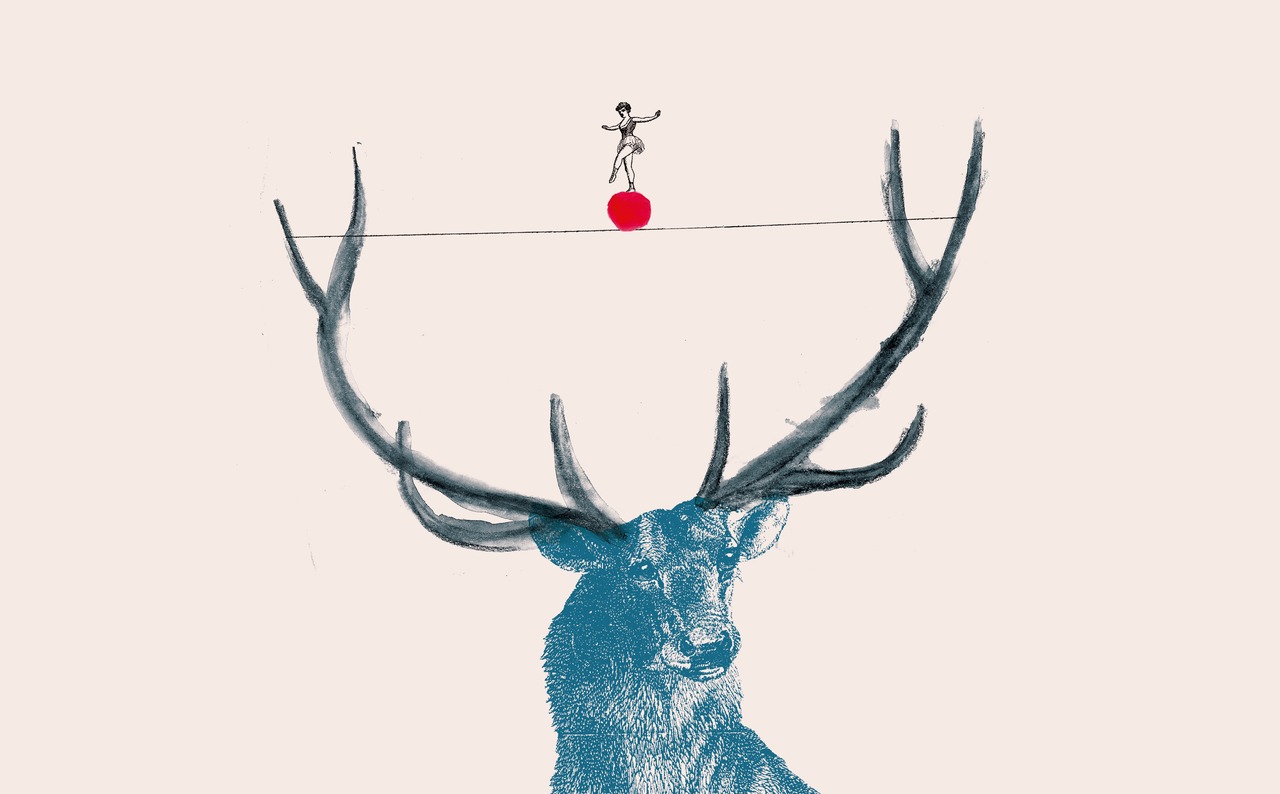
Baby-Deer

For most species in kingdom animalia, parenthood is not a permanent state—as soon as their offsprings turn into their ‘adult’ phase, parents ‘abandon’ their kids into feeding, and defending themselves from predator attacks. For us human beings, however, (expectedly) the story is a little bit more complicated than that. Parents don’t just ‘leave’ us in the woods to build our own nest and magically survive—instead, they:

(Disclaimer: I might be over-generalizing since the only sample of ‘parents’ I use here is my own—but who knows, you might be able to relate somehow.)

1. Take Our Opinions Into Account

For almost two decades, my parents had made most of my decisions for me. They picked the town where I was born in (Cianjur), my first schools, the books I could read (thankfully Harry Potter was one of themdespite our economic limitations), and others. During these early days, the things I said didn’t really matter. One time I told father I wanted to take my bachelor degree abroad (I even passed the test and got a scholarship offer already) but he said no, and I trusted his judgment.

In fact, I used to trust all of my parents’ judgment. For most kids, this is also the case: parents are the first humans they look up to, whose sayings and deeds are stored properly in their memory as a life guide (at least temporarily), and later affect their personality as their own identity shapes up.

Later as we age, however, each of usespecially those with access to better education—typically realizes that our parents could be wrong, too. We suddenly see that they are ordinary humans, and that sometimes we know better.

This new epiphany might yield in two different possibilities:

  1. some people get downright disappointed—they fail to accept such huge shift of perspective and they end up—in a way or another—taking distance from their parents;
  2. some others take the wiser road and respond better—they seek to reestablish the old subordinate-superordinate structural bond with that of two equal friends.

In the cases where the latter succeed to bring their parents to the same understanding, this is what usually happens: more substantial discussions over dinner, and more life decisions are now made together. They start to see you as an equal, and your opinions now count.

2. Stop Being the Person You Look Up To

Although some people manage to deal well with the awareness that apparently their parents are not saints who are always kind or teachers who are always right, most of them still have to undergo that painful phase of settling down.

There are, of course, certain qualities that we will always associate with our fathers and mothers: we would never get over the fact that they spend most of their life taking care of us, sacrificing things we could not imagine, and how they would be the first people crying if something bad happens to us. It does not mean, however, that they have to remain the very individuals we look up to for guidance.

As soon as you get to that point, remember to forgive yourself:
remind him/her that it is completely natural and okay to let them off the chart. We both know that they have their own special shelf in our mind—one that is exclusive for the very people who let us be who we are today.

3. Rely on You for Certain Things

My favorite part of growing up, though, is how I get to take the ‘parent’ role every once in a while. It feels awesome partly because I get to help the very individuals whose help I always rely on for so long, and partly because I just enjoy having control over other human beings. HAHAHA. (Kidding. Or not.)

Anyway, I see the switch in parent-child relationship as a beautiful irony: we are, at the end of the day, made for one another—at first we were born to make their days and them to take care of us. Later as adults, we get to take care of them and they will be there to make our days. I would say that one of the luckiest people are those who have enough time to be the parent to their parents—it is indeed a privilege out of which we should make the most of.

4. Still Want the Best for You

On top of that, my friend, pray know that they will forever want the best things to happen to you. Yes, they now have bigger expectations and often-time these requests could be bothersome (like how Indonesian parents ask “When are you getting married?” instead of the more relevant questions like “Are you happy?”), but real parents would not push you off the cliff for their own sake.

All and all, growing up is a bizarre thing. I told you once that we are physically still the same person—seeing with the same eyes and talking with the same mouth—but inside, we are almost a different person every day. But this strange process also hides a fulfilling answer to some of life’s mysteries: it reveals the dynamics to which parents and children interact not only in a linear fashion (that we would later have children of our own), but also a cyclical one, where we will eventually play the role of ‘parents’ to our own parents.

It is a very simple and yet wonderful concept, don’t you think?

Because the Freedom to Think Is What Makes a Human Human

(More boringly known as: “A Personal Musing on Who Should Be
Indonesia’s Next President”.)

As the old car we rented passed by a local school in Putussibau yesterday, my mind wandered back to the time I was still an elementary student. Compared to how ‘she’ works today (yes, my brain is a female), I was a very different girl back then. For starters, I never really questioned regulations, I enjoyed abiding them, and being critical was not really a concept I could grasp. Growing up is funny, you see: we are physically still the same person—seeing with the same eyes and talking with the same mouth—but inside, we are almost a different person every day. I could vividly imagine myself from five, ten years ago in loud disagreement with the present me.

Anyway, there are some fragments of memory I would like to share about being in a white-and-red uniform in the last two years of New Order era (and four more during the early Reformation period).

I remembered wearing my favorite hairband (which was pink); I remembered the great sensation of knowing that you could add and subtract numbers (I mean how awesome is that); and I remembered impatiently waiting to learn new things every morning. But on top of them all: I remembered being introduced to rules. I remembered recognizing ‘right’ from ‘wrong’.

Parlemen Muda-6571

They say kids are like sponges: they absorb knowledge very quickly, and they memorize what their parents say on the fly. This, I now understand, is the basic idea that Soeharto’s regime utilized to control the way young Indonesians behaved—through feeding us doctrines of what is okay and not okay via education.

Being under the authorities’ influence, my brain automatically created a simple binary system that registered deeds into ‘GOOD’ and ‘NO GOOD’ shelves. Submitting homework on time, for example, is an absolute ‘GOOD’. Not wearing the red cap on Mondays is ‘NO GOOD’, just like being late is. The flag should not touch the floor (now I find this idea very ridiculous) and the teacher is always right.

This library of information continued storing data as I grow up (adding things like ‘drinking alcohol’ to the ‘NO GOOD’ list as well as ‘being extremely active in extracurricular activities’ to the ‘GOOD’ list—not sure where I got that from LOL).
And it evolved to the extent I hated the Communist Party with all my heart. Our history books were pre-cooked with judgments, you see, it was written in a way that made us hate certain actors (including the Dutch and Japanese—the ‘penjajah’) while overselling the patriotism of our military force.

This over-controlled sphere of opinion-producing and significant absence of space for debates and criticism (linear curriculum with multiple choice tests FTW—NOT) turned most Indonesians (including yours truly at that time) into self-righteous, narrow-minded, judgmental pricks.

Today, more than a decade later, I know better.
I know that there is no such thing as an absolute right and absolute wrong.

I would tell myself from 17 years ago that sometimes not submitting homework on time is good when you have to take care of your mother, and I would break the news to my teenage self that people have life priorities, she would have to accept that. You see, my stupid young self: 1) laws were made by human—even the ones God created are interpreted by people with flaws, 2) we could criticize and challenge any of them when it’s not working, and 3) we could also create one of our own.

My college friends call this epiphany as being ‘liberated’—I call it a blessing. It’s a blessing to be fully aware that we are allowed to think; that we could question any tradition, we are encouraged to doubt the regulars, and we are free to investigate fallacies. Most fundamentally, I appreciate the rewarding pleasure of being able to disagree and produce our own, independent thoughts. (Read 1984/Anthem/A Brave New World for more of this.)

Having gone this far, of course, I would not allow the slightest possibility of having an authoritarian regime that will limit our newly-acquired freedom to think (let alone of speech) again. I won’t give a room for a new New Order.

Now this consciousness development relates a lot to whom I’m voting for on July 9th.

If you’ve been reading my tweets lately, you would’ve guessed already that I’m rooting for Jokowi. Well I am, you see, but unlike the people with half-red avatars who’ve been actively supporting the incumbent governor of Jakarta, my initial reasoning process is very straightforward. I simply don’t want to be governed by people who haven’t undergone the same mind-opening process, who think that democracy is merely a means, that freedom of speech is secondary in comparison to access to welfare.

I would rather avoid having a self-righteous president who are subsequently backed by a group of narrow-minded politicians in his cabinet.

The evidence of this allegation toward Prabowo is all over the place:

#1 Whenever asked about his human rights record, Prabowo always passes the ball to his military bosses (‘tanya atasan saya’). This signals two things: 1) he could not see the underlying problem of this ‘order’ from the first place (needs some text book to grasp the concept of human rights, perhaps?) such that he wasn’t able to feel guilty or at all apologetic to concerned families, 2) he still thinks like a soldier, because certainly a leader would be brave enough to take a bullet and volunteer to go to the court and let the bar decides.

#2 ‘Self-righteous’ is the second adjective that came into my mind to label the parties and organizations supporting him, after—of course—’hypocritical’. I mean, how else would you call PKS (meat corruption), PPP (Surya Dharma Ali case), Ical (and his unfinished Lapindo business), as well as PAN (Amien’s inconsistent statement). Not to mention FPI, FPR, and Pemuda Pancasila boys who are far from valuing human beings, let alone our rights to everything else.

#3 His party specifically mentioned about ‘membuat jera agama yang menyimpang, which is practically rising a big fat board with ‘I AM VERY NARROW-MINDED’ in capital letters on it. I could really go on with this, but there isn’t really much point in doing so.

But again, if my problem is with Prabowo, why bother voting for Jokowi at all? Why don’t I just, let’s say, go Golput?

Well honestly, I had my hesitations (cherishing the freedom to think, remember?), but then I talked to a number of people, read several articles, and eventually arrived to the conclusion that Jokowi deserves my vote. Just to make it an apple-to-apple comparison: Jokowi does value open-mindedness, and this is reflected from how Solo and the first several years of Jakarta performed under his wings. Instead of going with the conventional methods of running things, he made notable breakthroughs here and there. Innovation as well as the ability to think beyond what has been done for years.

Now because we all attach importance to the freedom to think, I would not try to convince those who doubt Jokowi’s control over Megawati’s hidden intentions. However, so far he has demonstrated:

#1 Merit, merit, merit—I’ve been telling people how I am all for meritocracy.
Jokowi is the only presidential candidate with almost 10 years of experience (and proven achievements) leading different governmental levels, and there goes my first checklist. If there’s anything you should doubt, it’s the ability of a fired military personnel to run a cross-level and cross-sectoral ministries that sometimes need out-of-the-box debottlenecking measures.

#2 He is surrounded by open-minded people—Anies Baswedan is more than enough to prove this point. This also means that the people around him does not seek for power (they are smart enough to know that ministerial positions are non-negotiable). On top of this, his work has also inspired his own party and its chairlady to actually be open-minded enough to allow someone from outside the party’s leadership to run as president.

#3 He has a lot more to offer and a lot less moral baggages to deal with—despite having Jusuf Kalla as his running mate (the man who introduced Ujian Nasional), Jokowi actually promised to erase the national examination for good if he gets elected. This is a very bold offer, of course, and at the same time also shows his ability to negotiate and compromise with Kalla. At the same time, despite generic, he also has many ideas to bring to the table in his white book (although debatably this was prepared by his team, which presidential candidate doesn’t?).

Because to me, the freedom to think is what makes a human human. Because the freedom to think is the start of every great civilization in the world. In this light, I will vote for Jokowi because I believe he would do everything he could to protect our freedom to think—to disagree, and to criticize the government. He would work for us, and that’s enough.

[Btw, this probably isn’t the first article you’re reading on June’s heated presidential race, and certainly isn’t the best either. I call it a ‘musing’ because clearly it’s circling around without making any sharp point, and ‘personal’ because d’oh.

Thanks for making it this far, though.]