2025: The Year of Great Expectations

For some inexplicable cosmic reason, I’ve been looking forward to the year 2025 for as long as I could remember. Perhaps because 25 was supposed to be my lucky number. To my utter dismay, it most certainly had not been my year (or anyone’s, for that matter). Throughout the seasons, I found myself angry, hurt, and lost, trying to find my way back to sanity and safety—in between, thankfully, I managed to hold on to softer moments of joy and calm.

Indeed, it has been said that 2025 was a year of ‘shedding’, marking a major ending as a collective “Year 9” that completes the ‘cycle’. While it does explain a lot of things, it does not quite fit how the year—at its core—felt for me.

As I thought hard, one theme that did resonate was “baptism by fire” (baptême du feu), how an old friend labeled what happened to me in late Q3. In the biblical sense, it refers to the ‘transformative ordeal that builds strength or faith through intense trials, often involving judgement or a new level of spiritual presence‘. It is possible, after all, that the universe was on a mission to systematically (and generously at that) initiate me into roles that I perhaps had not embraced as fully before, roles that came with expectations I had been avoiding, wishfully thinking I would just figure it out on the go.

[Note: this *is* a (deeply) personal post, meaning I am zooming in on myself and writing from where I sit with all the privileges that I have, being fully aware and with deep empathy to how the year has been probably much worse for many people out there: the detained activists/political prisoners, Sumatran flood refugees, and beyond. I have no intentions to undermine or take the spotlight away from these bigger, much more systematic issues. Read on if you’re okay with that.]

I. That of a wife.

We often think of marriage as an object we desire. Something to have, a mental space to enter (some mixed it up with a ‘wedding’). But I wonder if people (women and men) consider about the ‘role’ of someone’s spouse a.k.a. their life partner—of what it looks like on a daily basis, how and whether you allow that identity to transform and occupy your cognitive space and time differently.

Our first year of marriage (2024) felt a lot like a ‘transitionary’ phase: I sold my apartment and moved in to Ara’s bachelor pad, while looking and preparing for a physical space we could start building a life together in. Ara wasn’t a ‘husband’ per se, as I wasn’t quite a ‘wife’. We did not quite have an ajeg circadian rhythm yet, mostly ebbing and flowing as the river goes, having non-stop exciting days.

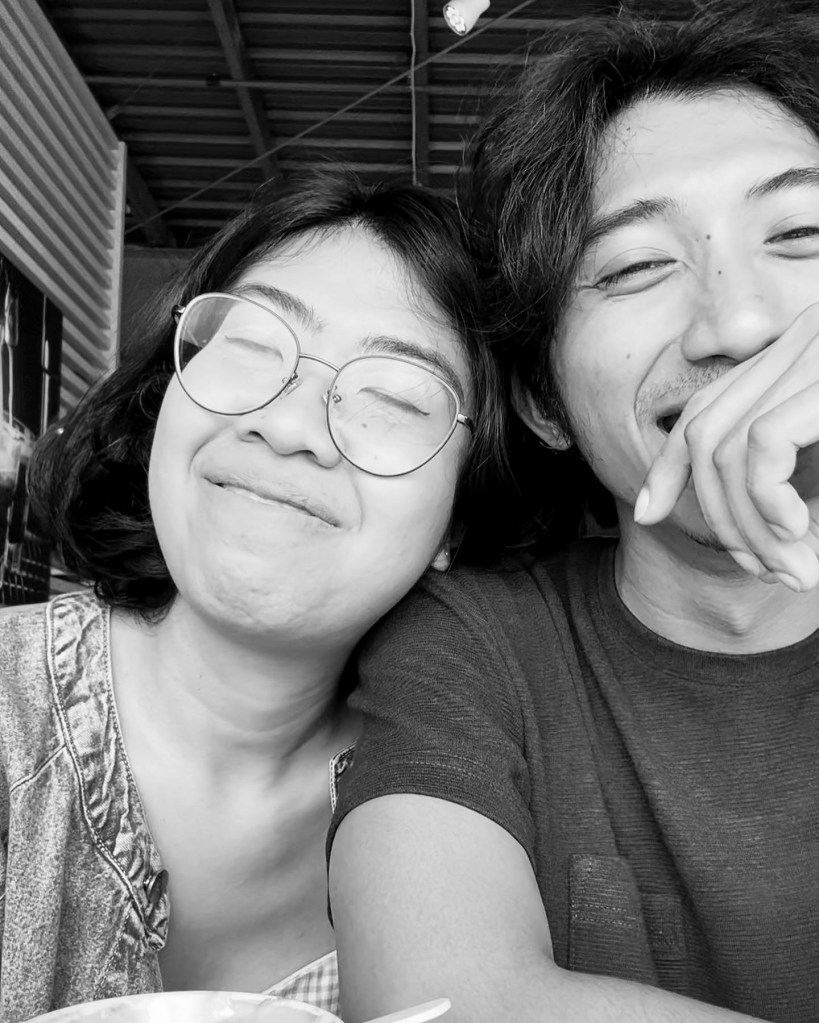
Since March 2025 however, as we finally moved in to our new home, we have started developing habits, rituals, and with that, adjustments to what we expect from each other as we build our little pack. Beyond our default compatibilities, this year was about bending ourselves to fit into each other’s tempo, harmonizing priorities, and mindfully choosing each other again and again.

After two years of marriage now, I realize that while being someone’s spouse means feeling fully accepted for who we are, it also paradoxically means being held accountable to a standard they know you’re capable of achieving. It sometimes involves disappointing the person you love the most in the world, and having the motivation to try and be a better spouse for them every single day.

Still can’t believe how lucky I am to have Ara to take on this role with.

II. Putting the ‘co-‘ in ‘co-founder’.

“You know Afu, being a co-founder is as intimate as being someone’s spouse. You share all your thoughts and go to work with them, making small and big decisions together every single day.” My leadership coach reminded me earlier this year.

I had to be honest with him that I never thought about it that way. While I put in the work to find the right romantic partner and developed a shared framework for everything with Ara, I might have had put my co-foundership in auto pilot mode. For the longest time, in my mind, it is simply about finding someone who share your vision and values. I mean, isn’t that alone a difficult enough task?

This year taught me about the importance of aligning expectations with your co-founders early, mastering the skill of two-way communication, all while maintaining your shared passion throughout the journey. In a way, every married co-founder quite literally have two partners.

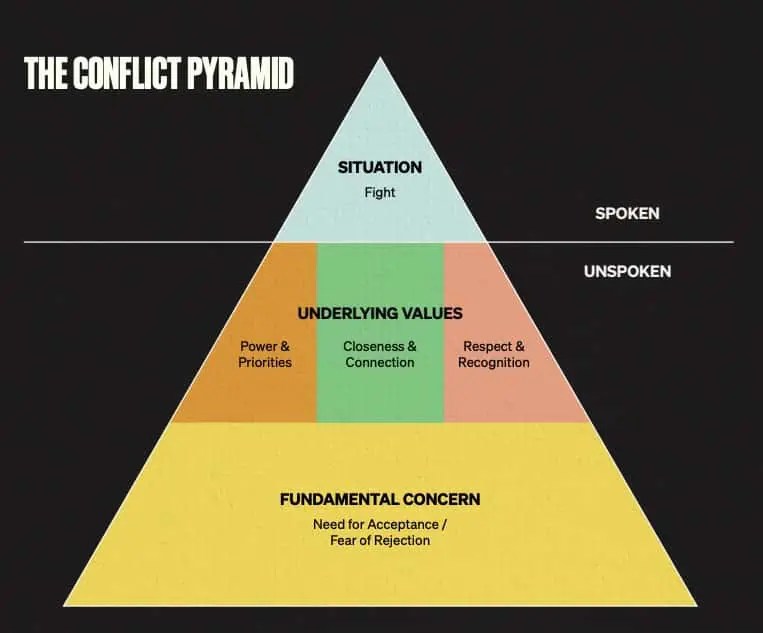
If you’re a co-founder too, you might find Ester Perel’s ‘erotic intelligence’ framework quite helpful—in every conflict, she said, there are three main ‘unspoken needs’ that, when unmet, may lead to divorces—or co-founder separation for that matter: (1) power/priorities (whether they have a sense of control and autonomy), (2) closeness/connection (sense of care between the two of you), and (3) respect/recognition (noticing and appreciating their contribution).

It was one of the biggest aha moments in 2025 for yours truly as it explains a lot.
III. Having a voice.

But of course the biggest flood of expectations came in late August, when we started the 17+8 campaign. It began, quite innocently, with a personal post, a few private messages, and a WhatsApp call—an intention to help spread awareness, to make sense of the escalating chaos that was happening.

Contrary to what’s convenient to believe, there’s no way that we—that I could’ve seen was coming our way.

Today, in hindsight, it only makes sense: in a country where most people can barely afford speaking up (due to political and economic consequences), the fact that we were protected enough to have a voice, to exercise our agency, means we carry with us hopes (and with that, frustration and anger) of those who don’t.

I wish I could see and build the muscle to carry them much earlier, to have the audacity to stand up to my own values, and the fluency to articulate them better. Instead, it was a whole month of snowballing misunderstandings and (what ended up as) personal attacks. I selfishly took my time to retreat and disappear; I knew I wouldn’t have survived otherwise.

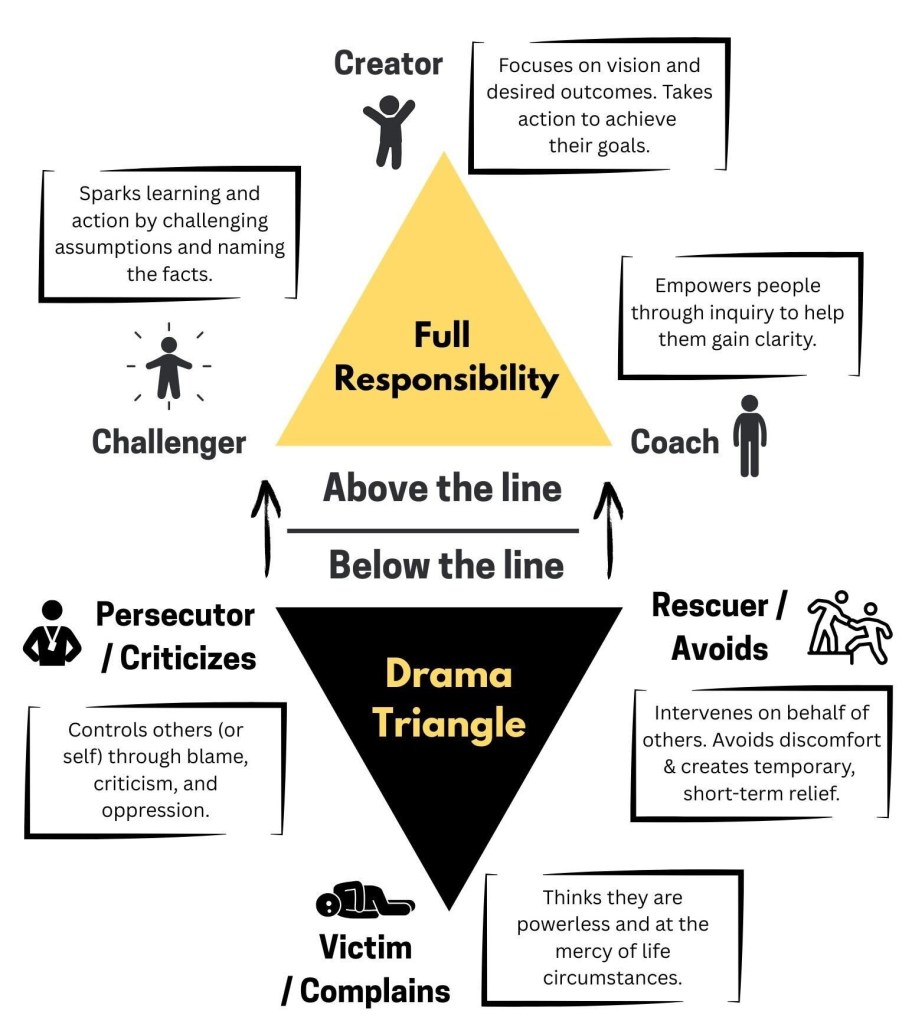
It was much later when I realized that I was stuck in the ‘drama triangle’—I felt deeply powerless as the ‘victim’ in this whole process, struggling and bargaining with a ‘persecutor’ who keeps demanding things from me, things I was not ready to provide. It was during a ‘leadership session’ at the LSE 100x that I realized only I could flip the switch and be a ‘creator’ in a world I want to see.

It was amazing how a little shift in mindset changed how I operate in the most meaningful way.
IV. Finally, hosting friends.

When Ara and I decided on getting our house, one of our main criteria was that it should be a communal space for our family, friends, and work teams to convene. Between being the first sibling and a CEO in our respective companies, we have natural tendencies to convene people (well I do, Ara prefers to hole up in his own room haha).

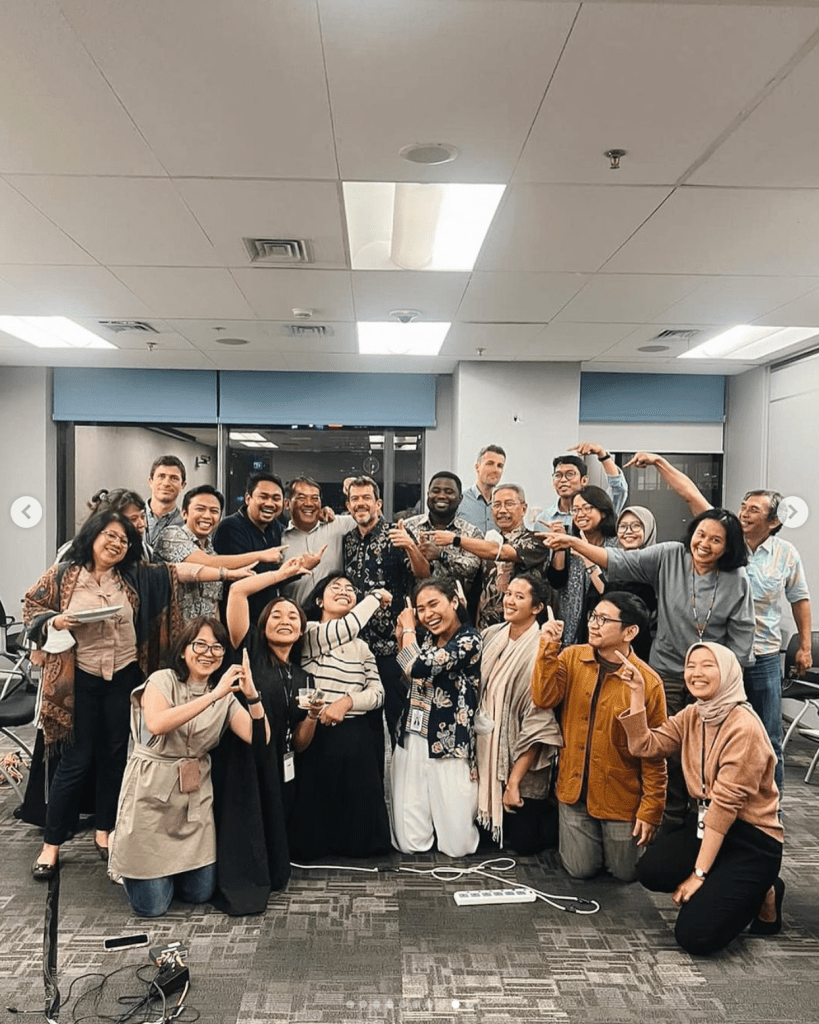
This year, we are proud to report that we have hosted at least a dozen or two of get togethers—with some highlights being our Halloween party, #Hamilten singalong, pre-New Year with family, and the initial housewarming. Each time, I am glad to learn something new about our guests, to see them interact with one another, and just a general sense of maintained camaraderie over the years.

In a weird way, I think I like (prefer) hosting—as opposed to going out—because it allows me to hang out with my friends in the lowest key possible: being at home means we could just sit in silence, or take turns in talking (I can just watch my friends talk to one another), eat at our own time, finding random activities, all the while having the safety of not meeting strangers.

One thing I have been struggling with, however, is what it means to have accumulated wealth—in the form of property, for example—as a couple of entrepreneurs/professionals with no kids. Have we been participating in worsening inequality? How could I redefine ‘enough’ for us as a family unit, something that has been such a core value for me growing up? What kind of world allows us to mobilize up while people lose their jobs and barely making the ends meet?

These are all questions I hope to answer in 2026.

***

On the last night of 2025, as Ara was sharing things he was grateful about, I realized that I, too, had an abundance of things I deeply, deeply feel undeserving of: Actual human beings who for some reason decided to love and support me (including in some of the ugliest period of my life), great times and laughters with friends, how amazing of a puppy Penny/Pepen has been (!), a whole team of capable young minds who has the audacity to take on the adventure of risky experiments with me, being able to hang out with our parents and siblings regularly, and—most important of all—our health.

I started 2026 ugly-crying in our bed, feeling an overflowing sense of gratitude throughout my entire body, thinking of those still struggling in Sumatra and other parts of the planet, wishing that all the other beings on Earth could also feel this sense of ‘happiness in your stomach’.

Happy new year, friends.
2024: Unlearning My Saboteurs

In the 18 years I spent sitting in classrooms, I have learned so much about the world, but barely anything about myself. If you think about it, it is quite mad that we do not budget time in our formal education to at least be given the map to better understand this blob of ‘self’ in our heads, making small and big decisions every single day.

When this ‘self-awareness instruction manual’ was finally given to me through a leadership course in grad school, it completely altered how I operate in life. In fact, it felt as though I had been walking around with a blindfold for a while. I could see oh so clearly now!

And of course once I did, I simply couldn’t, wouldn’t stop. I got thirsty with understanding myself more, obsessed about sharing its importance and available toolbox with as many people as possible. I developed it into a whole bootcamp, and eventually wrote a book about it.

This flame then took the backseat in 2023 because Indonesia’s democracy happened, but the universe knew I haven’t finished my lesson because it made 2024 all about self-awareness.

First off, what are ‘saboteurs’?

In January 2024, I met a ‘founders therapist’ who made me (re)take the saboteur test (it’s free). I actually heard about it a couple of years before, but didn’t think too much about it until then.

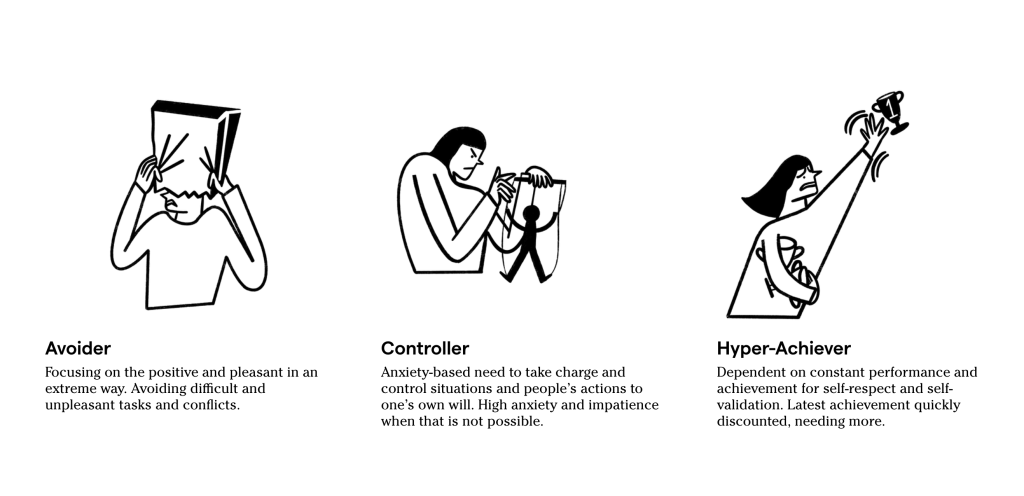
Simply put, ‘saboteurs’ are automatic patterns in our minds that—especially when unattended—will take over and determine how we think, feel, and respond. They are named such because they will affect our performance, wellbeing, and relationships, possibly a manifestation of real people’s voices in our head—a mentor, parents (or parentified individual), partners, friends, or society in general.

Now they are not all bad. Sometimes, saboteurs could serve us, too. For example, my saboteurs (more below) have helped me avoid common mistakes or inefficiencies, innovate, and develop strategies to anticipate when things go wrong. When out of control, however, that’s when they stab you in the back.

The first step to conquering them, hence, is getting to know them—and I mean really understanding them. Once there, you can deconstruct the false beliefs underneath. To begin with, here’s the unabridged list of possible saboteurs (source: PositiveIntelligence.com):

Now I will be sharing the saboteurs I have been struggling with—not because I have overcome them all, but in the hope that they would somehow be helpful for you, too.

Saboteur #1: Stickler (and maybe Hyper-Achiever)

I’m not gonna lie: Bijak Memilih gave me, gave all of us quite the high. Not sure how, but we were cautious but fearless, driven by conviction, and most importantly, could authentically be ourselves. We focused on the goal, didn’t quite mind what others were saying about the experiment, and kept adapting as we went. We created something that actually helped people, discovered the right kind of community who supported the movement, and blessed with a genuine friendship while we’re at it.

It was amazing. I will always look back at the experience with fondness.

Only later I realized that it was possibly my stickler-slash-hyper-achiever Saboteur that did not take a sufficient amount of time to bask in this milestone, to properly appreciate both myself and everyone involved, to instead go on directly to the different ways that it was not perfect. Who was so impatient to start planning again for what’s next, to set up the right governance, without being sensitive and considerate enough to celebrate and understand the underlying predicaments at the time. And when the transition didn’t go as planned, I then went and blamed myself for ‘not knowing better’.

This was, expectedly, not my first rodeo. Getting into my dream master’s program, building a company from the ground up, publishing a book—they felt like a checklist that was supposed to happen, and became ‘normal’ within a short period. I generally have a hard time feeling grateful after some time, not realizing that it was not an easy feat and is a massive, unattainable privilege for many.

The false belief or hidden fear: That I am, if not for all my achievements, not good enough :) That if I don’t do this or fail, then I’m a nobody. I have since been trying to unlearn this and trying to focus on other sides of Afu—one who’s trying to be healthier, who is a partner/daughter/friend—anything not tied to an output or productivity. Am still far from being where I should be, but hey.

Saboteur #2: Hyper-Vigilant

I spent a few long nights in 2024 considering the worst-case scenario: a flood of what ifs, some turned into reality, but mostly did not. They were mostly related to work (involving external actors), though rarely they also intertwined with the personal.

A while ago my husband sent me a link that could potentially be (a tad bit misogynistic, but otherwise) quite helpful in describing the way that women are statistically more likely to be anxious. The guy in the video was saying that, essentially, we have this ability (tendency?) to connect one thought to another, creating chains of possibilities that may or may not happen. Men, on the contrary, has this ‘nothing box’ where they could just stay in for a while and think about, well, nothing. This is at least true in the case of my husband and I.

While my husband and I are both firstborns, our genders make a world of difference in how we’ve experienced life. Perhaps combined with childhood upbringings, I could not find a person more calm and steady as him. We are both great problem solvers, but I usually do so after worrying a lot (haha), while his heartbeat remains steady. I am fortunately great during crisis however, having gone through the scenario in my head a few times. We are quite the pair.

The false belief or hidden fear: The high standard of ‘success’ I put on myself pushed me to be “on guard” as a default against threats, both real and perceived. I may have a higher emotional reaction to potential failure or criticisms—especially when I know they are not true. It may also comes from societal expectations I may (intentionally or unintentionally) internalize and shoulder. You know what they say, “If you worry and it happens you worry twice.”

Saboteur #3: Hyper-Rational

Among others, this Saboteur is one I’m still in denial about haha. Since I generally feel good about understanding things, I enjoy finding theories that help me navigate my emotions. It was the reason why I enjoyed going to therapy, and reading books about it.

Only later I realized that this might simply mean that I was hyper-rationalizing the hell out of it.

This may explain why my friends only (tend to) come to me when they’re already in problem solving mode, or why I jump directly to frameworks when processing my own emotions. Apparently, the healthy thing to do is to just experience it instead, at least for a bit.

The worry is that I hadn’t been able to connect emotionally with most people, that I hadn’t been able to hold space when others were being vulnerable, and therefore not being a very good listener for them. But maybe that is a role I need or could take in life? (Friends diversification, anyone?)

The false belief or hidden fear: Intellectual overcompensation—I might have been using my intellect to shield myself from being vulnerable or internal fears of inadequacy. Having grown up in environments where I’m dubbed as ‘the smart one’, I feel a similar need to be this way among my family, partner, or friends. Again, I’m not yet sure where I’m headed with this one for now…

In conclusion

Rumi said it best:“Yesterday I was clever, so I wanted to change the world. Today I am wise, so I am changing myself.” Last year was full of ‘cleansing’: of people, emotions, and approaches that no longer served me. It was also a year of targeted muscle growth: pain in specific areas (mostly professional) so I can grow stronger there. (Which a friend of mine would argue I could now afford because I have a stable and fulfilling relationship at home.)

I don’t believe in many things, but I genuinely believe that we can solve half of the world’s problems had more people had self-awareness, albeit knowing your Saboteurs barely scratches the full extent of it.

Thank you for being a part of my 2024. Here’s to a more peaceful and anchored 2025.

P. S. Can’t believe I have been doing this annual reflection 14 times already. Talk about consistency, eh? (This might be my hyper-achieving Saboteur talking.)

2023: A Year of Decisions

When I said I wanted to ‘take charge of my own fate‘, I did not expect the universe to shove multiple life-altering decisions to my face—all packed in a single year. Consequently, 2023 became both the year I learned to take my time and the year when time betrayed me, disappearing at the speed of light (that’s 300 thousand meters per second). As soon as I hit a milestone, I was forced to immediately move on to the next one; with barely any space to look back and appreciate it or simply catch a breath—not in the following order, that is:

Decision #1: To Finally Take that Leap at Work

I finally mustered the courage to leave the world of (traditional) policy research and embraced being an entrepreneur.

It happened in waves and over time, until one fateful afternoon, Ara was in his ‘coaching’ mode and helped me think through what really mattered in a job for me. It had always been in my head, but writing it down into a “career trade-off table” made it clear that:

  1. I needed work that consistently challenged me and let me learn something new. This is the reason why I typically delight the first couple of years on a new job, which then plateaued and maxed out in year five. It’s a bonus to report to or work with someone smarter (maybe because I basically just want to be at school permanently except I need one that pays haha).
  2. Having autonomy—to prioritize, to explore intellectually and otherwise—is non-negotiable. Perhaps because I am an academic at heart, I simply cannot be in a job where I am deprived of having a voice or have to blatantly hide the truth (I therefore would make a lousy politician).
  3. Optimizing my marginal utility or value added is also important to me. I would ask, for example, if I put one day’s worth of work into this vs. the other job, which one would create more impact? In addition, am I the best person to do this in this organization, or should I be replaced by someone else?
  4. Ideally, I would have power over the outcome. Can I influence any delta (change) in a statistically significant way if I stay in this institution? Or has it taken a business-as-usual course with or without me?
  5. That said, I still require financial stability to support my family. So I would not blindly take risks, I need to properly plan for the transition and make sure that I can keep paying my bills. But it was on me to define what is ‘enough’ vs. a luxury trap filled with things that are nice to have but I can live without.

Even after it was clear that the World Bank stopped fulfilling the above for me, I still had doubts. Indeed, the institution that once provided me with a magnificent intellectual safe haven had turned into this comfort zone that got a little too familiar. I also knew that my personal mission of ‘learning from the best economists’ while at the same time ‘converting them to care more about the climate crisis’ had somewhat been achieved. I had the insane opportunity to work closely with so many great minds and made friends with some of the kindest, humblest people. I knew this chapter was coming to an end, but why was I still not sure? Was it because it felt a teeny bit entitled and ungrateful that I even considered resigning from a highly sought-after job?

Then it hit me: I had no idea what it took to build my own company. I spent almost 10 years being a researcher in the development sector, but I knew nothing when it came to fundraising, finding and maintaining talent, and operationalizing a vision.

The following sentence washed away all the doubts, “If I knew one thing about you, it is that you can learn about quite literally anything. If you have to learn to be an entrepreneur, be the damn quick learner that you are.” (Guess who said that.) Since then, I changed my course, restructuring how I approached the problem, started putting faith in my co-founders and team, and read/studied everything I could as I was switching onto this brand new, shiny corridor.

It was so scary at first but I am so, so glad I did; I could tell from this renewed excitement I got every morning I woke up. Felt like I could be fully present and intentional again about how I would like to spend my days. Of course, it was not all sunshine and rainbow, but dang exercising your agency felt pretty great.

Decision #2: To Actually Lead and (Try to) Build Something Great

I am a stickler and hyper-vigilant professional, which might be (somewhat) acceptable if you work on your own, but something to manage if you’re trying to lead an organization of 60 people.

PSA: If you haven’t already, take this helpful assessment on your top ‘saboteurs’. It is usually a great place to start understanding how your childhood and upbringing create certain patterns at work. It turns out that I was raised into a perfectionist, hyper-rational, and generally anxious adult. I will let you read more detailed descriptions from the link, but the point is that I quickly became aware of my ‘default’ intuitions and had to unlearn a little more than a few things to grow into the parents I was not prepared to be.

As I began the new chapter of leading and building Think Policy and Bijak Memilih this year, there were more than a handful of moments when I felt a different kind of loneliness: when you had to make an impossible or unpopular decision, when you had to disappoint your team member, or when you simply didn’t think anyone would understand. It was not quite a ‘summit’ the way people describe it, more like one of those crowded halls where people either avoid talking to you, or look at you at the same time for direction.

And sometimes you just do not have the answer.

Things do get better, however. Amidst the self-doubts, I started regaining conviction—thanks to the village who saved me: my personal ‘coach’ at home (wink), the best friends who also happened to be the amazing co-founders who covered my blind sides, as well as pretty much everyone over at Think Policy and Bijak Memilih, the people I was supposed to provide direction for are the very same I ended up learning a lot from. I am not a perfect leader, I am in fact far from it, but they trusted me anyway and I will forever be grateful.

By February 2024, we had accomplished some crazy things that people thought were impossible; it could be very tempting to let this define the entire year, but I am writing this post to remind myself that there was more to the year beyond the election.

Decision #3: To Let My Authentic Voice Out Again

For the first time in a long while, I allowed myself to be brave again: to ask the hard questions and tell the truth as it is.

Having been a small cog in a massive machine of an organization for five years, I have to admit that I forgot what my own ‘voice’ sounded like. I knew she was still somewhere in there, but it had been quieted down for so long that it would take some time to rediscover. Do not get me wrong, writing as part of the institution has its own perks (your work was read by actual policymakers, you got invited to rooms you otherwise would not, et cetera), but there is nothing even close to the taste of the freedom to just speak your mind, publicly.

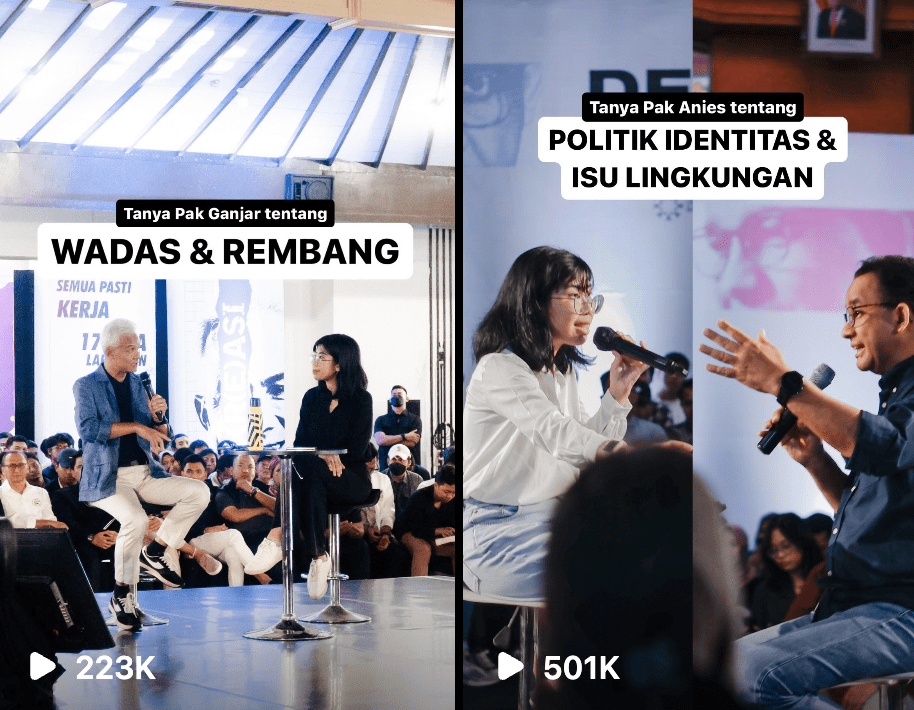
My first reunion with this rewarding feeling was when I sat across Anies Baswedan and asked him about how he planned to manage potential conflicts of interest related to his supporters vis-a-vis environmental issues. I knew I was pushing the boundaries a little bit, but it was—after all—a legitimate question to ask, and I had nothing to lose. I think I almost cried that afternoon: I was floored by how his campaign provided that rare space embodying what democracy should look like. I did not realize how badly I had missed it until that point. A couple of weeks later, Ganjar Pranowo‘s team organized a similar event, followed by a series of columns I was invited to write for the Jakarta Post, a TEDxJakarta talk, a Malaka Project video, as well as speakership and media interview almost every other week. Slowly but surely, I could hear authentic myself again—it was quite mindboggling.

Apparently writing Buku Menjadi (which now has a best-seller status, woohoo) is a little different—that one felt pretty much like blogging on this platform. Somehow, meeting Buku Menjadi readers in Jogja, Bogor, Bandung, Denpasar, and Surabaya (a total of 8 sessions in 6 cities) was not exhausting because I got to bring along all my layers. This ‘public voice’ I was talking about is a lot more demanding, and sometimes would put me on a pedestal, one I would rather not be on. All in all, while enjoying this chapter, I happen to also be very cognizant of the potential trap that would turn me into a certain persona instead of a being who contains multitudes.

Decision #4: To Love and Commit

If you told me two and a half years ago that there is a whole other state of happiness reserved for me, and that I would find the love of my life, I would say that you must not be in your right mind.

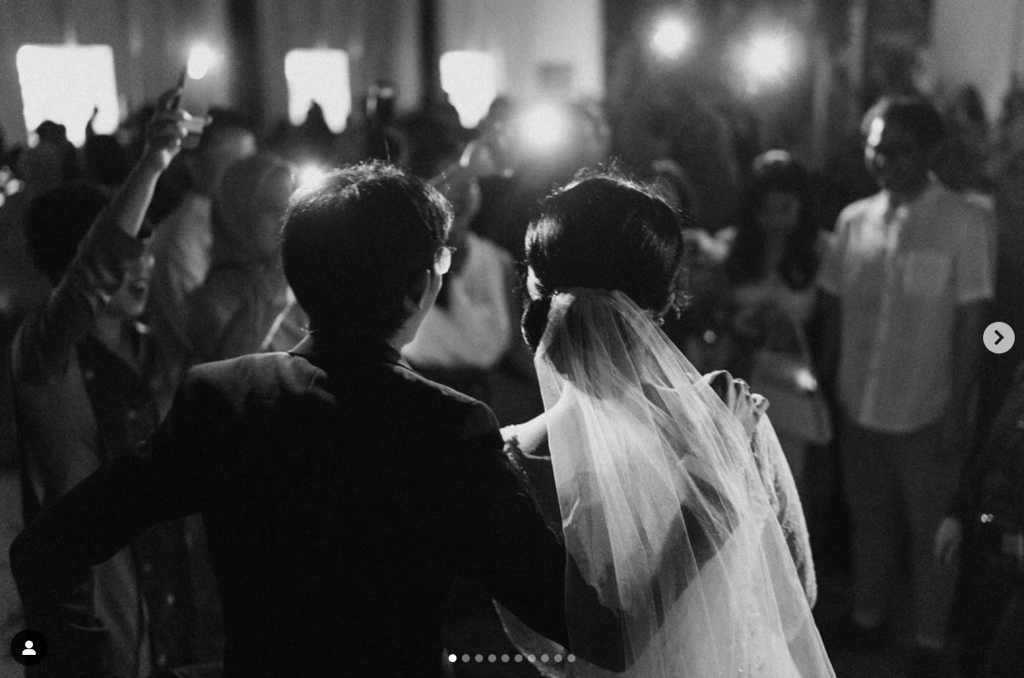
At the end of the day, 2023 is a year of love for me and my husband. It is the year he proposed (March), we got engaged (September), and finally married (November). Throughout the year we fell in love, fought, and learned endlessly about being a better partner for each other. I have seen him laugh (I love it), cry (both in private and in front of our families and friends), dance (with me both in private and in front of our families and friends), get mad (because of silly and big things)—and I want to stay through it all.

Every day we would wake up and feel the gratitude of being able to meet and be in each other’s lives. It is so weird to think how we were still strangers the year before and now we are building our home and future together.

***

All in all, I entered the year with so many fears that turned out to be unfounded. Everything works out at the end if you just give it some time. No, they are not always easy, but the things that matter usually are worth figuring out/fighting for. I’m glad I decided to assume control and exercise my agency to the fullest, owning every single decision I made and its consequences—in all its mess and glory.

That being said, while my friend Wina dubbed 2023 as “my year”—it has indeed been the best year of my life so far—I wish I had more time to savor it.

Maybe 2024 is a year for just that.

A full-course meal that is 2022

I genuinely thought I was done with 2022 when the year abruptly turned itself around.

On November 23, I posted a reel (“And with that, the 2022 season comes to an end…“) concluding the year to be that of family, friendship, community, celebrations, explorations, and self-acceptance—all orbiting a core defined by losing Eyang.

On November 26, little did I know, I met someone who thoroughly reoriented the rest of the year, like a sonata selfishly engulfing the rest of the song.

I knew that 2022 was supposed to teach me about how sorrow and joy could co-exist—almost reinforcing each other even—but man I had no idea that a whole other level of happiness existed before you. There’s no way I could have anticipated finding this much comfort again, not after all the pain and loneliness I’ve familiarized myself with lately.

In Brief Answers to the Big Questions, Hawking talked about how the positive energy yielded out of The Big Bang is inseparable from the negative energy dispersed throughout the universe. The former could not have existed without the latter.

I’d like to think that your existence is the culmination of every bit of misery I’ve ever had to go through before this point, because how else could I deserve this overflowing sense of contentment?

(In my head, you would say that I deserve all this and more.)

Writing this is a conscious effort to remind myself that this year has been that of a full-course meal, no matter how much more convenient it is to focus on how it’s ending. The journey was kicked off by Sorrow, followed immediately by Wonder, and finished with Joy—so, so, so much Joy.


First Course: Sorrow

I thought I have mastered the art of losing in 2021—but it was dwarfed by what I experienced this year. The universe seemed committed to making sure I did not have a half-baked lesson and let me experience an even deeper loss, that of the woman I love the most in the world. A loss that floored my entire being and completely changed the way I looked at the world.

If you’ve never had a significant other passing away, please know that no matter how prepared you think you were, you could never really be ready for it. The first time I entertained a real possibility of not seeing Eyang in her green room at my parents’ again, I cried so hard I had to gasp for air. Then when Mamah called me at 6AM in the morning, saying that Eyang finally took her last breath after four months of intensely fighting against her failing kidneys, all I could do was sit in silence. When I finally saw her again, all wrapped in white kafan, all I wanted to do was hug and kiss her forehead for one last time, knowing how much I will miss doing that forever. As they slowly lowered her into the ground, all that’s left was peace, imagining her smiling face of reuniting with her beloved husband and daughter again.

Today, seven months later, she is still on top of my phone’s ‘favorite call’ shortcut. I badly miss our weekly calls, her voice when she picks up my call saying “Assalamualaikooommm”, asking me about my latest work trip, me wishing I could take her around if she wasn’t bound to her bed. I miss how she would joke that my jodoh would be both handsome and rich, and how she would brag about me to all of our relatives.

It helps to think that she continues to live in all of our memories, remember how she’d led a full life, and try living by her values every day. I am grateful to find the rest of the family (Mom, Papah, Pap, Mamah, Kakak, Dede, Cici) ever more resilient after going through that together.

Alfatihah untuk Eyang—we all love and miss you so dearly.


Second Course: Wonder

After over two years of staying put at home, 2022 is also a year of (re)discoveries: making new friends, delving into new hobbies, bathing in new forests, strolling through new cities, and accomplishing a major dream.

  • Opening myself up to new friendships has been one of the most rewarding things this year; met a few souls whom I will treasure for a really long time (if not life). The kind that inspires you, that will stick around during bad times (including when you fall sick), that made you grateful it happened instead of fearing that it won’t last forever.
  • I let Dinar drag me to new activities—did muay thai a bunch and was pleasantly surprised to find how my body reacted to beat and music. It turns out I enjoy learning dance moves and didn’t mind that I looked silly while doing it. The dopamine rush that followed was pretty great, too. I happened to also unlock a new capacity to fully appreciate good meals (‘living to eat’ from ‘eating to live’), coached by Florida.
  • Reconnecting with nature has fulfilled my soul. Spending time in the forests (or beaches, alternatively) of Sumatra, Java, Bali, and Lombok has given me that singular feeling of being connected with Mother Earth is something I will always yearn for. It’s the year I finally understand that ‘grounding’ myself (in a literal sense) is a necessity for my being, a reminder of why I do what I do.
  • On the flip side, I have marveled over what humanity has been able to achieve—particularly in Madrid and Seoul. Learning the histories of their people, taking pauses to appreciate art—the peace that comes with being a nobody in a whole new city was one of a kind, a privilege that I never want to take for granted. Vaguely in between all of that, I tasted the fleeting feelings of belonging.
  • Finally, after quite the delay, Menjadi got published. Putting on a new onion layer as an author, having all of my good friends at the launch party, and traveling around to discuss the book have brought me some serious wonderful feelings. I’d love to tell my 13 year old self that she’s doing alright—accomplishing her dream(s), one at a time.

I hope to do more of all of the above next year (including a possible second book?).


Third Course: Joy

[Enter: you.]

You should know that we met at a point when I was done with wanting to be with someone. I was perfectly happy alone; you told me that you were, too. Neither of us expected to walk down a road that leads us here. (Read: nggak jelas banget anjir kamu tiba-tiba muncul entah dari mana mendadak bikin kesengsem dan butuh ketemu tiap hari.)

When people asked us how it started, we would tell them about the dog park. We were temen seangkatan di kampus who somehow reconnected. But I think it started all the way back—it might have even started the days we were born. The scarily similar families we ended up with, where we’re both firstborns with two younger siblings from the opposite gender. Where both our parents decided to call us ‘Dit’ at home and gloriously combined their names as our middle names. The separate but parallel journeys we took that led to the way we think today (gimana ceritanya we both decided to give ourselves a new name made out of the acronym of our full names, or started a business as teenagers, or bought properties just five minutes away from each other in the same year).

When people asked us why, we would tell them how it just makes sense. But I think it also doesn’t make sense how you tick practically everything on my kriteria mangga list. I never dared to think that the imaginary person I created in my head existed, and yet here you are. It is pretty crazy to think how many telepathic moments we had, how you help me with what I actually need not just what’s expected, quite unreal that you often just knew what I was thinking before I said anything.

When my friends told you that I’m difficult, you would tell them that being with me has been the easiest, most natural thing to do. For me, falling is easy when you responded “She overcomplicates things.” with, “That’s actually what I love about her.” Falling is easy when you’re a fierce problem solver—from daily mineal things to bigger, more consequential decisions. Falling is easy when you bring focus to my chaos, clarity to my anxiety, and calm to my worries. Falling is easy when you cooked me fried ox brain ‘just because’ or serenaded me on the piano in the morning. Falling is easy when being with each other’s families immediately felt familiar.

When our friends reminded us that this might just be a honeymoon phase, we would tell them that we are perfectly aware of it. But we also couldn’t deny this is no ordinary ‘honeymoon phase’ by far. I never felt this strongly about anyone, not in the first month of getting to know each other. I never gravitated towards another person this much; I typically would have needed to ‘use the restroom’ during dates just to get a break from hanging out with someone. With you, it still feels like I haven’t had enough, even after spending a whole week together. The intensity, passion, and overflowing joy has been unparalleled.

When our parents would (eventually) ask us when, we would tell them that we are taking our time. Because there is no shortcut to test endurance. You haven’t seen me at my worst, and neither have I you. But to the extent that you have sat with me when I was confused, afraid, jealous, and angry, I am already convinced that you have what it takes. I’d like to think that I have been able to provide you that space to be vulnerable, too.

The fact that two careful people who weren’t ready to (re)commit with anyone else before couldn’t help but talking about forever—just weeks after getting to know each other—is rather unusual, to say the least.

It’s weird how the year started with me crying a lot, and ended with me smiling ear to ear almost every day. Never did I anticipate to find myself being able to be ridiculously in love again, after what I’ve been through.

But that’s life, I guess: nothing’s quite permanent, including this state of happiness. The only thing left to do is to cherish it while it lasts.

2021: The Year I Found Myself

I was dead for over 29 years.

My body might have breathed, moved, consumed—but not quite lived. I have simply been walking down the most obvious pathway that the universe revealed. Born to an average Indonesian family, I grew up into a typical first daughter whose main mission is to make her family proud and exceed expectations, got one opportunity after another that piled up into a wonderful-but-very-much-expected career, and married the very first person who asked. When interviewed about my biggest failure a few years ago, I barely knew the answer, because if I’m being honest, I never really failed, not in a way that mattered anyway, and mostly because I never took a risk—not in a way that mattered.

This year everything changed.

Me saying hi to 2022, finally taking charge of my own fate.

It started with the biggest loss I’ve ever experienced, one that I didn’t think I was capable of stomaching. The person I (used to think I) loved the most decided to leave, practically in a blink, and at the worst possible moment—although perhaps there’s no such thing as a good time to end a marriage.

The first couple of months was the worst: the titanic pain seeped from my chest down to my torso, limbs, and all corners of my physique. Sometimes I literally couldn’t move out of the bed or floor had it not been for the kindest souls who kept me company. Even then, I was still lost for a little while longer, reaching for worldly things that I thought could help ease the pain. I was too clever to fool myself that they would cure my open-flesh wound of course, but back then I’d take anything just to survive another day.

I’m not quite sure how (perhaps writing my feelings down, talking to my friends, and regular check-ins with my therapist) but slowly and eventually the hurt subsided.

Once that happened, came this long and deafening quiet where I was left alone with myself, bewildered at the sight of an almost completely new person. Something told me she had gone through a war and came back stronger. I could sense that her emotional container expanded, reaching new depths capable of understanding and empathizing better—more so a gentler heart that forgives fully.

It’s the kind of bloom that could only happen through passing seasons.

It came with a brand-new, crystal-clear sight, so sharp and spot-free it’s almost like I never saw before in my entire life (even some things I thought I already knew):

  • Being with someone is not a prerequisite to, nor an assurance of, happiness. If anything, I learned that loving is all about sacrifice. If you are not ready to let go of a certain degree of comfort and compromise on more than a handful of things, let me remind you that being single has its perks. I was pleasantly surprised to remember the refreshing feeling of making my own decisions and owning the consequences, in lieu of having to reach a consensus with another human being every single time.
  • Being with someone shouldn’t mean losing yourself. Entering a relationship often means colliding two previously separated worlds, and when you let it unfold on an auto-pilot mode, soon enough one will be completely swallowed by the other. That will almost always lead to a certain feeling of loneliness or isolation. I finally understood the importance of friendship beyond the one with your partner (even when they’re your best friend) and having your own little territory—literal or figurative—like an activity or circle where you could anchor the self you were before you met them. Remember that you are responsible for taking care of yourself before anyone else.
  • We are bound to project our ideals on our partner, and it takes courage to see what is real. Our deepest urge to be happy often means deflecting our glance from the person in front of us, to a much prettier reflection of them on the pond. But once we rid of that fear and allow ourselves to be honest, both about who they are and who you are, that is when you could truly decide whether you would continue to love—and love fiercely—or not. It is a truly rare thing, to see someone naked in their entirety (literally and figuratively) and still love them as a whole.
  • Compatibility is the work you put in, but there is such thing as a minimum threshold for it to work and self-awareness is a necessary tool. This might not be exactly scientific, but I find this framework quite useful to assess (and therefore achieve) compatibility in a romantic partnership. First, compatibility is comprised of five separate ‘tanks’: intellectual, emotional, physical, spiritual, and material (not necessarily in that order). Having one of your tanks full is not enough if any of the other tanks are empty. Intellectual compatibility doesn’t mean being in the same academic field, spiritual compatibility doesn’t mean sharing the same faith, and material compatibility doesn’t mean coming from the same socio-economic background. They simply mean understanding and appreciating each other intellectually, having a similar attitude towards faith, and somewhat corresponding visions about worldly possessions. That being said, above anything else, being at the same level of self-awareness is critical. Even when you’re complete opposites in certain areas, having the language and toolbox to talk about it would help a lot. Without it, even the most earnest effort to make it happen is likely going to fail.

It is with these new tenets, that I am starting 2022, whether by myself, with a partner, or something in between. I have promised myself to not just let myself be but actually make the mindful (often difficult choice) every single day, meaning my every ‘yes’-es and knowing when to say no. Listening to my guts and newfound conviction about the kind of fulfilling love I actually deserve.

And with that, I wanted to thank him for leaving, for giving me the once-in-a-lifetime chance for a radical start-over. Today, I am the happiest I have ever been, completely engulfed in the kind of contentment that I would never have discovered had we still been together.

Today, I am taking charge of my own life and actually start living.