On losing friends.

I miss my friends.

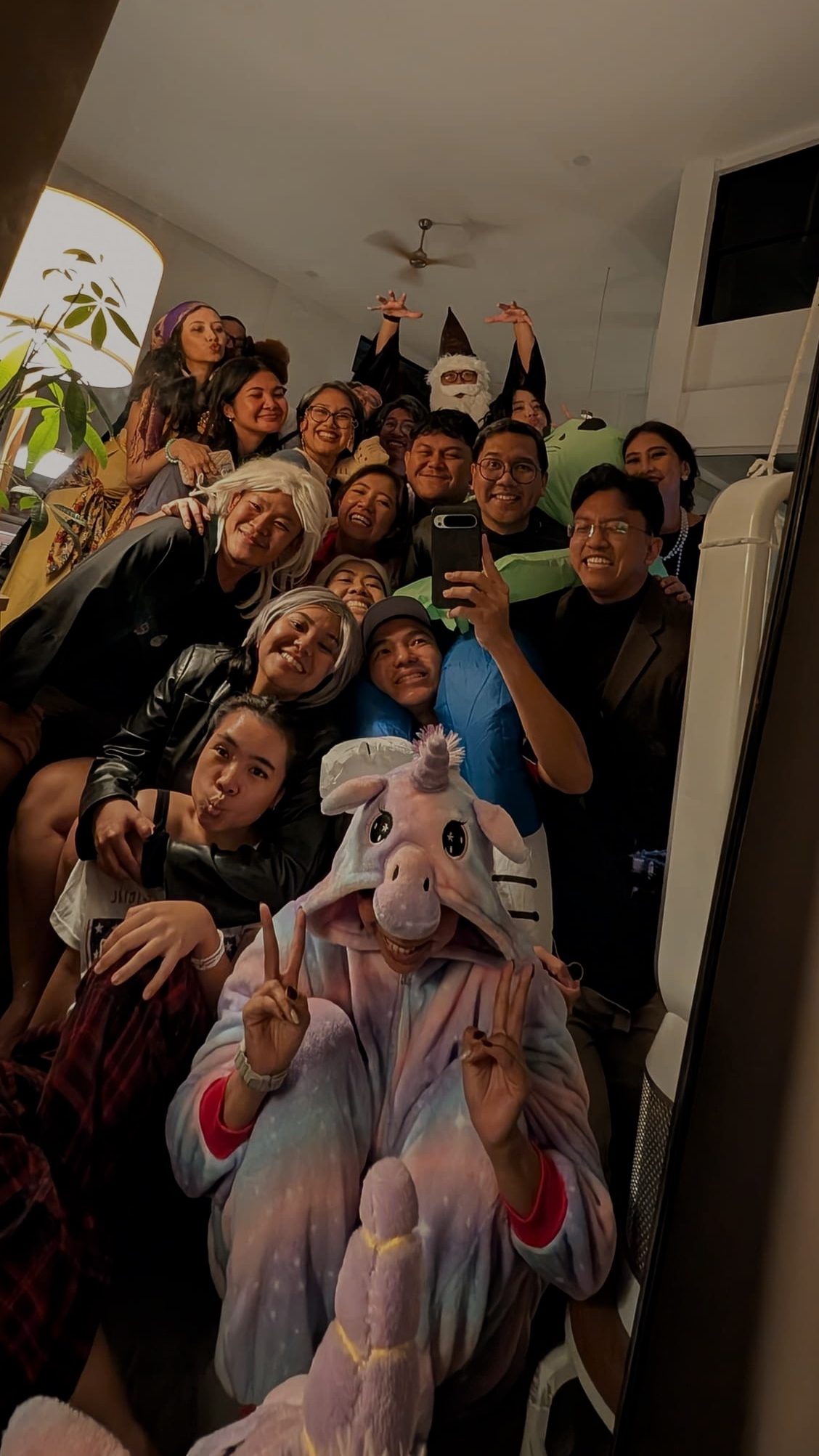
Although saying “I miss my friends” would be such a gross oversimplification—the truth is: (1) I don’t even know whether I’m a ‘friend’ to someone these days (it does get confusing), (2) it’s not so much about not being able to spend time together that it is about not being in the physical space that allows us to spend such time in the specific ways we used to (it will make sense below), and (3) life has led you to see the world (or yourself, or each other) differently and you simply can’t go back to ignorance.

I. How do we define a ‘friend’, again?

In between all the growing up and heartbreaks in your 20s, the border of ‘friendship land’ had gradually became more political. I often find myself asking whether I am still someone’s friend: Is it enough that we hang out from time to time (bilaterally and as a group), or do they need to call me when they struggle? What does it mean if you can’t tell if they’re genuinely happy for your achievements? Do they still consider you a friend if they keep prioritizing their demanding job, spouse, or baby?

Some (typically from school or work), pushed through and made it to your 30s: those who stepped in during your hard times, embraced the inconveniences of maintaining regular checkins, transcended through the traps of envy and celebrated your highs.

Making new friends, however, is a whole other ball game. Today, it’s too intense to call those you know through professional connections more than ‘colleagues’, those you meet in the studios (dance, pilates, or otherwise) were now ‘acquaintances’, and men decided to either be interested in you romantically or not a all. People simply don’t wear their heart on their sleeve anymore and ask to become someone’s friend.

Unreciprocated friendship proposals are just as real as romantic ones, by the way: those awkward invitation to “have caffeinated beverage”, met with delayed ‘reschedules’ (although sometimes they really do need to take a raincheck—too busy, too depressed, or simply are clear about their priorities—good for them, really.)

II. The unbearable lightness of growing up (and apart)

Even two years after resigning from my corporate job, I still hang out regularly with my ‘friends from the office’. They are some of my most favorite human beings on earth, and we’d make up excuses to dine together or have a roadtrip out of town. What I miss, however, is much simpler: those times that they would stop by one another’s office and just chat randomly until at some point one of us burst laughing on the floor, or walked to grab coffee together.

You know, the kind of ‘friendship’ that effortlessly fills your day, not the one you have to carve out time for.

It’s even less complicated making friends at school: you have to physically be in the same classroom or bump into each other in the canteen after all, tackle assignments together on those roundtables—every day the university will give you hundreds of reasons to make a friend. And in those random walks, your souls find one another, sparks happened, and the rest is history.

I’ve lost one too many friends to their dreams. Don’t get me wrong, I am elated for them: those pursuing academic degrees, better jobs—no, better lives abroad. At every farewell, we will promise one another to ‘stay in touch’ but who are we kidding: we lost touch. I cherish the annual calls we’d have, and all the big news (a wedding, a newborn, a new house) about them, but it’s simply not the same.

Oh what I would kill to be having those collective walk during lunch breaks again.

II. Most importantly: you have changed

On top of the list of beautifully tragic bases for missing (losing) a friend, is when you have radical clarity on what matters in life, and they simply don’t fit in that picture anymore.

As you get older, the universe will nudge you to get closer to your fully aligned self—it will put you in situations where your values are tested in the deepest sense, and sometimes it inevitably means breaking up even with some of your closest, most treasured friends.

This I think is the unique possibility unlocked in our 30s: the only time we actually could afford to be alone, is the time we are clearer about what we want, and what we find important. We have enough time to catch up and become better emotional regulators, we don’t have to please people anymore. Voilá, now you have clearer boundaries and therefore fewer friends.

***

In case not obvious: Attachment styles, as I discovered this year, applies to all kinds of relationships: your patterns of anxious, avoidant, or secure selves will show up in how you maintain your friendships, too. As someone with a ‘disorganized attachment’ tendencies, I am not the easiest to be friends with. I also tend to conclude/judge, prescribe solutions too quickly, and hyper-rationalize—yet in all my imperfections, I am grateful for the fact that a few people still find a friend in me, including those I haven’t even met in person for quite a while now: I love you guys.

So have that video call, that coffee catch up, that get together.
Life’s too short not to enjoy love in any form we could ;)

Where do we go from here? (Making sense of this senseless week.)

In the past year alone, the Indonesian people have gone through three cycles of protests: the Peringatan Darurat movement (August ’24), Indonesia Gelap (Feb ’25), and the Violent Thursday a couple of days ago.

Each time, three consistent elements were there:

  • Act I. The fuck up
  • Act II. The demand
  • Act III. Resolution (somewhat)

In Darurat Demokrasi, the parliament was going to rig the local election law, stifling competition and allowing the President’s kid to run for Jakarta governor’s office (Act I). In response, students and civil society came together, storming the parliament’s building (Act II). For the first time, ‘non-traditional’ actors (influencers, middle class at large) participated, because we all had enough. We still remember that image of Reza Rahadian on top of the truck. At the end of it, Sufmi Dasco saved the day, stopping RUU Pilkada from being passed (Act III).

Things went back to normal quite sometime after.

Indonesia Gelap did encompass more requests, but it revolved mainly around the problematic RUU TNI which would allow the military to take over more seats in what otherwise should’ve been filled by civil representation (Act I). It wasn’t as glorious as Peringatan Darurat (perhaps people were still recovering), but the students got together (and mothers, and labors—I was there) and took up Medan Merdeka (Act II). The revised UU TNI was still passed, but the final version that was made public seemed to have comparatively more limited authority (Act III).

The bad aftertaste lingered, but we moved on.

What about now?

This time, we are going completely off script.

What started as the labor’s protest to demand for social security laws protecting jobs and minimum wage (among others) became…something else completely, something no structure could quite contain, and now we’re all over the place. We are scared, confused, and angry—oh so angry.

The movement is now firmly anchored in our collective memories of Affan Kurniawan, the innocent martyr who was murd*red for simply doing his job.
The movement has evolved into a deep-seated frustration about police brutality, and the lack of serious reforms in the past decade.
The movement grew to be about holding our supposed representations accountable; the ones who called us stupid, who ran away abroad.

What it should NOT turn into, is a senseless horizontal violence amongst the people, looting unattended businesses and civilian houses, leading to more unnecessary deaths.

At this point, we are faced with two options of ‘scenarios’ moving forward.

  • Best-case scenario: Prabowo steps in as the usual hero, pushing for transformative reforms in the police force (and perhaps even DPR)
  • Worst-case scenario (I hope and think we’re still FAR from this though, hopefully): things get so out of hand, Prabowo called for the military to step in

How we act in the next few days (and what’s going on in the President’s mind) will determine which scenario is more likely.

But even in this somberness, I hope that the remaining members of parliament who still has some sense in them (I know there are many) will carry this message to their colleagues and party leadership:

Every time the government fucks up, we civil society rise.

That you politicians only has power because we give it to you, perhaps in our ignorance, perhaps in taking things for granted, perhaps in disillusionment, but WE GAVE IT TO YOU and we can and will take it back when we have to. Our founding fathers and the 1998 students have fought—and died—for this right.

As for us the civilians: I hope we remember that we’re all in this together, fighting against the same enemy of corrupt and evil men (and women, unfortunately) in power. We are fighting for a ‘bare minimum’ government that ensures our freedom, that works to bring a fair economic system, and actually things about improving their people’s future and not just their cronies.

If Boedi Oetomo planted the idea that led to a ‘national awakening’ in 1908 and only 20 years later we came together with Sumpah Pemuda (1928), we might still barely be at the beginning of what we’re trying to achieve.

So here’s my ask from all of us:

  • If you have influence, help others make sense of what’s happening. Deescalate the anger to a ‘productive’ level—one that pressures the government for reform, not just further destructions.
  • If you have resources, go donate where you can; help the communities who are organizing movements or further collective actions.
  • If you have energy and time, next time there’s a peaceful protest for something you believe in, maybe try and attend. You might be surprised that it’s not as scary as you think.
  • If nothing else, share our stories on your social media or dinner tables.

Either way, there is an awfully long way ahead of us, that we need all hands on deck in this fight, across class, race, and geographies.

Let’s pray for Affan Kurniawan, for democracy, for the ideals that this country should one day be.

#SipilJagaSipil #WargaJagaWarga

I’ve always had a complicated relationship with Indonesia, but not like this (Nesia, 80 years later)

In 1945, Nesia was born—birthed prematurely, some might say, out of youthful impatience and necessity. The welcoming ceremony was rather modest, held on the grounds of her father’s home on Pegangsaan Timur (now Menteng), with a few hundred present.

Nesia had many fathers hailing from different islands, she did, and they all had big dreams for her—albeit not exactly shared ones. Some were more nationalist while others were Islamist, some believed good decisions came from long deliberations, while others were more passionately intuitive. Some wanted a negara federal, while others believed that this country was destined to be a negara kesatuan. In the end, Soekarno and Hatta were given main custody (instead of Sjahrir who had no chance, or Wahid Hasyim, or Kasman Singodimedjo, or Ki Bagus Hadikusumo) because they were the epitome of ‘balance’: one magnetic Javanese orator who charmed the people, and the other a calm Sumatran thinker who was fluent with the elites.

Nesia’s other fathers were able to set their differences aside for a minute, because they understood something bigger, something earth-moving, was happening: they were building a whole nation from the ground up. One that had so much potential, one that would fight for humanity in every corner of the world, one that would bring colonialism down—in any shape or form. One that would be so just, she would make sure the god-given natural bounties in her land and sea benefited everyone.

They even put these dreams down in Nesia’s birth certificate.

Twenty years in, and Nesia hit her first stumbling block: a certain type of ‘cancer’ that she needed to get rid of—her new father Soeharto claimed. For a couple of years, she fought her own body so hard that she inadvertently removed not just the ‘bad cells’, but her best ones too—exiled abroad or ended in situ—these must have been parts of her brain that kept her moral compass and intellect, because for the next decades, it deeply affected the way she thought about the world.

In fact, many things happened in the following 32 years, and Nesia wasn’t sure if she was living her forefathers’ dreams anymore. She was trained to not think and to be afraid of her father; it was best to agree with whatever he said, if she wanted to stay alive. Sure, he managed to build, many still claimed he was the best builder-father Nesia ever had. But at what price? Nesia started finding her memories fuzzy, and ended up relying a lot on what her father said happened. She could swear that sometimes her father would tell her the opposite of what was true, but she learned the hard way that it was best to stay silent.

When her longest-reigning father left in 1998, she had to admit she was a little lost.

All of a sudden, her international friends surrounded her, swarming like bees, telling her what to do as she finally found her freedom. Fix your financial system, they said, take some loans to build your house, others insisted. It felt nice, being able to listen to anyone but her father—albeit her head felt loud for the first time in a long, long while.

Unfortunately, nobody reminded her about the most important piece of all: she needed to overhaul her political system. Her fathers’ friends were still around, trying to hold on to whatever pieces remained, no matter how scattered. Had she had a do-over, she would have thought through the role of parties (not the kind with music), about conflicts of interest, about cleaning her council from those with her fathers’ agenda.

She also would’ve invested a lot in reforming how she educates herself. She would’ve spent years relearning what it means to be a democracy, rebuilding her agency again as a great nation that could determine her own future, instead of being manipulated by more power-hungry fathers in the future.

Despite avoiding this difficult task at hand, things were looking good at first.

Major economic reforms took place, she even managed to introduce a commission dedicated to eradicating corruption (that’s huge!), and decentralized the hell out of her autonomy. She grew fast, and healthy too. Yes, there were a couple of hiccups in the form of financial crises, but overall she managed.

The year 2014 she reached a whole new milestone: she elected a father who didn’t come from power at all. He was supposed to be the man of the people. And boy, did Nesia’s new father build infrastructure—ambitious projects all around the country, ones that were supposed to lower logistical costs and help her grow even faster.

But all while this was happening, putting the education reform agenda in the backburner came back to bite her. She was clearly running out of time, and the window to prepare a truly great nation—one that think for itself, that was driven by the core values of humanity and justice, that cared about one another—the nation that her first fathers dreamed of, was closing.

Her people were petty, apolitical, and quick to judge one another. And they were trained to be shortcut takers, to be preman (pre-man a.k.a. manchild) who constantly looked for loopholes. They would exchange their votes for a little Rupiah, because the system forced them to give up on their true power—they failed to remember that they could flip those seats if they chose to.

The youth were distracted all the time: they were fed with content and consumerism, both taking most of their remaining mindspace. They were made to love the country enough to pay their taxes, but not too much that they would disturbed seeing those exploiting Nesia—disturbed enough to all go to the streets, angry enough to bring any unjust fathers down.

The most righteous amongst them, however, were divided. The fighters, those who were supposed to be more united than anyone, focused so much on their 10% of differences and abandoned the 90% shared mission that they had. They pointed fingers at one another, claiming the other was not righteous enough (because they didn’t put their lives at stake), for example. All while the evil ones continued scheming with one another, even when they only had 10% of their agenda in common, generously giving praises left and right, even to those without any ethical backbones left.

Her people were made to feel intimidated by brains, and trained to love the pretty, rich, and popular. They were turned into bullies who picked on people for the smallest of things, those who said something wrong that one time. They were told that loving Nesia was about speaking her language, or exclusively living in the country, instead of what they use any language for—no matter where they were. How misguided, given that Nesia’s forefathers all used Dutch as they started dreaming about independence.

Today is Nesia’s 80th birthday, and she has never felt more astray from where she was supposed to be. In three years, it will have been 100 years since 1928, the year her forefathers dared to start dreaming about giving birth to her, when her forefathers chose to be one nation instead of several, because she was worth fighting for.

Is Nesia worth loving still?
Were her fathers’ dreams still alive?

Against my better judgment, I kept failing to let her go. Every time I found a reason to, I kept meeting incredible human beings who wore their big heart on their white sleeve and made staying worthwhile. Those who didn’t even flinch when (any of) Nesia’s father(s) tried to put fear in them.

If fate could take extreme turns and courses shifted in the past 80 years, she could very much do a lot in the next 80. Nesia just needs a bunch of naive believers, much like her fathers did at the beginning of this journey of nation building. Those who looked around, and questioned the way things were run, those who tried to do something no matter how trivial and small, those who kept the fire alive for a little while.

Those who would gladly join the fight, until it (hopefully) sparked something, even decades later, even when they may not live to see Nesia’s glory.

***

https://www.youtube.com/watch?v=GgxPJRN_LVI

Dear Theodosia, what to say to you?
You have my eyes, you have your mother’s name
When you came into the world, you cried
And it broke my heart

I’m dedicating every day to you
Domestic life was never quite my style
When you smile, you knock me out, I fall apart
And to thought I was so smart

You will come of age with our young nation
We’ll bleed and fight for you
We’ll make it right for you

If we lay a strong enough foundation
We’ll pass it on to you, we’ll give the world to you
And you’ll blow us all away
Someday, someday
Yeah, you’ll blow us all away
Someday, someday

Oh, Philip, when you smile I am undone
My son, look at my son
Pride is not the word I’m looking for
There is so much more inside me now

Oh, Philip, you outshine the morning sun, my son
When you smile, I fall apart
And I thought I was so smart

My father wasn’t around (my father wasn’t around)
I swear that I’ll be around for you
I’ll do whatever it takes (I’ll make a million mistakes)
I’ll make the world safe and sound for you

Will come of age with our young nation
We’ll bleed and fight for you
We’ll make it right for you

If we lay a strong enough foundation
We’ll pass it on to you, we’ll give the world to you
And you’ll blow us all away
Someday, someday

Yeah, you’ll blow us all away
Someday, someday

2024: Unlearning My Saboteurs

In the 18 years I spent sitting in classrooms, I have learned so much about the world, but barely anything about myself. If you think about it, it is quite mad that we do not budget time in our formal education to at least be given the map to better understand this blob of ‘self’ in our heads, making small and big decisions every single day.

When this ‘self-awareness instruction manual’ was finally given to me through a leadership course in grad school, it completely altered how I operate in life. In fact, it felt as though I had been walking around with a blindfold for a while. I could see oh so clearly now!

And of course once I did, I simply couldn’t, wouldn’t stop. I got thirsty with understanding myself more, obsessed about sharing its importance and available toolbox with as many people as possible. I developed it into a whole bootcamp, and eventually wrote a book about it.

This flame then took the backseat in 2023 because Indonesia’s democracy happened, but the universe knew I haven’t finished my lesson because it made 2024 all about self-awareness.

First off, what are ‘saboteurs’?

In January 2024, I met a ‘founders therapist’ who made me (re)take the saboteur test (it’s free). I actually heard about it a couple of years before, but didn’t think too much about it until then.

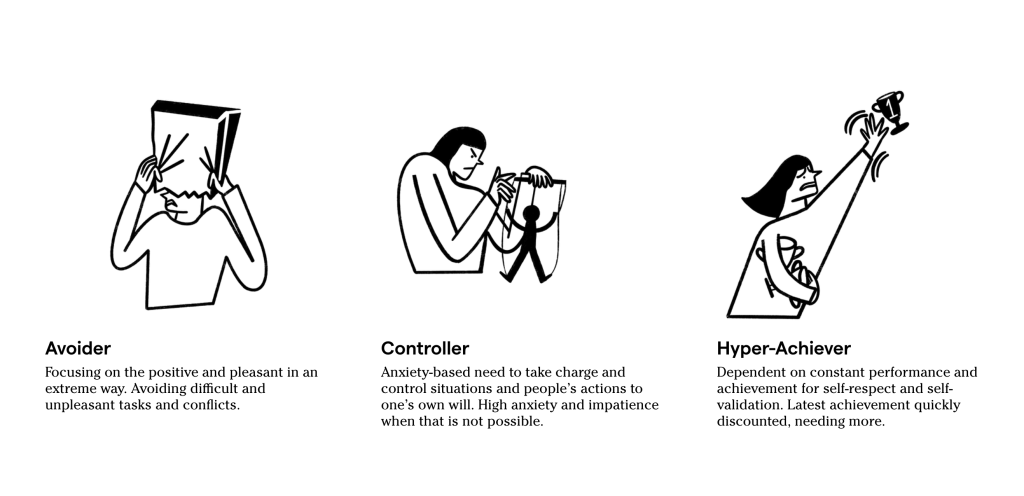
Simply put, ‘saboteurs’ are automatic patterns in our minds that—especially when unattended—will take over and determine how we think, feel, and respond. They are named such because they will affect our performance, wellbeing, and relationships, possibly a manifestation of real people’s voices in our head—a mentor, parents (or parentified individual), partners, friends, or society in general.

Now they are not all bad. Sometimes, saboteurs could serve us, too. For example, my saboteurs (more below) have helped me avoid common mistakes or inefficiencies, innovate, and develop strategies to anticipate when things go wrong. When out of control, however, that’s when they stab you in the back.

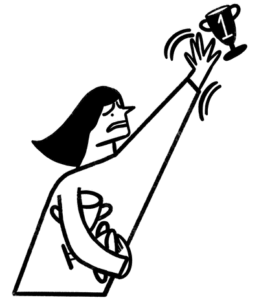
The first step to conquering them, hence, is getting to know them—and I mean really understanding them. Once there, you can deconstruct the false beliefs underneath. To begin with, here’s the unabridged list of possible saboteurs (source: PositiveIntelligence.com):

Now I will be sharing the saboteurs I have been struggling with—not because I have overcome them all, but in the hope that they would somehow be helpful for you, too.

Saboteur #1: Stickler (and maybe Hyper-Achiever)

I’m not gonna lie: Bijak Memilih gave me, gave all of us quite the high. Not sure how, but we were cautious but fearless, driven by conviction, and most importantly, could authentically be ourselves. We focused on the goal, didn’t quite mind what others were saying about the experiment, and kept adapting as we went. We created something that actually helped people, discovered the right kind of community who supported the movement, and blessed with a genuine friendship while we’re at it.

It was amazing. I will always look back at the experience with fondness.

Only later I realized that it was possibly my stickler-slash-hyper-achiever Saboteur that did not take a sufficient amount of time to bask in this milestone, to properly appreciate both myself and everyone involved, to instead go on directly to the different ways that it was not perfect. Who was so impatient to start planning again for what’s next, to set up the right governance, without being sensitive and considerate enough to celebrate and understand the underlying predicaments at the time. And when the transition didn’t go as planned, I then went and blamed myself for ‘not knowing better’.

This was, expectedly, not my first rodeo. Getting into my dream master’s program, building a company from the ground up, publishing a book—they felt like a checklist that was supposed to happen, and became ‘normal’ within a short period. I generally have a hard time feeling grateful after some time, not realizing that it was not an easy feat and is a massive, unattainable privilege for many.

The false belief or hidden fear: That I am, if not for all my achievements, not good enough :) That if I don’t do this or fail, then I’m a nobody. I have since been trying to unlearn this and trying to focus on other sides of Afu—one who’s trying to be healthier, who is a partner/daughter/friend—anything not tied to an output or productivity. Am still far from being where I should be, but hey.

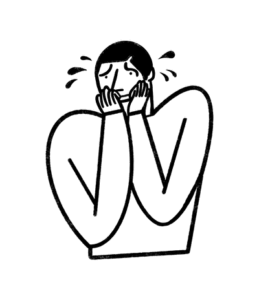
Saboteur #2: Hyper-Vigilant

I spent a few long nights in 2024 considering the worst-case scenario: a flood of what ifs, some turned into reality, but mostly did not. They were mostly related to work (involving external actors), though rarely they also intertwined with the personal.

A while ago my husband sent me a link that could potentially be (a tad bit misogynistic, but otherwise) quite helpful in describing the way that women are statistically more likely to be anxious. The guy in the video was saying that, essentially, we have this ability (tendency?) to connect one thought to another, creating chains of possibilities that may or may not happen. Men, on the contrary, has this ‘nothing box’ where they could just stay in for a while and think about, well, nothing. This is at least true in the case of my husband and I.

While my husband and I are both firstborns, our genders make a world of difference in how we’ve experienced life. Perhaps combined with childhood upbringings, I could not find a person more calm and steady as him. We are both great problem solvers, but I usually do so after worrying a lot (haha), while his heartbeat remains steady. I am fortunately great during crisis however, having gone through the scenario in my head a few times. We are quite the pair.

The false belief or hidden fear: The high standard of ‘success’ I put on myself pushed me to be “on guard” as a default against threats, both real and perceived. I may have a higher emotional reaction to potential failure or criticisms—especially when I know they are not true. It may also comes from societal expectations I may (intentionally or unintentionally) internalize and shoulder. You know what they say, “If you worry and it happens you worry twice.”

Saboteur #3: Hyper-Rational

Among others, this Saboteur is one I’m still in denial about haha. Since I generally feel good about understanding things, I enjoy finding theories that help me navigate my emotions. It was the reason why I enjoyed going to therapy, and reading books about it.

Only later I realized that this might simply mean that I was hyper-rationalizing the hell out of it.

This may explain why my friends only (tend to) come to me when they’re already in problem solving mode, or why I jump directly to frameworks when processing my own emotions. Apparently, the healthy thing to do is to just experience it instead, at least for a bit.

The worry is that I hadn’t been able to connect emotionally with most people, that I hadn’t been able to hold space when others were being vulnerable, and therefore not being a very good listener for them. But maybe that is a role I need or could take in life? (Friends diversification, anyone?)

The false belief or hidden fear: Intellectual overcompensation—I might have been using my intellect to shield myself from being vulnerable or internal fears of inadequacy. Having grown up in environments where I’m dubbed as ‘the smart one’, I feel a similar need to be this way among my family, partner, or friends. Again, I’m not yet sure where I’m headed with this one for now…

In conclusion

Rumi said it best:“Yesterday I was clever, so I wanted to change the world. Today I am wise, so I am changing myself.” Last year was full of ‘cleansing’: of people, emotions, and approaches that no longer served me. It was also a year of targeted muscle growth: pain in specific areas (mostly professional) so I can grow stronger there. (Which a friend of mine would argue I could now afford because I have a stable and fulfilling relationship at home.)

I don’t believe in many things, but I genuinely believe that we can solve half of the world’s problems had more people had self-awareness, albeit knowing your Saboteurs barely scratches the full extent of it.

Thank you for being a part of my 2024. Here’s to a more peaceful and anchored 2025.

P. S. Can’t believe I have been doing this annual reflection 14 times already. Talk about consistency, eh? (This might be my hyper-achieving Saboteur talking.)

I’m past anger, just sad (keeping up with the Moelyonos)

“Are you coming with me to the protest?”
“No, I’m gonna stay and work, holding the economy together,” said my husband half-jokingly, on the fateful August 22nd, the day DPR was going to ratify the expedited—hence problematic—revision of the Pilkada law.*

I rolled my eyes (lovingly), then hugged and kissed him good bye. Ten years ago we would’ve switched positions—his old friends from college days would’ve expected that he’d not only join, but also help organize (si paling anak kastrat). On the MRT, I figured people turned their back today for a few very different reasons:

The first one, the old fashioned, is pure naïveté—the oh-so-blissful ignorance. Being shielded away from the throbbing anger and fear from actually understanding what’s going on. Lacking the historical references to realize how worrying it is to have a coalition almost without opposition. Not being bothered by incompetent candidates being given the highway to run for office because they are related to power. Immovable by the fact that we may have catastrophic public policy made by wrongly motivated decision makers. There will come a time, I hope, when knowledge touches them and turn everything around.

The second one, however, runs deeper—it’s that of disillusionment. You know exactly how critical the situation is, but you’ve been let down one too many times by your own expectations. Having faith in a leader just to be disappointed again and again. Wondering if it were you (???) or them (definitely them). Having tried, given it all your might, just to find yourself beaten to the ground at the end. Feeling a lot like banging your head against a wall—wishing it breaks before your head does. Another day, another ‘good leader’ gets corrupted by the system. Waiting for a different game altogether, some kind of disruption, a new window for change.

But mine is neither, it’s a completely different monster altogether. I cannot—as I could have 10 years ago—say with a straight face that I care. It is very possible that I don’t anymore. It is not that I have been let down ‘by the system’ (I’m smart enough to manage my expectations since day one), but by the very people I was trying to—for lack of better word—help. The way that we self sabotage into our own doom, the few times that people brought me down. If I’m being honest, with my privilege I probably would have survived this impending regime even without doing anything.

And yet I moved, still.

Against reason, I find myself weeping together with the other Kamisan protesters in front of the Presidential Palace that late afternoon, singing, “Pasti menang, harus menang… Rakyat berjuang pasti menang.” as the sun was poetically setting behind our backs.

Perhaps it was simply out of a muscle memory. I do not know, could not, respond in any other way. When I feel helpless, I show up. When I feel disgusted by injustice, I speak up. When there is work to be done, I make a to do list. Not always through grand gestures, but just enough to make me feel less in despair and sleep better at night.

Perhaps it was because I wasn’t alone. Between the Think Policy team and Bijak Demokrasi community, I had endless supply of energy and camaraderie. It simply felt unnatural to stand still. Literally everyone is taking their part: standing in front of a crowd, telling their stories, spreading awareness. Maybe that’s why they call it a movement—it was supposed to compel you to move, making it impossible to do otherwise.

Perhaps we have reached a new boiling point. We have seen corrupt leaders before, but not like this. People protesting for the first time in their lives, public figures too angry not to join the crowd. I don’t remember it being like this before. But we may lose this momentum— it is imperative that we do not lose sight of the long horizon.

What is the bigger picture?

Seperti cinta, demokrasi harus diusahakan. It’s a journey of making democracy work. I too, thought that it was good enough that we get to vote. But no, there is such thing as a quality democracy and we are far from it. Ensuring everyone’s participation is hard work. Doing civic and political education properly is hard work. Reforming the political parties? Still seems impossible without a black swan event.

It seems like a losing game, but tell me, is there any other way to be than to try?

We deserve better.