What Aboriginal Paintings Can Tell You

This lengthy post has actually been hanging around my draft box for almost a month (when plenty important events conspired to take place at the same time, that is). A week in Melbourne plus three more being inside the government’s system taught me a great deal of lessons, and so do Aboriginal paintings. You will see my attempt to link both of them in this post.

For the record, the following indigenous illustrations of Australia were mostly inspired by Dreamtime, a sacred era when, according to the animist framework, ancestral totemic spirit beings created the world. This includes how the birds got their colors, babies their spirits, and so on. Faith developed from the simplest things can turn out to be the most beautiful, don’t you agree?

1. A wonderful trip and a good home are both about being with the right person(s)—the place never matters.
Dsc01893aborig-turtgoanna

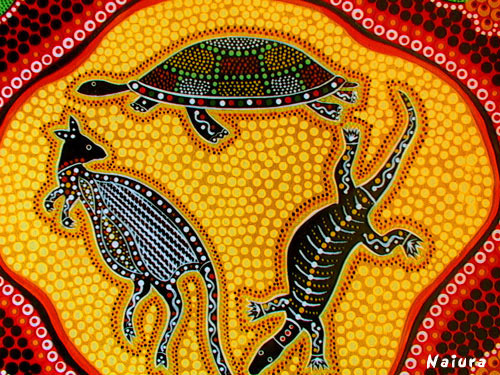
When did the concept of ‘home’ first appear? Was it after the nomads decided to stay and lead their life in a single area forever, or was it about being where their family lived? I would go with the latter hypothesis: a journey can also be a ‘home’ when you are with the people you care about. This painting portrays the crossed fate between three different creatures, to symbolize my overall adventure in Melbourne: 1) Bu Iim—a motherly host, by whom I was treated like a daughter for more than 6 days, 2) AMUNC kids—wonderful children, really, who patiently listen to whatever inputs I choked them with, as well as 3) Fika and Eno—two cordial friends who volunteered to take me around the city! With these people around, I hardly felt like I was away from home.

2. Every mankind was born with a disease of caring too much about themselves. Life is then a quest to find the only cure: to fall in love.
Australian-indigenous-art

“We’re all a little weird. And when we find someone whose weirdness is compatible with ours, we fall into mutually satisfying weirdness.” —Robert Fulghum

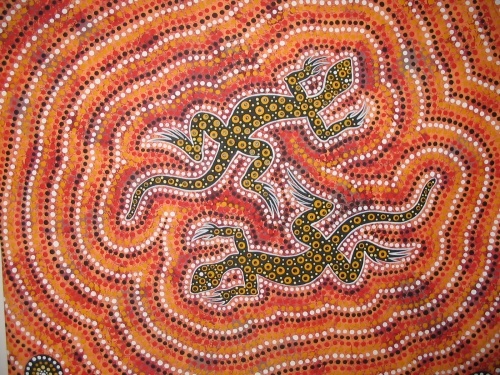
The geckos above depict the Aboriginal belief that each of us has a soulmate—or someone destined to accompany us for the rest of our life. That’s not where I am going, though. If anything, I simply believe that every mind is under a subconscious quest to discover another mortal whom they can care about so much—that they can forget their own ego for a while. These mortals, they might not always love you back and you can get disappointed every now and then, but believe me: any sane individual will appreciate one’s company and kindness, although they have different ways to express such gratefulness, and sometimes you just have to read between the lines.

Putera shared his magical ‘Rule of 3 Years’ to me after our Finale Ball dance:
“When you fall in love with someone but not sure if you’ll ever going to end up with this person, just wait until 3 years. You’ll be surprised by what destiny is capable of, Fu.”

3. “Everything is a process of a process of a process. The outcome doesn’t matterit might not even exist.” @darlol

A6

See how tangled this web of circles are? Well that’s probably what’s going on with life. Today’s failure, tomorrow’s success, yesterday’s stupidity, they are all simply bits of a bigger scheme: the grand design that God has assigned to us long before we were even born. So stop wasting so much energy on regretting what you have or have not done—focus on enjoying today. Carpe diem, they say. Oh and remember that both good and bad luck are earned; they materialize as a result of something you have done in the past.

4. All encounters are meant to make us thankful of what we havenot to be sad of what we have not. And it’s only a matter of perspective.
Ngangirra-meeting-place

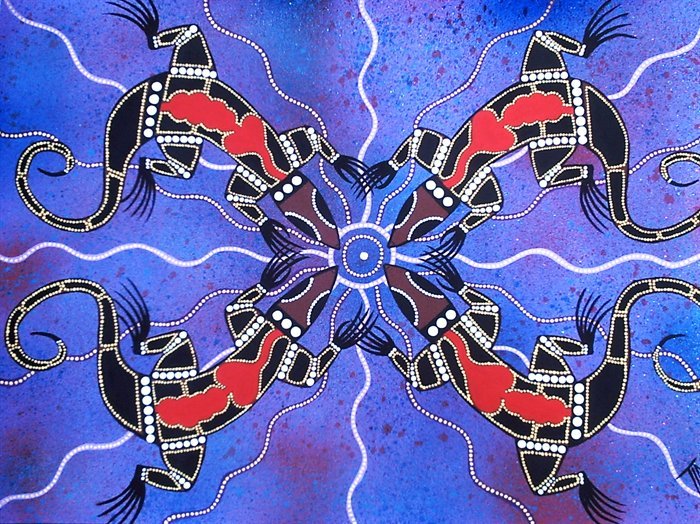
This painting, entitled ‘The Meeting Point‘, depicts one of those Daydream stories where the spirits meet each other at one spot—before departing and start their own stories afterwards. What I learned from meeting Australian students and, in particular, my highschool friend Eno, is that one can either be a pathetic whiner and mourn over the good things in life that she missed—or she can opt for being thankful of things that she actually possesses. Eno conducts a high-end, happy life in Melbourne: she rents her own apartment, explores many interesting places in the city, and gets the best education she can put her hands on. On the other side of the globe, I have to survive with whatever my lecturers provide throughout courses, in a hot city where all you can really do is, basically, struggle.

But let’s change the perspective: despite all the sucky things I have to deal with, I do have a lot of things to be proud of—amazing talking partners, lessonful organizations, and spicy foods at its best. And of course, Eno can be more grateful to her so-called ‘monotonous’ life, having listened to how I wish I could go abroad for my undergraduate study.

5. Whereas knowing ourselves is one of the main keys to success, most of us are the worst judges for ourselves.

Au_ronnie1

Human minds are like these abstract lines: they’re terribly winding and incomprehensible. The process becomes twice harder when we have to take a closer look at our own heads. But really, one should first understand him/herself before
he/she can help anyone else.

Being an intern in President’s Delivery Unit for Development Monitoring Oversight, I realize that there is a wide gap of difference between creating changes slowly from the bottom (as what we’ve been doing in Indonesian Future Leaders or other organizations) and doing it rather efficiently quick from the top. My point would be this: regardless what people say about losing your idealism once you got trapped into one of those governmental institutions, do what suits you best. If you think you have what it takes to overhaul the system altogether, then go for it.

What’s important is to be a great person wherever you are, but don’t forget to look down and feel powerless. Today’s common mistake, as hig
hlighted by Pak Kuntoro Mangkusubroto himself, is to feel important when you’re around important people. There’s one message that remains in my head from him: “Jangan sombong. Di sini, kamu akan bertemu banyak orang hebat, tapi kamu bukan salah satu dari mereka.” (“Stay humble. Meeting a lot of great people does not turn you into one of them.”) Powerful words from one of the most respected men in the country, indeed.

6. Humility versus ‘Sungkan’
Pr516

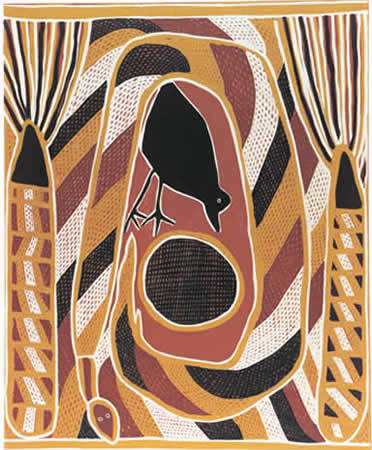
Despite its unquestionable virtue, humility can sometimes be misunderstood as ‘kesungkanan‘ (you see—I can’t even find the English word for a concept so cultural in the Sundanese and Javanese tradition). The bird in this painting is keeping her head low, but it does not mean that she will let any predator belittles her speed to flee. Don’t get humility wrong: it does not mean feeling like you’re worse than everyone else—it’s acknowledging your strengths while humbly admitting that they will not last forever, and that there are contribution from other people to your owning such talents. And remember: although haters will always find a reason to hate someone, the vulnerability of being disliked because you’re smart is higher than if you’re kind—so stay alarmed. Alarmed, but not conceited, and neither ‘sungkan‘—because it only takes all the chances away.

7. If there’s anything you should never let go, it’s the little kindness inside your heart.
Centredart_modernaboriginalart_samtjapanangkageorge

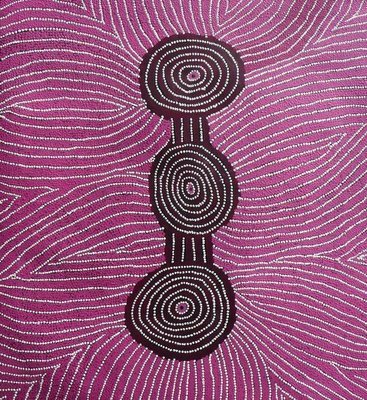
As much as it’s hard for certain people to move on, they change very overwhelmingly quickly. Someone you know from two years ago has become someone else today, and the bad news is, it’s not always towards a betterment. (But then who are we to judge what’s good for everyone in this planet?) So move on, and believe that there’s something better—although unknown—waiting for us in the end of the tunnel. Leave everything behind—except that little kindness inside your heart, for that’s what makes you human.

Mikha once told me, “A powerful picture is not taken with expensive cameras; it simply makes you wonder about how they were shot.” The same premise applies for humans—powerful ones are not wearing the most expensive clothes—but rather thoughts that inspire you to wonder.

8. …Because every mind is a collection of stories.

Lc076a

I love meeting new people not because I’m some network freak who secures her future by befriending cool folks—but more because every individual has a unique story carried at the back of their head. Be it embarassing mistakes they somehow did, the fear they never dared to tell, or failures they managed to bounce back from. It’s always interesting to listen to people’s stories—and share your own in regards. I think that’s how we should live our lives: as storytellers.

I know you’re very much confused with what I’m trying to say in this sloppy, jumpy post—believe me: I am just as puzzled. But I’m glad that I finally managed to post this. Have a great week!
Popularity Explained (or Why We Enjoy Tweeting about Where We Eat Our Red Velvet Cakes So Much)

For a person who was born with average talents to a common family, being known by strangers can sometimes be creepy. One day I attended a Philosophy of Social Science course just to find out that a group of girls were sending messages to one another on a piece of paper—talking about me. Of course I did not ‘intentionally’ peek over their shoulders (I did), but it nevertheless was embarrassing to discover your name jolted down by juniors you never met before. Or the word awkward might be more like it.

(Okay you might start thinking that I’m trying to say that I’m quite popular, but believe me—that’s not the case. Well at least that’s not the main case. HAHAHA.)

One of the stupidest things a journalist can ask to public figures would be this: “How does it feel to be popular?” If you ask me, I believe they deserve a punch in their face to ask such a lazy, pointless question. A worth-trying alternative would be, “Do you aim to be popular?”

Most people would say—or lie, to be exact—that popularity is just an inevitable outcome of their doing something good (or bad, in some cases). It is to my regret that the trend always demonstrates otherwise: youngsters crave to be popular. This is not morally incorrect indeed, but changing one’s point of view in seeing popularity might increase their productivity level in a significant manner
(and plausibly otherwise).

(Oh and please be reminded that I am by no means an exception to this premise. You see—I’m still naively 20, for God’s sake.)

Online-communities

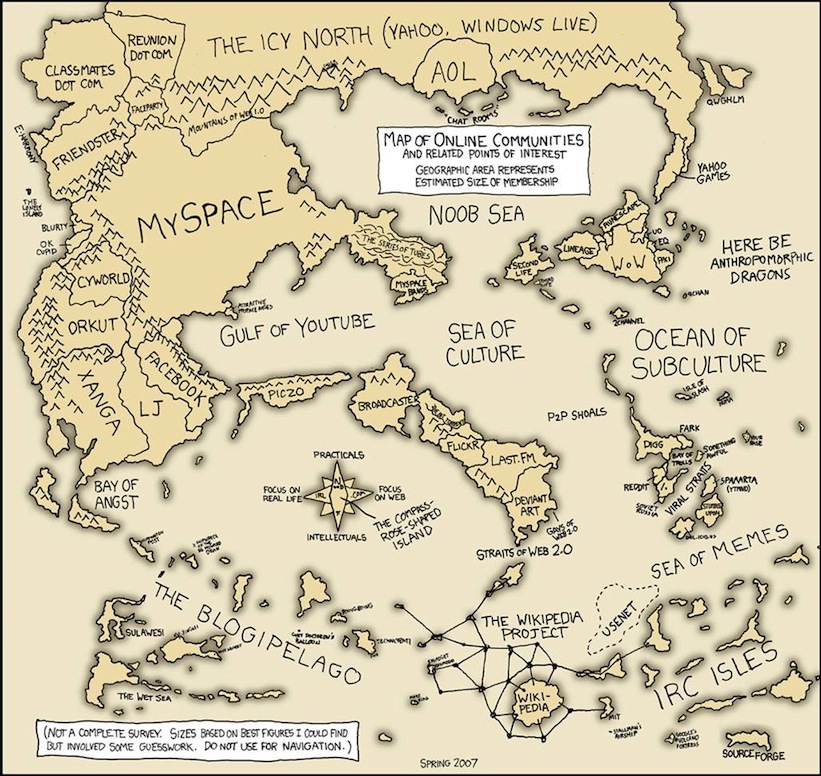
“We have the power to be heard at the click of a button, and you choose to let the world know where you’re eating your red velvet cake.” @darlol, one of my most favorite accounts.

For one thing, I regret how social media create a bunch of overly self-interested individuals. Take Mother Theresa, for instance. Shall there be Twitter back then, would she tweet the number of poor children she helped? Would your parents care to tell the world that they have been accepted to work in the country’s most bonafide company more than they wanted to make their parents proud?

Twitter and Facebook have indeed broadened our network reach, but they failed to deepen the existing connections we had before we signed up for an account. While our close friends used to be the first ears to know about how we feel that day, the internet deceived us to skip them and go directly for the bigger audience. We started creating false images of ourselves just for the fun of popularity. What good can we earn from these showing-off tweets?

“Headed to a meeting with new clients. Excited!”
“Kuta beach, here I cooome!”
“Thank you for the past two years, love. Waiting for more…”

I mean, I will still buy personal tweets as long as it gives me certain benefits: be it stupidly funny ones, extensively informative ones, or anything alike.

For the record, I do not declare myself free of any guilt. I, too, sometimes have the urge to let the world (or a particular person, most of the time) know what I’m currently doing, and damn, nothing can be more effective than Twitter.

So what we should blame on is solely the system of social network.
Its mere existence grows people’s insecurity, facilitates us to compare ourselves to others and, when we’re not lucky enough to have self-control, makes us feel rather ‘less’ than ‘thankful’.

Here’s an easy example: when tweeting about how you volunteered in one of the most respected hospitals in town does not even visit your mind, reading someone else’s announcement about how they happily work abroad will stimulate you to outpopularize that person by tweeting about it.

So, yeah. I’m looking forward to when our society gets maturer and cares to share ideas more than places they visit. Until that day, folks.

An Essay on Love (World without States)

In a planet where opinions are openly contested—although not necessarily valued—everyone appears to disagree upon everything: environmentalists refuse the expansion of industry, liberalists oppose regulated markets, and technocrats always opt for continuous progress above other options. Deep inside, these people have an ideal picture about the future they want to live in and, despite the apparent dissimilarities, all of them are united by a commitment to the quest of accomplishing their visions.

I, too, have my own aspiration about how a perfect world should be.

Together-world-peace-389504_400_300

For one thing, power tends to corrupt. The idea of social contract where abundant control is ‘voluntarily’ given by the society to a group of chosen individuals, therefore, has its intrinsic gravitation towards fraudulence. In many parts of the planet, this nature materializes in the form of strong soldiers killing innocent people for an invisible cause called ‘nationalism’, terrible misconduct use of budget that actually belongs to poor people, as well as limited freedom of speech over various means, justified merely by the paranoia of government officials. The most powerful ones ironically claim that they strive towards obtaining international peace when the only tools they use are guns and grenades.

The good news is, these conditions are not given; they are rather the products of a concept invented by the emperors and kings of Europe almost four centuries ago. Like any other invention, I believe that ‘nation-state’ also has its expiration date. Today, this process is further accelerated by globalization and technology, both of which have been escorting the global civil society to be stronger than ever. Just in the last few decades, transnational solidarity and tolerance have proven itself to be so powerful it can change the decisions taken by world leaders.

It is therefore possible that in less than a hundred years, states’ dominance will be replaced by a network of restless efforts and voices of the people. When the time comes, we might also overhaul the current system and recreate the foundation of this planet—because human beings deserve a better future. A completely different world from what we have now.

In that world, the only spoken language will be the language of unity. The disappearance of the word ‘nationality’ will be accompanied by the extinction of ‘gender’, ‘race’, ‘class’, as well as ‘ethnicity’. All of them will no longer be printed in dictionaries of any tongue, replaced by vocabularies of equality and justice. As the consequence, the level of misunderstandings between humans will greatly decrease, along with the ridiculous hatred among them.

In that world, the only visa required will be your birth certificate. Every newborn baby will be a citizen of the world, and one day he/she will settle down in a territory that needs him/her the most, regardless their blood relation. No one will be able to prohibit any individual from travelling and experiencing the journey of their life for one-sided political grounds.

In that world, the only valid money will be in the currency of love. When power is no longer a transactional commodity, it should be distributed equally to the people who need it. ‘Empowerment’ will become the main jargon of the next generation’s civilization, as they realize that leaving behind marginalized groups will equal the beginning of their own devastating loss. The economy will not be run under forced egalitarianism, but rather constructed upon the essential awareness that—at the very least—one shall not become a burden to the others.

In that world, the only prevailing religion will be humanity. Yes, everyone will still hold to their faith in different gods and rituals, but they all perceive one another as one big family. While safeguarding an even richer diversity of beliefs, conscience will speak louder than man-interpreted sacred texts, and mortals will be able to value life more than ever before. Wars will be kept in museums forever, visited by people only to remind themselves about the horrendous history mankind once had and shall never be repeated.

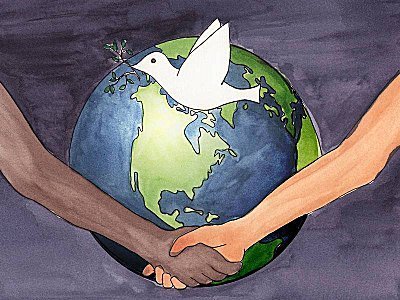
In that world, there will be no states. There are only I, you, and billions of people who give up the identity that our governments and grandparents once dictated us to have. There will only be a peaceful planet filled with men and women who regard differences as something to be grateful of, and impartial justice as their non-negotiable principle.

[P.S. This essay was submitted to the UNESCO-GOI Peace International Essay Contest for Young People and surprisingly got me the 3rd Prize, alongside with other wonderful writers from across the globe.]

Model United Nations 101

Wait, what? Why would any sane individual create a ‘model’ after one of world’s most ineffective organizations? The following slides were shared on yesterday’s Indonesia Model United Nations 2012 Workshop, and will hopefully assist us in answering that question. Enjoy!

For more information regarding the cool event itself, visit http://indonesiamun.com.
Have a great Sunday!

What Does It Mean to Be Human?

We were designed to do a lot of things: to change diapers, to sketch lousy drawings, and to land on the moon. But more than that, we are sentient beings with anger and despair, who often question the reason of our existence and the unknown post-death world.

This post is not a lecture about how our brains work—it rather tries to humble us down, contending that even our cherished logic and rationale sometimes need to admit that several emotions and sentiments can eat them alive. A lot of unparalleled events will bring humans to their lessons, readied to continue the journey and get to the next stage in the game of life.

Library

1. To fall in love and to get hurt afterwards

Being mortal means seeking for comfort from another mortal, to tell each other that even in this short period of life we are big enough to care about another being—to let them know that everything’s going to be okay because you will always be watching their back. It means treasuring the most important people in your life, sometimes by asking their hand in a marriage or adopting them as your child. Despite its compelling beauty, investing a big portion of feelings into another human being also means risking them to get deeply, devastatingly hurt. To find out that the man you grow fonder for every day loves someone else, for example, to see your son in such a big pain after that car crush, or worse—to let death take them away. It hurts. It hurts more than what your heart is capable of handling.

2. To try hard forgetting traumas and pains

One of my favorite quotes from Murakami’s 1Q84: “Life is a battle of contrasting memories.” Happy memories, I would argue, can become even more lethal than sad ones, because they trap you in your past forever. They keep you away from realizing that the status-quo has changed. They deny, above everything, that although some feelings last, most of them vanish after a while. Comparably, humans try to self-cure by forgetting trauma that creates constant pain. Our brains reconstruct what happened and what did not, even when the Truth has to feel misjudged for it. For what it’s worth, traumas are the strongest and most eternal part of our pieces of mind, hence they deserve to be celebrated on a regular basis.

3. To feel sorry for things we cannot control

We hate to admit that sometimes we just hate several things, because surrendering to hatred makes us feel small. But then again sometimes we do hate ourselves for being weak, coward, and not able to take hard decisions. Then comes the fear of being powerless and completely detached with God when He created a scenario for our future. To comfort ourselves, we start creating lies about who we are, and clinging to that tiny hope given by the society. When these lies do not come true, we start feeling sorry. We apologize for not being in control of everything all the time. We wish that a different story plot could take place.

4. To leave traces of lasting memories with our beloved

All of us die. Some of us have to die sooner than the others and, however hard we try to fight against death, we always need to let go. The only way to stay alive forever, then, is to leave traces of everlasting—although not always sweet—memories with your beloved ones. What I’m telling is, if you have someone you dearly love at the moment, come to him/her and let them know you want to stay alive forever in their head. Tell them worldly ambitions do not mean anything compared to the kind of happiness that comes to your heart whenever you’re together. Because one can never predict what tomorrow brings.

5. To seek for words we never find

In the end, feelings are too complicated to be translated by human’s simple linguistic syntax. When mutant butterflies start kicking your stomach, when your heart jumps off to your throat—how come we do not own a word for that? To be human, then, is to solve the riddle of letting our counterpart understand how we really feel when there’s no adjectives (nor nouns) to define it. But then it’s okay because it makes us human.

Isn’t it beautiful, the fact thatas much as we’ve been boasting about conquering the world with technology and transformative speecheswe are just powerless, helpless beings?