What It Really Takes (for Indonesia to Reemerge as the Third World Leader)

[An essay I submitted to the G20 Youth Indonesia selection committee.]

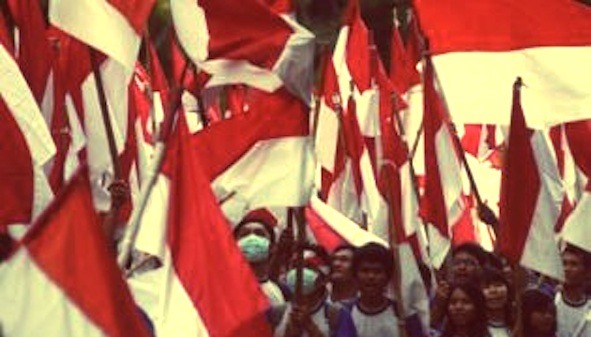
Indonesians are trapped in historical romanticism for a reason: this archipelagic country was once indeed a great nation who stood up against post-colonialism inequality while promoting cooperation in order to accelerate the accomplishment of post-World War II development agendas. The establishment of Association of Southeast Asian Nations, the success of Bandung Conference and consequentially Non- Aligned Movement, as well as Indonesia’s victory over the Netherlands in the case of West Papua; these three cases are enough evidence to demonstrate Indonesia’s outstanding performance back then. Not only were we the pioneer of great initiatives in the region, Indonesia was also respected as one of the game- makers during the Cold War era—hence validating the claim I made in the beginning of this essay.
Tes_copy

Having undergone over 67 years as an independent republic, however, it is essential for us to stop glorifying the past and question our current standing: where are we right now? Have we lived the pride our Founding Fathers had about a harmoniously prosperous people they dreamt of? If not, what went wrong and—more importantly—how could we fix them? These inquiries are very pivotal drivers for today’s young generation lest this nation seeks to move on from exalting the past and start being proud Indonesians. Deep down, I always believe that if we manage to unleash all of Indonesia’s potentials, this country will not only reemergence as the leader of the Third World: we can be one of world’s greatest state-actors both in economic and political sectors. The following paragraphs will explicate further upon the foundational strategy that is deemed essential to achieve such an ambitious notion—each of which covers both national and international aspect of the policy.

I. Open Government: Bureaucratic Reform as the Backbone of Change

Blame the game, never the players. I believe that it is not impossible to change the behavior of individuals as long as an effective system is in place. All the issues coming from Indonesia’s bureaucrats, thenceforth, should also be dealt using this intelligent postulation: that the rules and regulations need to be frequently monitored and evaluated more than the countless problems themselves. In other words, the leaders of this country should utilize a helicopter view lest they wish to mend the republic holistically. So before Indonesia continues with big ideas on international standing and foreign policy recommendations, the issue of open government (i.e. transparency and accountability) needs to be addressed immediately— both as a domestic matter and a universal currency.

The story of Indonesia’s struggle in improving its bureaucracy has begun long before the 1st Open Government Partnership meeting was held in New York, 2011. But taking co-chairmanship with the United Kingdom this year, Indonesia has made a global commitment to enhance its checks and balances mechanism paralleled with national endeavors to increase society’s participation in the process. The year 2011, 2012, and 2013 are stated by the official Secretariat (under the President’s Delivery Unit of Development Monitoring and Oversight) respectively as the ‘commencement phase’, ‘breakthrough and innovation phase’ as well as the ‘expansion and intensification of public participation phase’. The year 2014, therefore, is a critical period that will determine the success of Open Government Indonesia’s four- year national roadmap as well as its bargaining position internationally.

If I were the next president of this republic, I will firstly ensure the continuation of this initiative. Domestically, a more open government will not only effectuate a better coordination as well as decision- making process amongst the cabinet and ministries I lead, but further it will also enhance the quality of public service units, eradicate corruption, restore society’s trust in the government and, in return, build stronger political participation. Internationally, Indonesia will gain more respect because, despite being a developing country, it dares to prove its consistency in promoting a more open government that adjusts with the advance of technology and innovation—which is still a difficult mission
for Third World countries.

II. The Archipelago Economy: (Agricultural) Growth for All

Having repaired the government’s home-performance through bureaucratic reform, my next focus would go to our economic growth. Above everything, we need to realize that Indonesia is one of a few countries that are bestowed with rich natural resources. To list a few, Indonesia is: 1) world’s largest producer and exporter of palm oil, 2) second-largest exporter of coal, 3) second-largest producer of cocoa and tin with 4) fourth- and seventh- largest reserves of nickel and bauxite. November 2012, however, marked a historical wave in the course of Indonesia’s economic performance, when the country’s top 1.500 leaders gathered in a visionary meeting to discuss how Indonesia can boost its potentials even further. In this meeting, a report on The Archipelago Economy: Unleashing Indonesia’s Potential was presented and the findings were rather a shocking one: Indonesia was predicted to surpass Germany and the United Kingdom as world’s 7th largest economy by 2030.The analysis highlighted how it was pivotal to safeguard stability while promoting diversification of economy in order to invite more investors as one of the key factors in the country’s overall development. A thorough and meticulous management is then mandatory in order to deal with this once-in-a-century economic transformation. As the leader of the country, I would ensure that all of the participating parties in the national meeting to harmonize and accustom their respective institutions to take part in this astonishingly stimulating vision.

Among others, my priority would be set upon increasing the country’s national productivity in agriculture and fisheries. One of my most elementary reasons will be the apparent rise in the number of middle-class consumers in the emerging markets such as India and China. Domestically, the increased demand is predicted to take place simultaneously with giant migration of countryside citizens to the cities. According to the report, to meet domestic demand alone, Indonesia’s farms will need to increase productivity by 60%—making it imperative for the government to anticipate and ensure significant improvements in agriculture and fisheries sector. All of these efforts should aim at well-distributed growth throughout the archipelago, accompanied by adequate skill-based
investment in our youngsters.

III. Take Big Jargons to the Extra Miles: Reestablishing
Leadership In the Region

Traces of Soekarno’s brilliant discourse building such as the dichotomy between NEFO (New Emerging Forces) and OLDEFO (
Old Established Forces) in the Cold War era seemed to have also inspired today’s foreign policy. After Yudhoyono’s infamous line ‘a thousand friends, zero enemy’, the MoFA continued the legacy by bringing up the so-called ‘dynamic equilibrium’ to the table of our regional negotiations. Last year, chairing ASEAN, Indonesia also introduced the vision of ‘ASEAN community in a global community of nations’. These three jargons should, I wholeheartedly believe, be utilized to further empower Indonesia’s role in the global arena. Beyond this, Indonesia needs to bring up the equivalently important discourse of sustainability and human security as the main development agendas post-2015. Hundreds of years of civilization have taught me one thing: that the power of words is often undermined—as long as the country’s leaders commit to the discourses they initiated, it is not impossible that the international community would once again pay respect to our country’s determination and acknowledge our leadership in regards.

After all, the year 2014 should not only become a year of ‘democratic festivities’ where millions of Indonesian citizens will celebrate democracy by using their voting rights, but also a decisive period that will determine whether or not this country can unleash its predicted potentials. Having elaborated three of the most basic—not necessarily huge, but profound—policies that need to be catered in welcoming a greater development for the country, I would like to also emphasize the important role of youth as the upcoming decision-makers, entrepreneurs, as well as engineers of the country: the government needs to invest more in capacity building programs and educative projects. Shall these foundational aspects be successfully accomplished, I am more than confident that the nation can finally move on from their pseudo-pride of historical romanticism—and cherish the real thrill and honor of being an Indonesian.

Footnotes:

[1] ‘About’, Open Government Partnership’s official website.
[2] Open Government Indonesia: Sebentang Titian Menuju Keterbukaan(Jakarta: Open Government Indonesia Secretariat, 2012)
[3] Masterplan: Acceleration and Expansion of Indonesia Economic Development 2011-2025, Coordinating Ministry for Economic Affairs,
Republic of Indonesia, 2011.
[4] Raoul Oberman et. al, The Archipelago Economy: Unleashing Indonesia’s Potential (Jakarta: McKinsey Global Institute, September 2012)
Twelve Pieces of Twenty Twelve

Confession: 1) I still feel as if this post was made just about yesterday in the very corner of my room. Apparently, another set of 365 days has passed—and 2) I would lie to say that I don’t enjoy the process of reading through my agenda while leaving marks on the pages of moments-slash-accomplishments that matter to me throughout the twelve-month period.

So without the intention to sound cocky whatsoever, here goes my story.
(You might want to stop here if all you have in your head is a judgmental brain.)

January: Beaches and Beyond

1

It has been a tradition of the crazy students in my beloved department to start the year with an outing agenda. This year, we went to Anyer Beach and despite feeling tortured of not being able to be productive for three days, it turned out that playing with the sand and sea is just as enjoyable as exploring a silent mountain. (The month become twice exciting when I got the news that I will be an assistant lecturer in one of my favorite courses this semester!)

1

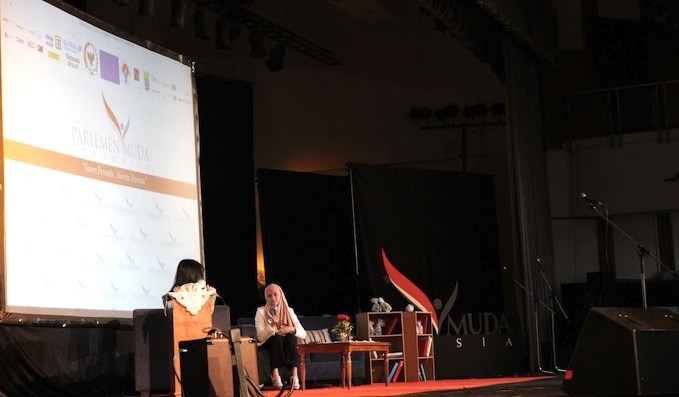
Other than the newly-found affection, this month also marked the beginning of my realization upon the perks of chairing a discussion. Having moderated Marshanda and Dik Doang in Meet the Leaders National Conference, I realized that my previous giddiness toward bad interviews was not always triggered by lame answers but also hardly-sharp questions thrown at them. And somehow this reminded me of a nostalgic push to have a career in journalism.

February: There Are Still Lessons after a Second Failure

2

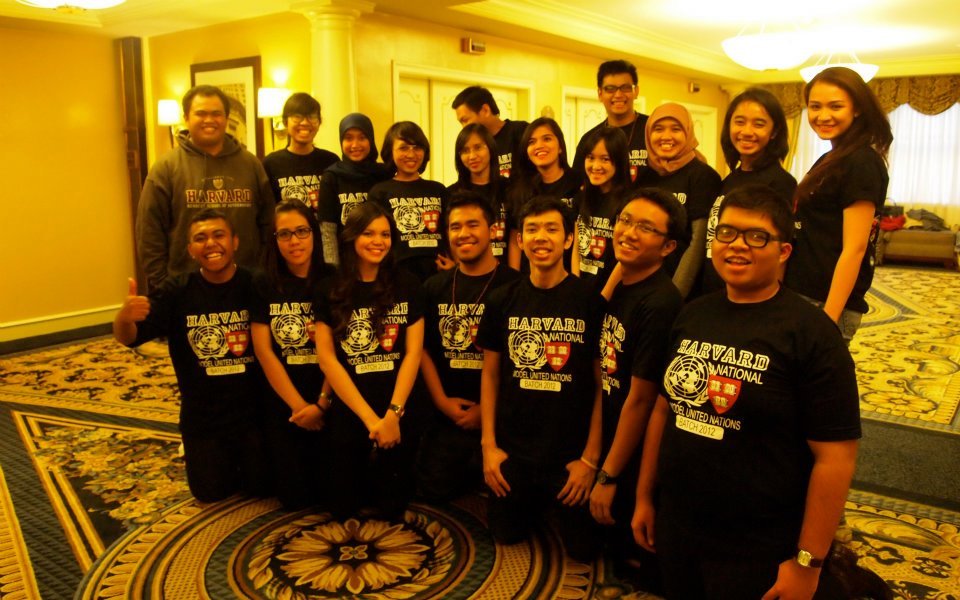
Having successfully failed (what an oxymoron) in 2011, Universitas Indonesia’s team emerged and (objectively) performed even better at Harvard National Model United Nations 2012 last February—although we missed the award. Again. The loss hit me even harder not only because I was the head delegate, but also the fact that it was my second chance and I still missed it. But hey, it helped me to realize that I truly savor the pressure and level of complexity this competition offers (and thus will go there again next year). Good thing that we got to stroll across New York for three days afterward (I also made a post about it).

March: Even True Love Needs a Proof

3

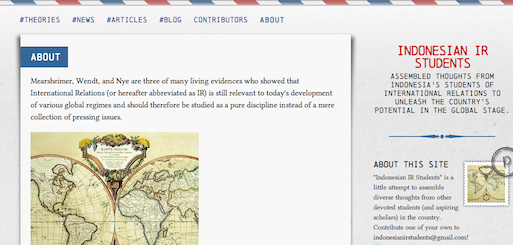
After having the idea for quite some time, my two friends and I finally managed to publish Indonesian International Relations Students websitea platform for, as the name stated, passionate youth to write their ideas and arguments in the discipline. Additionally, @iirstudents was also made to spark online debates/discussion and basically interact with the people on Twitter. I was so happy getting exposed to everyone’s enthusiasm!

April: The Devastation of Getting Second Is a Myth

4

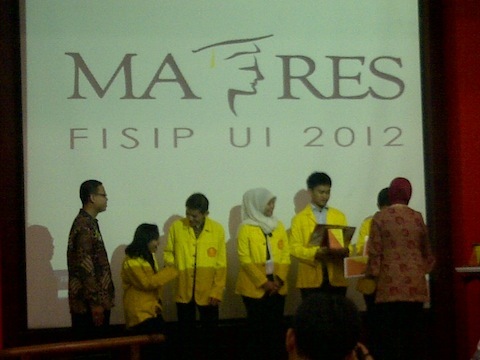
According to this research, bronze medallists are happier than those who won silver. The reason to such postulation is mainly the fact that runner-ups usually face a harder time moving on from the thought of “I could’ve been the champion had I done a little better.” Knowing the efforts that my best friend did to win the faculty’s Mahasiswa Berprestasi award, however, I know that he deserves the position far more than I do and I can’t be a happier runner-up. (Oh wait, I could beit was when Iman was finally announced as the National Champion!)

May: Lessons for the Coach

5

I always had the fear of “You’re not good enough to win an award and yet you dare to train us?” whenever I began a coaching session (for either public speaking, debating, or—mainly—Model United Nations). As I went on, however, I got to understand that being a coach is not about being greater than your kids (and thus legitimize your position as the person to look up to), but having the eye able to identify even the most hidden potentials that they have and smart enough to formulate the method that might assist them in the unleashing process. Currently feeling rather addicted to it (especially after the chocolat chaud the kids brought me from Canada, LOL), this year I took the pleasure of becoming the coach for several teams in my campus’s club as well as high schools.

June: It’s Okay to Stop By

Img_20121225_150630

If there’s anything I really learned this year, it’s the fact that life is not only about moving upward the stairs of career but also having frequent pauses so you can enjoy the view. So—invited by a senior—I sneaked into his extended class on philosophy in Sekolah Tinggi Filsafat Driyarkara every Monday, in addition to several other unrelated concerts, seminars, and of course, books.
Which were amusing!

July: Australians Make the Best MUNs Ever

7

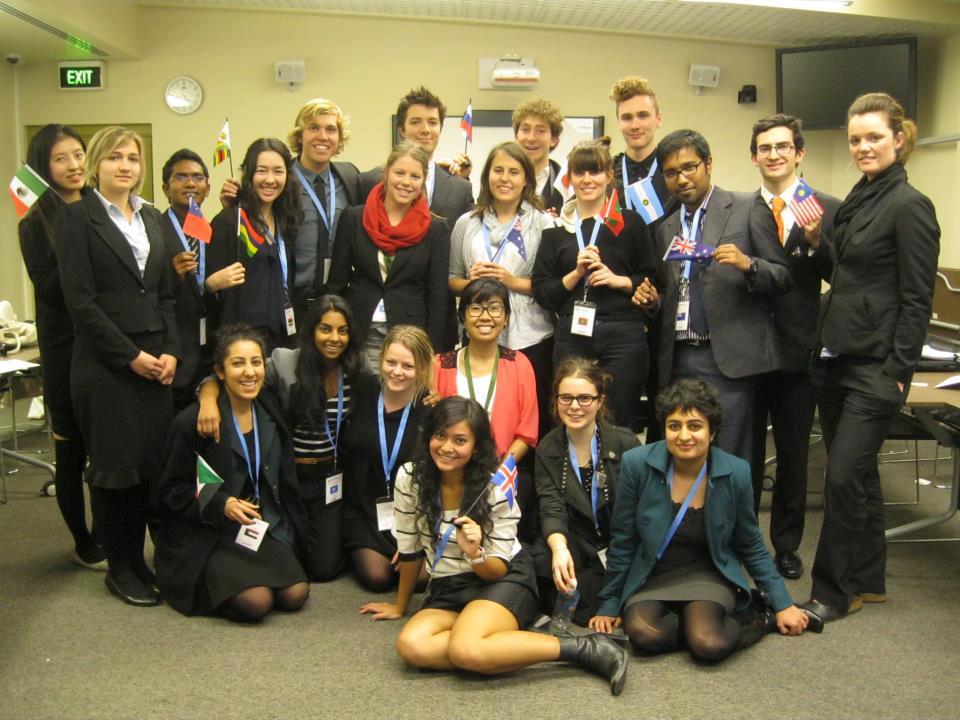
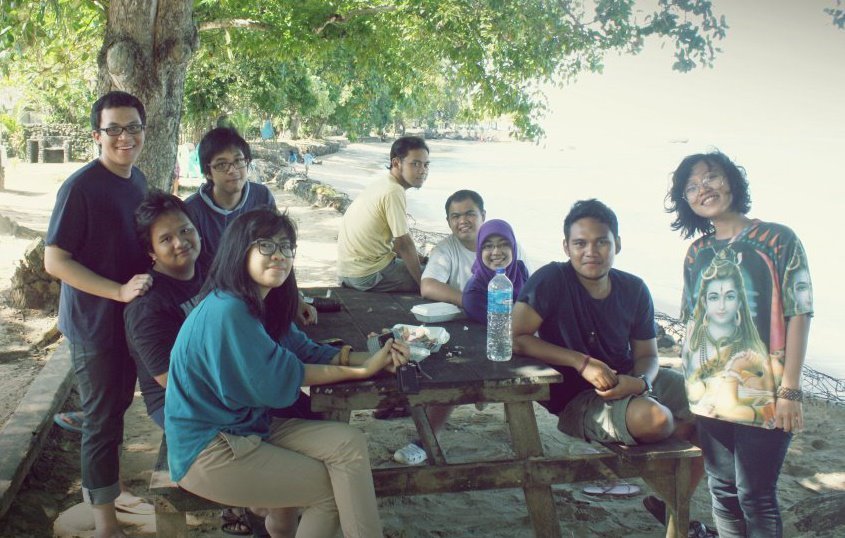
I still remember my first experience of directing a conference—I was a rather shy, clueless one—and within just one year, God let me experience a whole new level of heated debate in the year’s most livable city, Melbourne. This was me, my co-director, and the delegates of COP 18 at Asia Pacific Model United Nations Conference 2012 after three days of great discussion on global carbon trade. We had motions on video-screening, singing, and dancing—I love Australians!

August: A Collage of Overwhelming Exhilarations

8

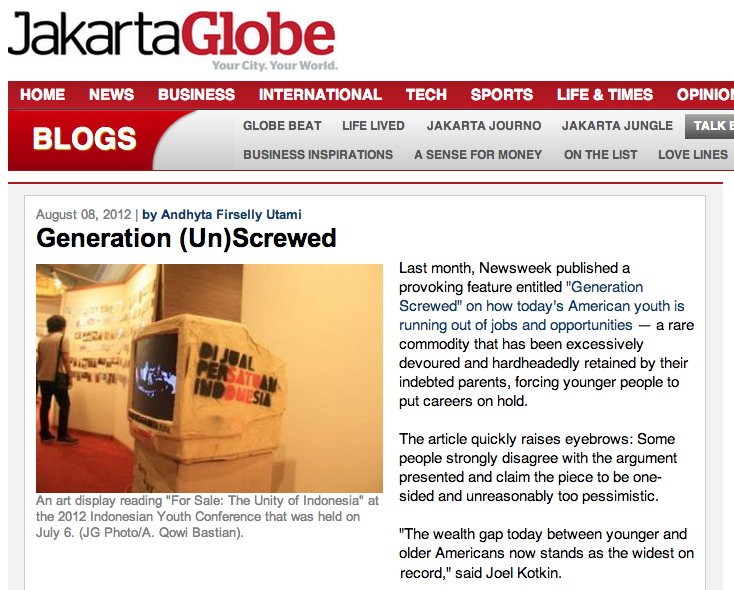
1. I finally published my first-ever article on The Jakarta Globe Blogs. The amateur (not to mention debut) post made it to one of the Most-Readable-on-JGBlogs, got 88 retweets, and I definitely felt super-great about it! You can read it here.

8

2. We managed to hold the first-ever national gathering of Indonesian Future Leaders board from across the country! Despite the poor venue (we had it in an unused masjid’s hall), we had a really precious time togerther exchanging views.

8

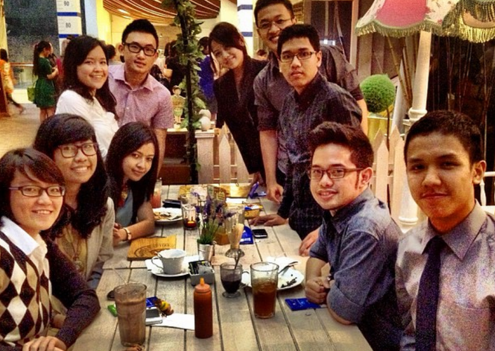
3. A series of meet-ups also filled in the month. I’m usually a wallflower who avoids crowd, but the month really taught me how meeting new people let you brainpick in an entirely different way, but equally nice. These are some of the awesome people I met somewhen in the middle of August.

8

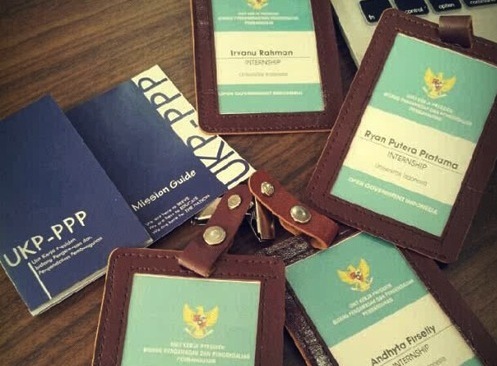
4. You know, it’s just about time that one will regain their faith and optimism in the government. I had mine after working with a team of Indonesia’s most brilliant people in the President’s Delivery Unit for Development Monitoring and Oversight for two months, as an intern. You should have a slice and apply, too! More information can be found here.

September: Graduation Is Both a Farewell and a Beginning

9

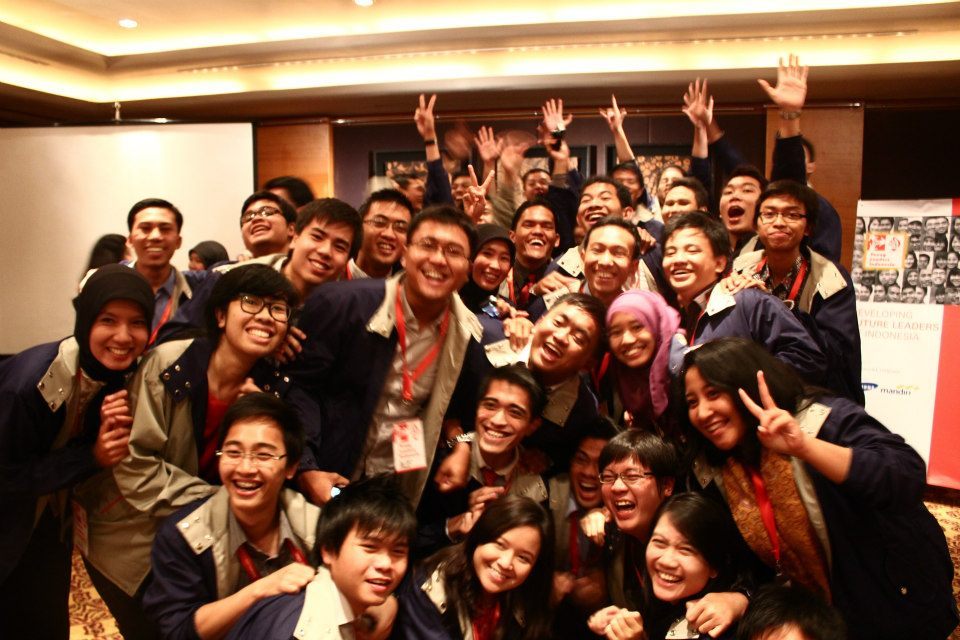
After going through five months of amazing forums and awesome projects, we were finally declared as the alumni of Young Leaders for Indonesia Wave 4.
I don’t exactly know how I can say this without being cheesy, but the experience was truly a life-changing one—it made me realize that each of us has the responsibility to contribute back to the country.

9

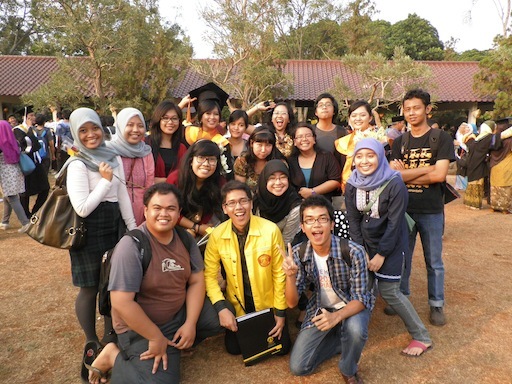
In the same month, two of my friends also graduated—from the university, in just three years! The rest of batch 2009 can’t be prouder of Pettisa and Caroline.

Screen_shot_2013-01-02_at_12

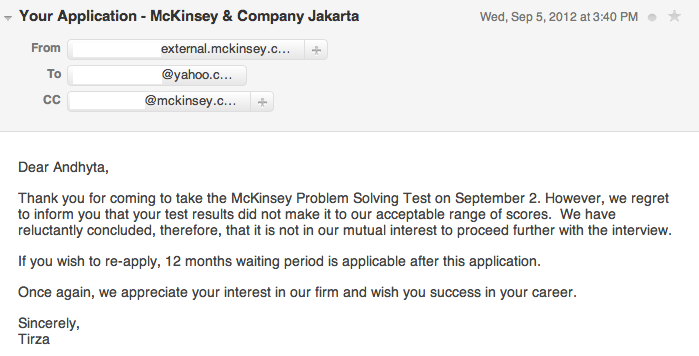
My friend Gesa once told me about this clever person who made a curriculum vitae not only after his achievements, but also failures. So this, my friend, is an open self-reminder that I have been once rejected by a company I wished to work for. I felt very, very disappointed at that time, but rejections are one of the most effective tool to humility. Cheers.

9sd

P.S. I also had a
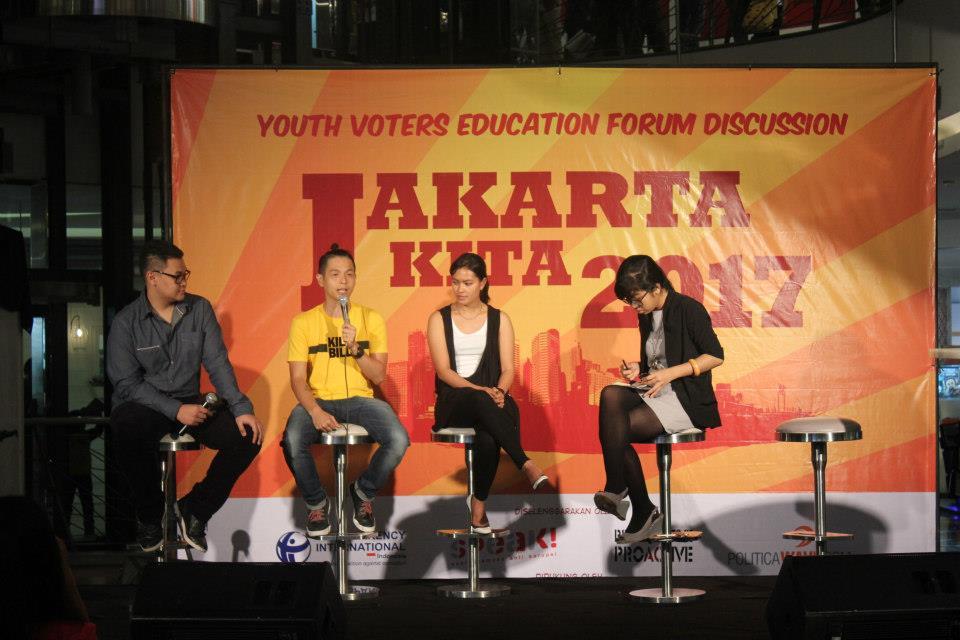
hard time moderating my first-ever semi political talkshow with (among others) Faisal Basri and Arif Zulkifli, but ended up enjoying it! Oh and after getting the opportunity to talk and moderate a number of other similar events, I sort of understand how answering human’s instinct to share will indeed lessen the burden of being overblessed with opportunities.

October: The Commencement to My Retirement Period

Img_8043


Indonesia Model United Nations 2012 marked the last (and best) event I was involved in throughout the year, and can’t be a prouder part of it. Looking forward to a greater one next year, will gladly come to the closing ceremony, Diku.

November: Too Much Happiness

11

Hold your breath, ladies and gents: I FINALLY MET AYU UTAMI IN PERSON! Although I did embarrass myself by unstructuredly blurting out how she’s not just my favorite writer but also a prophet-writer whose writings profoundly change how I see things, I was so happy when she spontaneously commented, “Oh kita beda satu huruf aja berarti. Kamu A-fu, saya B-fu. Maksudnya Bilangan Fu,” followed by the audience’s laughter.

11

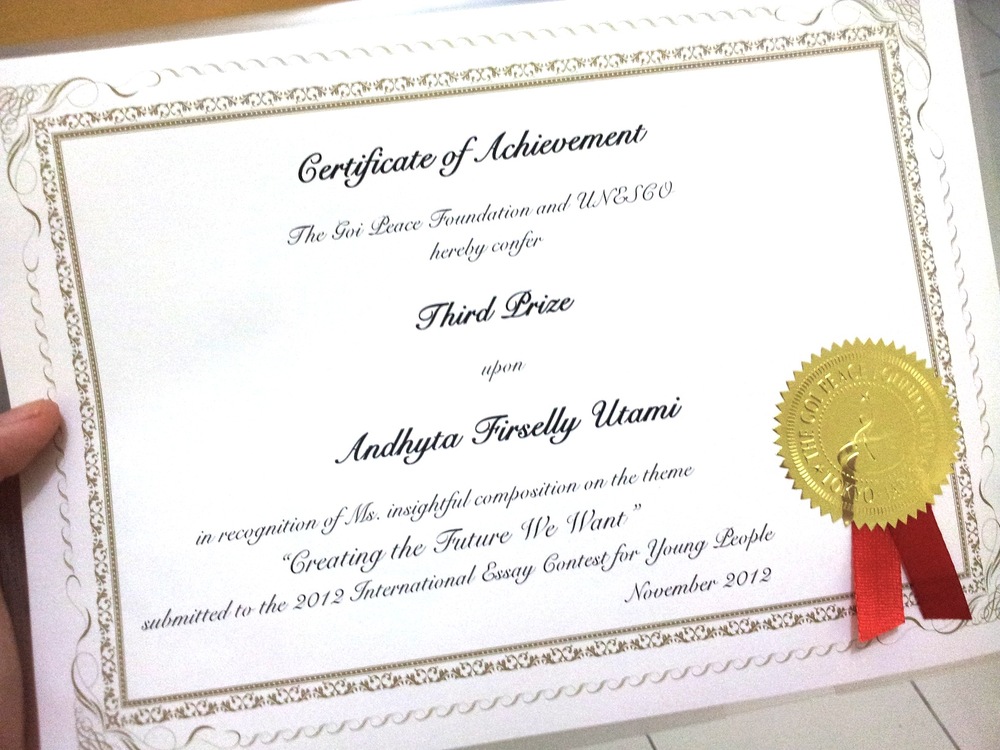
And this. This marked the first time I scored in a writing competition (I never entered any before) and God I can’t be any more thankful.
In case you want to read the essay I submitted.

December: West Sumbawa and Bali

11

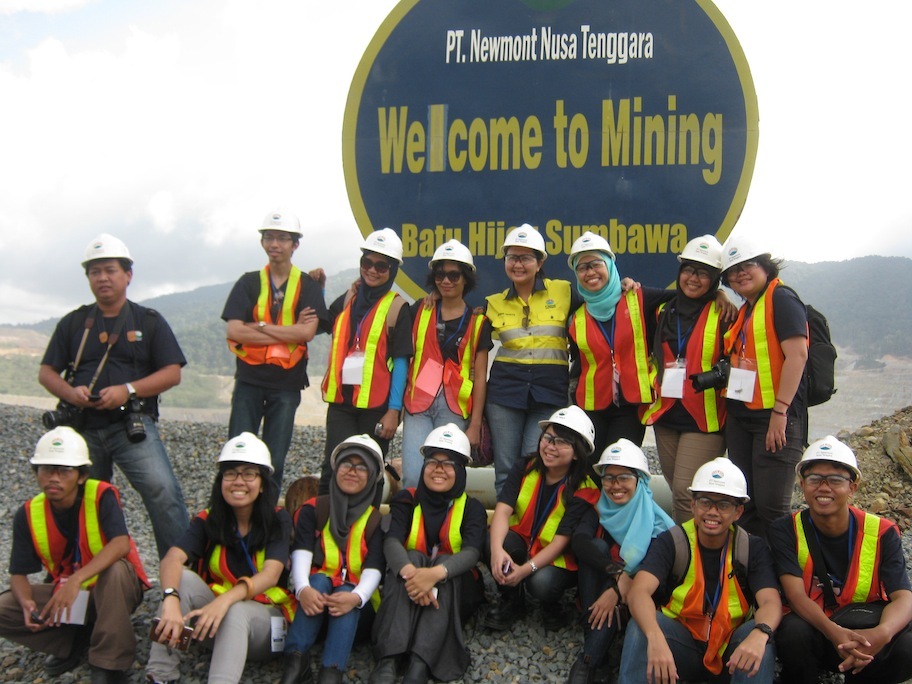
I used to ‘meh’ at people who blabbed about how not traveling is like only reading one page of the whole book yet my first experience to another part of Indonesia outside Java Island gave me this perpetual longing to explore some more.
Had an interview about it.

12

Did not manage to compose any report about Global Youth Forum, but I guess most of my criticism was eloquently elaborated by Youth Policy’s article. Thanks to Angga Dwi Martha, I had one of the best hands-on learning experience about how a policy-making process is really complicated and yet critically important. Although, the event stroke me back with a bit of pessimism about how our bureaucrats can ever meet our high expectations.

Above all the heartbreaks that made me stronger and missed opportunities that humbled me down, I thank God for proving that even after all the amazingly wonderful experiences I had in 2011, things can still get better.

Let 2013 surprise us. Have another great year ahead!

P.S. Lately I’ve been doing a small literary photography project on Instagram. Despite the obvious incomparability, the activity gets me excited just like writing does. Feel free to check the pictures out!

Goenawan Mohamad’s (Modified) Spectrum of Writing Personae

Among the most worrisome people I know are writers—yours truly included.

First, they (we) worry about an issue—say, Iman aims to maximize youth involvement or Alanda and her noble idea of dream power. Second, they worry if the audience will actually get their message right—Marx is the least Marxist person on earth, remember? The published ones worry if their books can’t get to the second print because the public are simply not interested in buying them. Then they worry some more—about possible rebuttals, the kind of language they should’ve used (Why the hell am I writing this post in English if most of my readers are Indonesian?), the gender of diction that will sound best (Shouldn’t it be more cheerful? Would this bore my visitors?), and the list goes on.

This tributed post, my fellow writers, is an antidote to the endless stream of concerns that surround us (both professional and amateur) writers: the story of what actually takes place in our very primitive stage of writing.

So earlier this week I started reading Goenawan Mohamad’s Indonesia/Proses. Despite being greatly impressed by his eloquent elaboration on the profoundly misunderstood concept of identity, I will highlight something else—my most favorite part of the essays, in fact:

Dengan sendirinya, medium [menulis] sangat berperan penting dalam terbentuknya persona itu. Korespondensi, kita tahu, berbeda dengan catatan harian. Catatan harian adalah ibarat sebuah kapsul pesawat antariksa yang berisi seorang astronaut di dalamnya. Dalam catatan harian, seseorang masuk dan diam di sebuah ruang komunikasi yang paling intim, tapi juga berada dalam ruang pikiran dan imajinasi yang hampir tanpa batas. Tak ada orang lain. Atau orang lain itu (seperti dalam catatan harian Anne Frank) diciptakannya sendiri dan berada di bawah ampuannya: teman bicara imajiner itu tak bisa menjawab.

This particular paragraph strikes me. Hard. Finally, the answer to all those confusing inputs that people throw at me (“Menulis itu harusnya untuk dimengerti orang banyak, Fu. Percuma lo mikir ribet-ribet kalau nggak ada yang baca,” or Pramoedya’s “Bangga memang, menulis dalam Belanda. Tapi orang yang menulis dalam bahasa pribumi lah yang bisa meninggikan derajat bangsanya.”) appears: there are options of writing-mindsets! Your writing medium plays a pivotal role in the creation of this (your) persona. Of course!

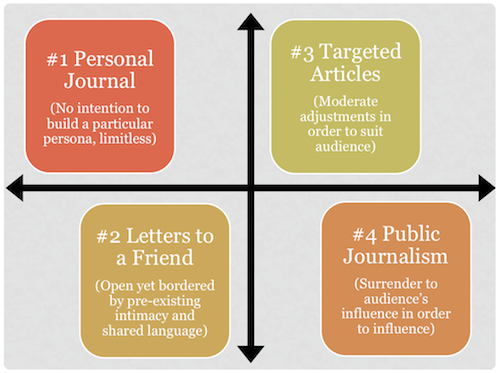
I then took the liberty to create this spectrum of writing personae:

Screen_shot_2012-10-31_at_9

Basically, Goenawan postulates three distinct examples of writing personae (Anne Frank’s diary, Kartini’s correspondence with her Dutch friend, and a journalist’s report)—but then I added a complementary element of targeted articles. Here’s how they’re different from one another, in his own words:

Personal Journal

Kecuali bila seseorang sadar bahwa catatan hariannya suatu ketika akan dibaca orang lain, ia praktis secara mutlak menguasai ruang komunkasi itu. Ia bisa bicara apa saja. Catatannya bisa berperan seperti sebuah curahan konfesional, semacam pengakuan dosa yang tanpa pastor.

Public Journalism

Bila catatan harian adalah ekstrem yang satu, media massa adalah ekstrem yang lain. Bila catatan harian ibarat sebuah kapsul pesawat antariksa, media massa ibarat sebuah konser di alun-alun. Ruang komunikasi di sini hampir sepenuhnya publik. Menjangkau sebuah audiens yang besar, berkat teknologi Guttenberg dan kapitalisme-cetak, media massa mengandung paradoks. Ia kuat dalam potensi mempengaruhi, tapi juga rentan.

Letters to a Friend

Dibandingkan dengan kedua ekstrem di atas, surat-menyurat bisa dilihat sebagai sesuatu yang berada di tengah-tengah—antara ruang komunikasi yang intim dan surat kabar. Dalam korespondensi, ada orang lain yang nyata, yang bisa bertanya dan bereaksi. Tak hanya itu: orang lain itu secara konsisten dapat diidentifikasikan.

Briefly (yet articulately) explicated in less than two pages, this theoretical framework helps me understand that it is okay to be different personae in different writings—because there is no right or wrong in pouring our thoughts into words; what matters is you feel comfortable in doing so. I myself have three (or probably four?) separate blogs where I express myself dissimilarly. Because hey, what is writing if not a personal ritual and powerful remedy to the restless minds?

Here’s to being more open to who we are and what we like writing about the most.

The Tale of a Retired Student

Once upon a time, there lived a ridiculously ambitious girl who often took responsibility for things she wasn’t even sure if she was capable of. Despite side-effects in the form of temporary insanity and occasional stressfulness, she actually enjoyed what she was doing and told everyone about it. She somehow managed to thrive and emerge as one of those people-to-go-to; which consequently added up a series of even more workload every now and then—that she gladly accepted.

Some three years later, entering her final stage of university, she realized that it was time to give up. The expiry date to ‘good-productive-days’ has been bamming on her door, and the alarm to ‘get off your horse and go to the balcony to enjoy the view instead’ started ringing. “Alright,” she thought, “what can be so bad about spending more time for myself? I can finally read those books, blog on a daily basis, and have some fun!” These were several ideas that her friends offered and something she expected (hoped) to be true.

Two consecutive months of being a retired student, however, led her to three surprising discoveries: 1) she was barely happy throughout the beginning of her pension period; 2) she hardly wrote anything other than her amateur thesis; and 3) she knew for a fact that a big part of her identity was missing.

But of course, there’s no point in sharing merely the sad part of the story. This bounce-back post is therefore an attempt to highlight the lessons-learned and positive sentiments instead (she happens to believe that she’s not the only person who’s going through the challenging phase of being a useless individual and wishes to move on). So here we go:

Kevinbarbainstagramwallpaper

1. There Is No Such Thing as a Cure to Post-power Syndrome

You see, the prompt emptiness that (paradoxically) fills up your days will always remain there. Some of your peers might suggest other replacement activities such as hiking, singing, shopping (I mean—who doesn’t love it) but hey, organizational hecticness that you usually subsribed to has this ‘continuous’ element that makes up what it is. As much as new rituals or hobbies can distract you for a while—it would take something more permanent to completely restore you back to a good shape. So the only way to deal with it when you can’t find a new place to be masochistic is this: let go. You just have to appreciate all the extra time that you have and carefully avoid being boring in between.

2. You Get to See Things You Previously Did Not

It might sound and look very bad at first, but being idle actually bestows you this sort of superpower to observe even deeper than what is observable. You begin to realize what people are implying behind their statements, you know what it takes to be a true friend, and you become conscious about the people who really care about you. You also understand how some colleagues actually don’t hate you but simply feel threatened, while some others have no feelings at all notwithstanding how much they enjoy flirting with you.

On a more negative note, however, you and your retired friends tend to chat (a.k.a. gossip) about one another—not because you’re mean, of course, but you’re just running out of topic to discuss about. The usually fruitful discussion on ‘how are we gonna get extra 20 million in just a week’ or ‘what concept of event can work best for this situation’ has to vanish and gets superseeded by those of ‘why is this person doing this and not that’ or ‘shoot I envy her for blablabla’. Futile and shallow, but it might as well be part of being a sociable human being.

3. You Become More Sensitive and Grateful

The small memories that you usually toss away in order to give more space in your brain for functional knowledge and pragmatic information, now become golds that you gladly treasure. You munchscreen morning greeting from an old fellow, thank a friend for a nice massage that they give out of the blue, or an afternoon discussion over a glass of green tea. You…act more properly to the guys who treat you well—not because you desperately need a boyfriend now that you have a lot of time to waste with, but more because retiring means switching on that ‘human’ button at the back of your head. Cheers for becoming a mortal with emotions.

4. Your Family Finally Stops Complaining

At last, you spend enough time at home. Your brothers don’t hunch in your presence anymore, you get into one of those long conversations with your father, and (this one takes an extra effort) you can help your grandmother bake that red velvet cake you never had a chance for before. Those Modern Family episodes you were somehow familiar with commence to eventuate and you can truly have a hands-on experience on them.

5. You Suddenly Want Kids

Wait…okay. This last premise probably only applies to me, but seriously being jobless makes you aspire for new stuff (and this video does not help). For some people it probably translates as up-to-date shoes, bags, or set of clothes, but all I need is some 5-to-10-year-olders whom I can play silly games with. I guess for the time being I should feel content with just hunting novels.

That, my friends, conclude my Tale of a Retired Student. Hope you feel entertained and somehow-inspired by it. Old students unite!

P.S. Putting my preference to the original storyline aside, I think Benedict Cumberbatch is the coldly-warm kind of Sherlock Holmes that Sir Conan Doyle would’ve actually been delighted for, although he’s too good-looking—not that I’m complaining. HAHAHA.

Who Are Friends If Not the Strangers We Chose to Talk to?

Traditional celebrations like 1st of Syawal (a.k.a. spending longer time with parents and siblings) can mean various things for a person: questions of “when-are-you-getting-married”, obligation of replying tons of broadcasted texts, hours of ride to an unknown area, but among others: missing your friends—or, in a more romantic sense, “the family you pick for yourself”. This post might get a little bit too sentimental, but really, I can’t find a better method of expressing how friendship takes a lot of part to my daily happiness.

639635053

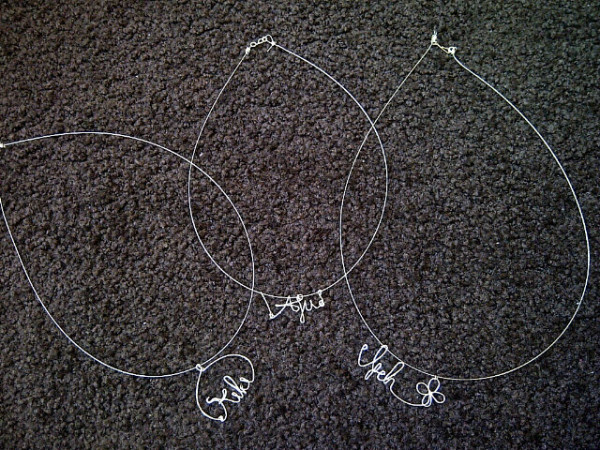
I’m not a fan of cheesy tokens of friendship, but these necklaces made by Diku are irresistably cute—although I can’t promise her that I’m ever going
to wear it. Sorry, darling. HAHAHA.

*clears throat*

Familiar with those cliche lines about “true friends are those who stick with you through the hard times” and the rest of similarly phony quotes? Well, let’s not stop there. This post would argue that there are countless factors, tinier but more profound bits, that constitute a friendship. And even more intriguing, I’ve found that a plethora of friendship types exist—not being in one category doesn’t make you a less valuable friend, the system simply works differently. The following ones are just several examples that are by no means mutually exclusive to one another (i.e. a person can belong to more than one group) and they may or may not be applicable in your own story:

1. The Guys Who Bro-zoned You

Or, if you’re a male, the girls who sister-zoned you. This type includes those from the opposite-sex who can easily ask you out to accompany them to another town or hang out the whole day and tell you boring stories about their newest crush yada yada yada with no hesitation whatsoever. Being with them (usually two or three altogether) in your best days can mean feeling safe under the watch of plural bodyguards—but in your worst days when you really need them, their girlfriends (if they have any) take them away.

Some of you might start seeing traces of this pattern around: the one-girl-with-two-boys and (I don’t really see that much but for the sake of gender equality) one-boy-with-two-girls? This type usually goes in sets like that. Oh and, familiar with the “let’s get married if we can’t find anyone when we’re 40” vow? One can always abuse their bro/sisterzoned friends for this. LOL.

2. The Partners in Rare, Short, but Always Meaningful Discussions

People say that the best kind of friends are whom you can spend hours with—even while doing nothing at all. But what if, for unavoidable reasons, some friends cannot always be around? Be it because they have to live somewhere abroad, work miles away from your office, or study in the same campus but are busied with completely dissimilar activities? Thanks to happenstances, though, somehow you meet them sitting alone in the canteen, carrying their books in the library, rushing into the train you’re on, or blinking on Skype. When this happens, you feel like the happiest person in the world, because you know that you’ll engage in one of those priceless conversations.

It’s almost impossible for me to take names as examples because there are just too many of them—but if you find posts containing brilliant ideas in this blog, you might realize that they are often derived from the discussions with my brilliant friends from this category.

3. The Communal Friends

You know, a group of people that laugh very hard at your jokes and whose jokes you laugh at—you love spending time with them because they’re fun, hilarious and all, but the magic disappears when you hang out with one of them separately. (It doesn’t always have to be like that, but it happens, really.) I’m not saying that we don’t love hanging out with merely one of them, but you know, everything suddenly becomes very awkward when the rest of the gang left.

People who went to boarding school or various organizational activities might be familiar with this pattern. Most girls in Kharisma Bangsa’s female dormitory (I’m particularly close to Melissa, Juli, Ami, Putri, and a lot others, but you get the idea), International Relations batch 2009, the HNMUN team (for three consecutive years), my Project Management squad, etc. I think it does not mean that they don’t worth as an individual (of course they do), but the saying, “The sum is greater than the parts,” explains it better.

4. The You’re-So-Different-from-Me Friends

Although most friendships are based on similarities, there are certain attachments that were born from differences instead. You know, the blonds you meet overseas, the Ahmadi peer you encounter at a course on human rights, and—yet the best—the gay friends! HAHAHA. Don’t get me wrong: I’m not saying that I tend to befriend people because they don’t come from the same background of religion or even sexual orientation, but you know, having fresh, surprising insights from people with life stories so alien to yours is so valuable they have to stand on their own category. Cheers for stronger tolerance and humanity.

5. The I-Hate-You-but-Somehow-We-Always-End-Up-Forgiving-
Each-Other Friends

Let me tell you a secret: friends who have extremely similar points of view with yours can be twice more dangerous than those from classification #4. I’m not a big fan of horoscopes, really, but two people from the same zodiac should be careful lest they want to maintain a good relationship with each other. It can be extremely challenging for two Aquarians, in particular, because they’re generally born with pride and selfishness. (I have many stories to share where the subjects stopped talking to each other every now and then, but let me keep it there.)

Indeed, limiting the course of hatred to ‘coming from the same zodiac’ would oversimplify the case, but basically it’s when you become friends with people who have similar characteristics or traits with you—having a similarly big ego, or the likes. At its best shape, you will think that maintaining this kind of friendship is worth all the mean texts and painful yells at each other, but the same pattern repeats so frequently you start questioning if that premise is true.

6. The Family Friends

This one is pretty scarce, but there are cases when you don’t stop at becoming friends with a person, you also become friends with their sister, brother, or even the entire family. Maybe the philosophy behind such pattern is this: “If friends are the family you pick for yourself, it’s more practical when they already come in a package!” LOL. I surprisingly have two friends that belong to the same family (the sister is just older by two years, so it does make sense).

7. Le Best (Girl)Friends

This one seems to be Indonesian movies’ favorite. The girls in Ada Apa Dengan Cinta or sok-keren ones you’re sick of in cheap sinetrons are just two quick examples. I myself always frown at my television when these girls get pretentious or shout some obnoxious jargons, but I can’t help but to admit that—in a less annoying way—I’m also one of them. Please don’t laugh.

It’s not like your entire life depends on these girls, but they’re the first aid kit whenever you need a mind-venting ritual. I can literally talk anything—and I mean anything—to my girls. Wheter you’re having a bad hair day, parts of a newly-read book you need to excitedly bore someone with, an idea for some organizational stuff you need to brainstorm about, boys issues, anything.

What’s even better about them is that sometimes you don’t even need to talk to tell them things. They never really listen anyway—they sort of understand you beyond words. In a more negative note, this means that they don’t need your permission to do anything. This means that when you don’t allow them to sleep on your bed, they will do it anyway. Or they can borrow your dress and tell you that it looks better on them without having to worry that you will feel bad about it. It’s not because they don’t respect you, but because they know that you wouldn’t mind. Or you would, but they just don’t care. LOL.

***

What I can underline is this: people say that friendship is about accepting our friends’ imperfect personalities as they are. But that can’t be entirely true, since you are the one who already conduct a ‘personal selection’ from the very start
—not that it’s bad or anything.

Again, these imaginary boxes are not intended to classify, let alone differentiate one type of friends with another, because there’s no such thing. Although one should not be self-conscious when they interact with their friends, as a social scientist I cannot help but to realize what I’ve elaborated in this post.
Remember: they can always overlap and a person may transcend any of these categories. For instance, my girlfriends and I are also involved in a variety of professional ties (I’m their coach in one activity and one of them is my vice president in another organization), but such facts cannot not matter any less to how we see one another.

So you see: there are friends you take for granted, friends you catch by surprise, and friends whom you wish were around. Some friendships’ kick-off might be admiration whilst some others depart from hatred, but you know that each one is distinct, incomparable, and adds up uniquely to your overall life story.

P.S. I’m also available on The Jakarta Globe Blogs now.
P.S.S. I still can’t believe I made this post almost two years ago. Corny to the core.
P.S.S.S. It is to my sudden comprehension that maybe being humble is not about keeping your head down to compliments—maybe the real proof of humility is to celebrate your friend’s victory. To pat on their back when they are successful.