A Week In New York

I’ve always thought that if there is a dichotomy of where people would live, they would be compartmentalized into those who prefer either Manhattan or London. The former being lively, vibrant individuals with ideas and hopes while the latter being blokes and ladies who are fond of timeless, classic lifestyle. Until last year, I was quite confident that I belong to the second box. Having experienced New York myself, however, I should say that I might have made a huge mistake.

This is my post-conference article about world’s most beautiful city. As Frank Sinatra puts it, “If you can make it here, you’ll make it anywhere.”

New-york

1. The People

For one thing, people here talk and walk fast. They take subway, grab a portable meal and phone on their way to work. Time seems to be an extremely rare commodity, and one shall do whatever it takes to use it very wisely. This can hardly be found in Jakarta–let alone Depok–whose citizens should bear with traffic jams and belated trains. In the Big Apple, you simply can’t survive without pushing yourself off the limit and keep up with everyone’s pace. Even beggars and street singers need to be creative lest they want to make money.

Quick fact: almost 250.000 people test their luck by moving in (and out) every year, but only really, really determined ones get to the top. New York is like the ace card: one needs to know what game they enter to make the most use of it. Otherwise, it’s almost definite that you’ll fail.

Anyway. What I like the most about New Yorkers is their inherent individualism–some people mistranslate that as ignorance, though–that allows you to be your complete self. I can shout amidst a flow of humans (a simpler experiment would be wearing an annoying, orange shirt) on the street and nobody would care enough to judge and talk about me in more than an hour. This behavior welcomes the wildest form of dream and, with a little extra hard work, it might actually come true.

2. Books, Books, More Books

Strand Bookstore (its slogan being “where books are loved” and “18 miles of books”), is so far one of the main reasons why I think I would love to stay here forever. This is not to mention the other 9 independent bookstores and Union Square’s Barnes and Noble. Yes, people usually go to New York to enjoy its bars and restaurants, but one (read: I) needs to read before they can hit anything else. Here’s why:

Imagine one shelf of good books. Does visualizing it make you happy? If yes, now imagine there is one big room full of sectionalized shelves of good books. And if that’s not enough, imagine there are four floors of them. FOUR EFFING FLOORS! Now that I have visited the bookstore myself, I can die peacefully. Wait–I still need to make a lot of money to buy the whole building before I can really rest in peace. HAHAHA.

Anyway. It’s not actually about the fact that their stores are huge. It’s the basic reality that the books are good. Let’s admit it: Indonesian books offer you less worth-discussing ideas, but rather mainstream books that people would buy. American bookstores, on the other hand, were made in such way that you could hardly see books as mere economic commodity. Books are rather very appreciated. The Harvard Bookstore in Boston even printed their own custom cover with a card saying, “The great story inside might be undermined for its horrible cover.”

Coop

Here in our country, the publishers dare not to take unorthodox titles that would barely be popular for domestic readers. Shall we sigh in unison now?

These reasons being said, I think you would understand why the United States is such a perfect place to breed and feed thoughts.


3. Breathtaking Spots

One does not simply walk and fall in love with a city–but such statement might need further justification for New York. One simply stops at the 42nd street station and walk up through Times Square to comprehend why people can’t stop romanticizing Manhattan. History also contributes a lot in shaping today’s United States former capital city. Go to Top of the Rock, sail to the Liberty Island, throw its museums a visit, or simply stop at Chelsea Market and you’ll understand what I mean. Alicia Keys did not lie when she says that the city is a concrete jungle whose lights will inspire you. No exceptions exist for that statement, methinks.

I tweeted this but I’ll say it again: if Boston is the City of Academia and D.C. is the City of Power, then New York is the City of Dreams. With all humility, I wholeheartedly wish I can spend a significant amount of my life there–an amen from you might mean a lot.

The Philosophy of Solitude

Nobody enjoys being left alone…or so the society thinks.

Individuals who hide behind the walls of isolation are just a bunch of cowards who don’t possess enough bravery to face the imperfection of human beings that has disturbed them to an intolerable level…or so the society thinks.

I believe otherwise: it is our nature to live all by ourselves.

Solitude

Yes, Aristotle‘s concept of zoon politicon puts people as social animals, political animals, who would not survive without the help of others. I’m not sure if I understand the argument behind his notion, but his empirical observation might be surprisingly wronged.

We were born from a mother, that is a factual truth. However, being part of a family is not even a choice we make. Some of us are, indeed, lucky enough to receive love from our given parents (whom we don’t pick from a market’s display window, by the way), but some others are less fortunate in a way that they have to build their own kit-to-survive-childhood institution named orphanage. Some others fail to even understand why they were born when they’re unwanted. Okay that went a little bit off the main line. My point is, there is no unfalsifiable justification to a subjective view that we are all born social. Although, you can always argue the other way around.

My main, semi-physical evidence to prove the case to you, ladies and gentlemen, is the existence of our thoughts–subsonscious, undermind, or other alternative nouns that English is kind enough to provide us with.

No one, I repeat, no one can ever understand another person’s idea completely.

Not even Plato towards Socrates. Our brain, sometimes stimulated by rationality or faith, produces insights that are solid enough to require extra efforts for one to break in. Everyone has the right to compose a thorough explanation in order to assist a second party to enter your room of thoughts, but there will always be a shadowy section of which they would not comprehend completely. The same framework can also be utilized to shed some light upon analyzing our dreams–one of our most personal belongings.

So I contend, as long as human still owns the attribute of private properties–a wholly different realm whose entrance is not accessible by another person even when the owner wishes so, we are pretty much secluded creatures.

Another bad news, even love might have been designed to put us into a state of extreme alienation. Peek into Jeffrey Eugenides, in The Marriage Plot:

Madeleine fully understood how the lover’s discourse is of an extreme solitude. The solitude was extreme because it wasn’t physical. It was extreme because you felt it in the company of the person you loved. It was extreme because it was in your head, the most solitary of all places.

In the end, I don’t necessarily expect you to understand such a saturated theory, because I know you wouldn’t. I comprehend that we were all born as unique individuals, not as groups of people, with our incomprehensible minds as a valid distinction.

You should not, however, misperceive me as a skeptic to social or even romantic interaction between human beings. I always admire, as a matter of fact, how people are able to create some kind of connection with others–whom of which was once a complete stranger to their own being.

Most blessed of all are people who believe in, and find, their true love–despite the solitudeness they were naturally born with. Have a blissful week!

(My) 2011 In Pictures

I blame Iman for having lured me into composing this personal kaleidoscope which most of you might not even be interested in. But with or without your permission, I am going to brag (I know ‘share’ is a hypocritical verb) about the best things that happened to me last year (and prove to you that happiness might come in a form of simple, everyday lessons and first-times):

January: Has It Been A Year?

167127_1740726193577_1101343131_32047128_3986896_n

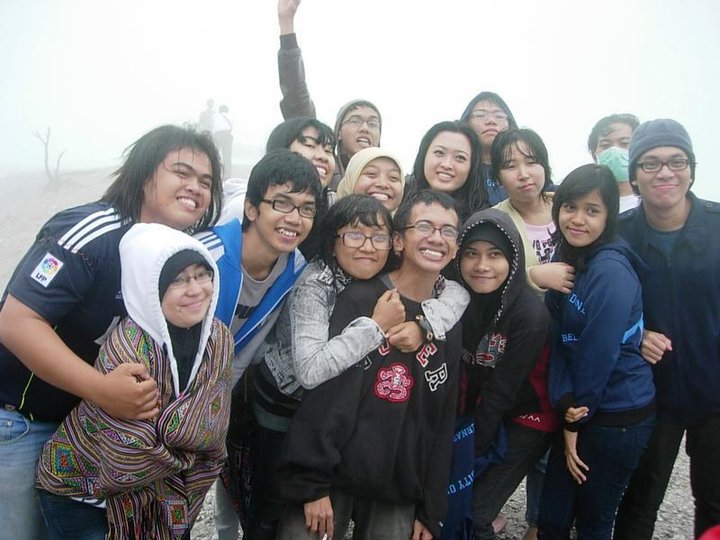
If you see happy faces in the picture, that’s because we were. Jabriks (our department’s outing program) to Ciwidey, Bandung officially marked the end of our happy-period of being sophomores. Now, ready or not, we should welcome the merciless junior year…

February: Boston, New York, and D.C.

183360_1904830867431_1441551732_32224473_3518401_n

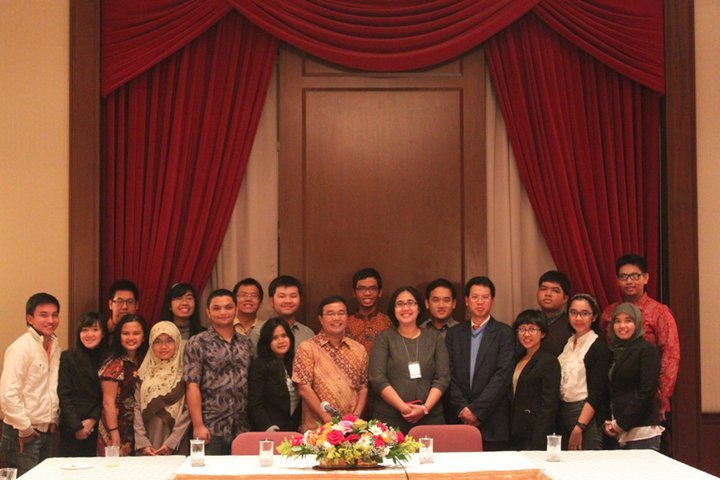
Harvard National Model United Nations (HNMUN) served us not just a tough, mind-boggling competition, but also a cool family with whom you’re able to visit United States’s sexiest spots, from museums to Times Square! It was an ugly truth (of realizing that you’re not good enough to win) lurking inside the joy of visiting the remarkable land of liberty. Did I also tell you we literally met Lady Gaga on Broadway?

March: I Don’t Swim…but I Snorkle!

194105_1744096175942_1644895036_1696545_5055569_o

When I was informed that I was selected to attend the faculty‘s talent scouting program in Kepulauan Seribu, I did not realize that I’d end up in such gratefulness: that Earth owns gorgeous creatures under the sea, and that there are honest people living by the coast. This picture was taken before we dipped ourselves into Laut Jawa.

April: There’s Always the First Time for Everything

189114_1889396364478_1528534451_2028236_4842107_n

…and that includes directing in a Model United Nations conference. I was very excited when one of the participants approached me after this valuable opportunity!

May: A Tweet Just Happened

7_may

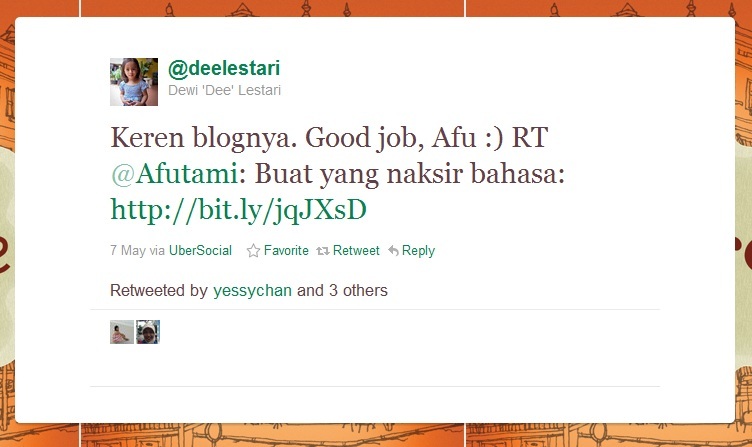
You’ll never, and I mean never, understand HOW HAPPY I WAS TO BE MENTIONED–let alone complimented with ‘great job’–by my most favorite Indonesian writer! And she’s actually following my Twitter account! (Yes I put that as a present continuous tense because she might change her mind after reading this, haha!) You can judge me all you want–but this tweet of hers will remain forever epic in my head.

June: New Batch, New Energy!

267577_1831562675737_1440496335_31409162_6011186_n

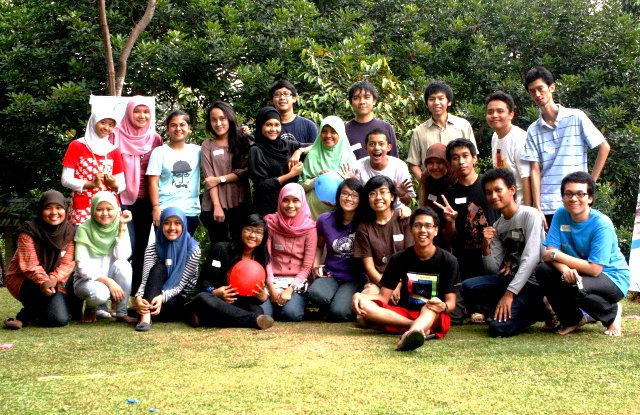
Meet Indonesian Future Leaders’ (IFL) new board of executives, framed right after our hilarious 2-day Camp. Energized by ‘IFL Initiates’, this team is (supposedly) ready to aim for greater youth development this (and next) year!

July: A Slap of “You’re Not A Freshman Anymore!”

313139_2338929833002_1242571520_2797914_6457014_n

That’s the beloved batch of International Relations Universitas Indonesia 2011, a new family which reminded us–batch 2009–that we’re not a first-year student anymore. In fact, it’s almost our 4th year… You guys rocked and we did our best, so let’s not thank each other but make us proud!

August: First (Visionary and Yet Paid) Formal Work

912965632d7438866f147af3e81c54dc

If you think that this is a modified-for-pretty-pictures office, you’re wrong. This energy-efficient (no lights required!) room is as neat as the picture appears to your eyes. It is the very workplace of Energy Efficiency and Conservation Clearing House Indonesia (EECCHI). I was blessed to have worked in such a passionate atmosphere (and have my articles published)!

September: Two Weeks of Being ‘Young’ Again

Img_1435

Thanks to Iman and Alanda, I was able to join a Volunteer Program Development and Management Course (VPDM) arranged by VSO Bahaginan in Antipolo, Philippines. Apparently being surrounded by old people (the youngest one was a 29 year-old Chinese bloke!) reminds you of how being young and spiritful is indeed a privilege. I learned a lot of new things.

September: Having My Baby’s 2nd Anniversary

319949_2229910782208_1081017465_32068652_2046088325_n

Sometimes what you thought a fling could turn into a lifetime affection. I remember a quote saying that, “If you have a good idea, lead. If you heard a good idea, follow. If you don’t have or hear a good idea, don’t let yourself bother the others.” We had the good idea, tried to lead, and now we’re struggling to grow the organization bigger. Wish us luck!

October: The Future of Libya?

313088_2062780852097_1321989098_31796113_149646416_n

I was plain honored to be part of Security Council in Indonesia Model United Nations (IMUN) last year. It was not an easy work but I was happy, having directed a fruitful discussion upon the future of Libya after Gaddafi’s death. (For the record, he was not dead when we had the conference–and that’s probably why the news about his death immediately made me shiver.)

November: Can Indonesia Raise Social Scientists?

Img_3523

Who says Indonesia can’t have their youngsters analyze social issues? Social Science Olympiads (OIS) is a valid evidence that WE DO HAVE ALL THE POTENTIAL WE NEED! This extraordinary event has taken so much of my time and energy this year–but it was totally worth it. I can visualize perfectly how we cried in one another’s hug right after the grand champions were announced.

November: First Touchdown in Purwokerto!

389796_2282356655118_1134878446_31970711_1591328917_n

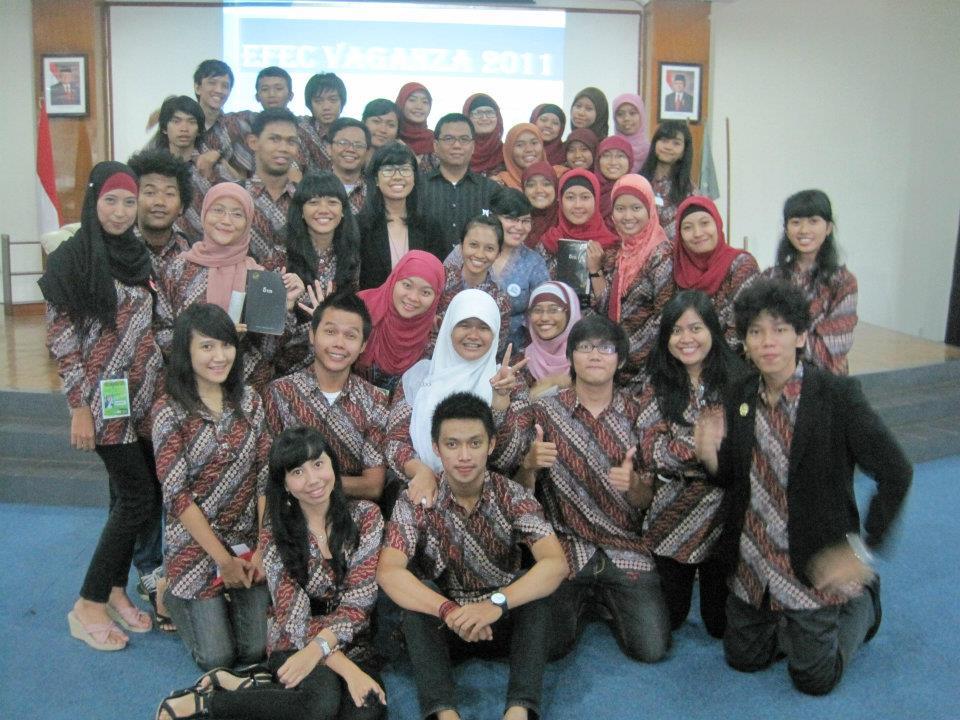
This is embarassing but I’ve never been outside West Java on my own (not even Bali), so I found the 5-hour ride all by myself to Purwokerto very exciting! That’s not to mention the warm welcome from these students of Universitas Soedirman (all dressed in this pretty batik), matur nuwon!

December: I Knew Knowledge-Sharing Would Feel Great

406852_2984048757650_1154926507_3315688_698683505_n

Ari knows best how we did not intend to create anything big, but School of Diplomacy (SOD) just managed to betray our expectations–in a good way! Started as a simple fundraising idea at Burger and Grill, we had  more than 200 students on board, each of them is enthusiastic to learn in our chambers. Hats off to the facilitators, too!

December: A Thesis Topic?

Img00645-20111230-1006

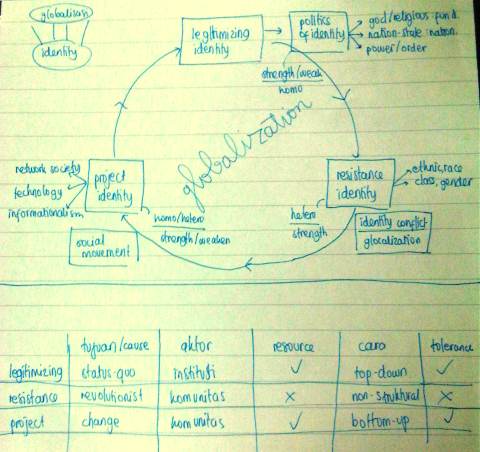
This sheet of paper is very historical to me–because two of my most favorite lecturers of all time acknowledged this as ‘original’ and deserving to be ‘patented’. That beautifully happened in the last session of our Identity class. I just hope that one day I can develop the idea into my own, non-traditional international relations book–or at least a thesis. Amen.

Isn’t it ironic that my first post in 2012 is about 2011? Regardless all the bad luck that was kind enough to have visited me several times (in a row) last year, I am happy. I was not that sure about that before, but reading this post…I guess I am. (Supported by the fact that I learned shuffling, several billiard trick shots and–most important of all–cha cha cha dance in the last day of 2011, HAHAHA.)

Have a blessed year ahead, everyone. We deserve it.

Is Grey a Disguised Black or a Deceived White?

Some of you might disagree: since thousands of years ago, the most difficult quest of human being is to solve the never-ending riddle of our own complex sets of brain cells.

It is hard, my dear friends, because there is no such thing as a finish line which we can visualize in the end of the road–ergo, it would take perpetual endeavours to do so. Let’s admit it once and for all: our mind evolves. What used to be a ‘truth’ is now a ‘lie’ (Remember when church was the only omnipotent institution?) and, to add an external problem which makes the game even more intriguing, the shape of our world is constantly altering.

Having known that the possibility of discovering a completely satisfactory answer to the mystery of human’s elusive mind is near zero, most of the people fleed to the study of secondary questions: natural science. These people try to explain how atoms react to each other, how numbers have a certain pattern that amaze us all, as well as how carbons are processed in our body. Natural scientists are blessed to experience a temporary happiness of being able to produce knowledge and mastery through experiments–but deep inside, I believe that we all keep that drop of curiosity to find out how mankind produce thoughts.

Social scientists are therefore, brave intellectuals who dare themselves to shed some light on the primary inquiry: how does a person think? What can be the raison d’etre behind one’s action? Why not the other way around?

Some of them are labeled as psychologist, communication expert, theologist, anthropologist, sociologist, and–top of all–philosophers. One tries to explain what comprises fondness, another elucidates the idea behind one community’s political preference, while the rest analyzes our society’s consumptive behavior. If they’re stubborn enough, they might as well go to the extend of explaining why human needs a God–and religion.

Within the past fortnight of not posting here, my brain has been producing quite a list of points to discuss about. Most of them involve human’s idealistic notion of romance, but I also spare enough space for daily observations:

Black-white-and-grey-cor

1. In a ladder of fondness, admiration stays at the bottom.

Fahmi and I once debated on whether admiration comprises tinier particles of love or is it admiration that contributes to the bigger building of love. He confidently suggested that love is just 1% of admiration (I’m pretty sure he had Real Madrid in mind when he said ‘admiration’!), while I contended elseways. Unlike admiration which focuses you on one’s fine traits, love helps you see perfection in their flaws.

So, here goes my proposal.

There are at least 3 distinct verbs to express different levels of fondness: admire, like, and love. Of course, English is generous enough to leave us quite a collection of alternatives: adore, care, appreciate, adulate, worship, and the list goes on–but for now, we’ll just stick with the trio.

At the lowest floor of the pyramid, is when you admire a person because you find them attractive. The popular word for it might be–to have a crush? You just seem to notice a certain trait, degree of cleverness, or physical appearance that interest you–thus captivate your attention at some level or another.

The next step is when you like them, triggered by further interaction with this individual. It is, however, a bit tricky, because there comes the two-prone possibility of either losing the interest completely because he/she doesn’t meet your expectations, or falling even deeper into their charm. To ‘like’ does not, however, provide the quintessential tolerance for weaknesses. You simply live in your nice imagination of him being the perfect prince–or her being the most beautiful lady.

The bad news? They’re not. They are, as a matter of fact, just human beings with flaws. There goes the key to get to the next, final level: acceptance.

Have you managed to take these imperfections–be it false tunes, covered wound, or stained habits–as an inseparable aspect of your beloved, you are ready to love them. Indeed, the wind blows tighter up there: every event just seems to reveal itself as a potential threat for your feelings. You will, by then, get familiar with anger and jealousy which are, surprisingly, the validating properties of your fondness.

2. A true leader climbs their ladder.

After a long, midnight discussion with Jessica (while recalling lessons from my Management Principles course a year ago), I realized that a leader is just a person who is foolish enough to admit that he/she is.

You see, being a leader is just a role that human chooses to take from time to time. Some of us needs it to achieve a vision, some of us wants it for money, but it doesn’t matter, really, as long as we understand that being trusted as the leader is never a means to prove that we’re better than anyone else in the team.

It rather means that the rest of the people in the team are better than you in preparing the events, in fundraising, and in doing the publication–but in the end, you get some of the credits because it’s you who decides to stay there, stick them together, stand up and motivate when everybody’s down, and take the blame when a decent coordination does not take place.

We further agreed that a true leader climbs their ladder in order to have a first-hand experience of being a follower. This idea has also been approved theoretically, where leaders are ought to be a staff at their first years so that they can understand the grassroot situation before getting to lead anyone else.

3. What doesn’t kill you makes you stronger.

…including uncertainty. My English teacher once said that in order to survive, human needed a fair, balanced amount of certaintly and uncertainty. A man, for example, needs to be assured that he can eat in the next morning, but at the same time life would be too boring for him if he knows exactly what food he’ll be eating everyday. This has been a very interesting concept to me, and I’ve been trying to find other examples ever since. I take ‘job’ as certainty and ‘projects’ as uncertainty–or ‘marriage’ as certainty and ‘love’ as uncertainty. In this regards, surprises at birthdays still make sense despite the fact that they are very predictable, because the time and place will always remain as uncertainty.

4. Books are sentient beings. Period.

A friend shared me a link to Mortimer J. Adler’s prose on How to Mark a Book. To quote his exact words:

I contend, quite bluntly, that marking up a book is not an act of mutilation but love.

Whoa, whoa, whoa, wait in there, Mr Adler, did you just say that smearing books with symbols all over its pages is an act of love? I think I have to stand against that idea. He did

make a valid point when he says that:

…But the soul of a book can be separated from its body. A book is more like the score of a piece of music than it is like a painting. No great musician confuses a symphony with the printed sheets of music. Arturo Toscanini reveres Brahms, but Toscanini’s score of the C-minor Symphony is so thoroughly marked up that no one but the maestro himself can read it.

Then again, music scores are nothing like idea-condensed books. (When I said ‘books’, you understand that I refer to thoughtful ones, not some market-based sets of words, right?) No matter how much you love–or hate–a book, it is a sentient being who deserves to be treated well for it is a physical manifestation of thoughts. Great conductors do not make notations on lines of magnificent sentences–they compse new symphony through marking scores.

I say, if you fail to appreciate the body, you can hardly understand the soul. Although in the end, people might express love through different ways,
tee-hee!

5. God must be hiding a happy-ending scenario behind the existence of these conflict-triggering religions.

As much as I have this tendency to invent confusing questions about–and for–God, I apparently am still the very conservative girl back then who has an auto-pilot that drives herself into possitive assumptions about Him.

Rumor has it, God closes certain people’s heart from receiving the light for particular religions. My brain has it, it would be a too shallow, and poor, description for Him.

You see, I possess this preposterous habit of watching people walking down the street from the window of my room. One day, it just came up to my mind that each of them–destined for a different story and religion–must play their unique role in God’s master plan. As quoted from Cin(T)a:

Why would God create us different, if He only wants to be worshiped in a single way?

I once said to a friend over coffee that I would feel awfully betrayed if God does not own any happy-ending scenario behind this diversity of religions He has created on Earth. At the status quo, I can say that I still am very much disappointed to the existing conflicts it triggered.

My most favorite story line would be Dwinta’s concept of ‘destination’, while the second-best alternative would be this: God’s actually playing a trick by designing us with a limited container for faith but endless curiosity for truth so that we would ask one another, share ideas, and basically, interact. Because otherwise we’ll just stay at our safe houses of unitary religion.

6. Movie is not a character-killing product.

Instead, it’s a character-producing one.

I wholeheartedly believe that there are many of us who have been let down by novel-based movies, and I’m not proud to say that I used to be one of those furious audience. Harry Potter, Sense and Sensibility, One Day–you name it–true readers don’t really fancy movies.

Of course, I truly understand that movies are intended to please our audio-visual and not mere imagination, and thus are challenged to be eye-and-ear-catching, which are still very tolerable, until I met (the movie) Sherlock Holmes (last year) and Professor Moriarty (yesterday).

Here is all I need to say: my handsomely smart English man has turned into a laughing stock while the brilliant antagonist does not have the fierce expression I expected. So no, people, I won’t take it anymore. I decided to reach out for acceptance through seeing Sherlock (the movie) and Sherlock (Doyle’s) as two different persons.

And with that, ladies and gentlemen, I rest my last case in 2011. I don’t even know what point I was trying to make back there, but always remember that getting lost in a bookstore might still be the best bliss that we can get so far.

Oh and for 2012, let’s keep my friend’s idea in mind: dreams are not genetic and self-driventhus–before it’s too late–let’s revisit our old dreams and see if we can make them come true (like having http://afutami.foreignpolicy.com–HAHA). Happy new year!


‘Typical’ Chinese Philosophers?

Meet Rocky, my self-proclaimed lost Chinese brother. Like me, he aspires to be an international relations scholar. Yet–unlike me–he still cares how he can directly contribute to the society. If you think you have an answer, please spare some time to comment on this post, thank you!

Rocky: So Fu…I’ve been pondering lately. What can we do as an IR scholar to society? Will we be able to do much for its betterment? Passion memang lah ya, tapi terpanggil juga nggak sih untuk society? Terutama yang sekitar kita. Hahaha aduh maaf tiba-tiba random gini.

18qqsh

Me: First of all, think we need to agree on the degree of ‘scholarship’ that we’re aiming ourselves to get to. Would it simply stop at being a regular lecturer, or would it last until we produce our own IR theory?

Me: Well, jadi dua-duanya bisa tetep kontribusi ke masyarakat sih…in a different way. Kalau gue mimpinya jadi dosen-slash-profesor (amin) yang bisa bikin bibit-bibit pemikir juga. In a way, itu bentuk kontribusi yang pengen gue kasih ke Indonesia (as a state) supaya pembuat kebijakan luar negeri-nya lebih aware dan bertujuan…gitu. Tapi kalo pertanyaan lo gimana kontribusi langsung ke masyarakat sekitar susah juga dijawab sama profesi scholar itu. Gue mah percayanya kita akan selalu punya waktu luang buat bikin projek/kegiatan lain kalau emang mau give back langsung.

Rocky: Memang sih pertanyaan gue mungkin lebih ke fungsi dari scholar sendiri. Apa keuntungan langsung dari masyarakat Indonesia misalnya, kalo ada pencetus teori HI yang menjelaskan politik internasional lebih komprehensif. Gw sendiri awalnya mau jadi scholar karena murni fun bidangnya sih. I’m too much of a philosophical bastard to be an entrepreneur. Oh wait I’m Chinese! HAHAHA.

Me: Me too. There’s no way I’ll prefer entrepreneurship before IR theories (or other theories in general). Semisal nggak ada manfaatnya pun somehow gue rela-rela aja baca buku teori berjam-jam asal diri sendiri senang :))

Rocky: Yak, 100! I had dreams of working for the UN. But then I realized my passion lies in academic studies. Tapi mungkin my Chinese part kicks in here. I long for a profession that directly helps those in need.

Me: Unyu. I always love when Chinese people define themselves.

Rocky: Well, Chinese people love practical and simple things. Jadi ya you see. In my case of being in social studies. I also have a passion in teaching, but I still don’t know how strong it is.

Me: Well find out then!

At one of our World History classes, Diku once pointed out how the Chinese classic philosophers always had this preference of observing ‘what’s on the ground’, instead of ‘what’s in the sky’ like the Western thinkers. This means that they cared about solving problems (Are we identifying existentialism’s tenets here?) more than finding out the reason behind humans’ existence and what life is all about. That premise, apparently, is proven correct through the instance I presented above.